On a Rosado
Tasting
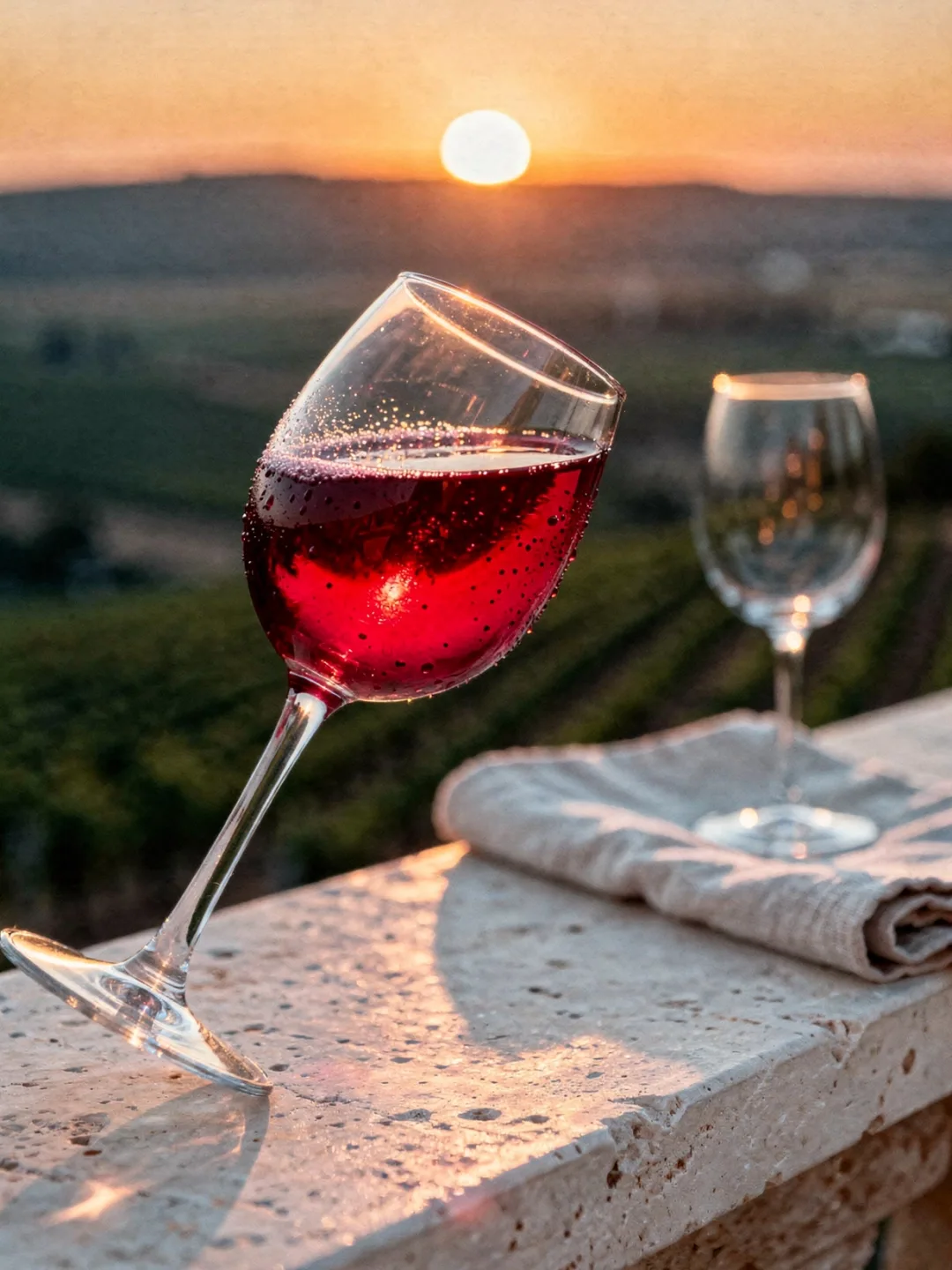
Hold a glass of Navarra rosado up to the light. The first surprise is the color. It ranges from pale salmon pink to a deep, almost garnet-red tone that in France would be dismissed as too dark for a rosé. In Navarra, that's often the reference point. At a tasting in London in 2026, experts crowned the darker, more intensely colored style as the more authentic rosado, over the paler, internationally popular tone.
On the nose comes first the fruit of the Garnacha: strawberry, raspberry, sometimes a hint of pomegranate, plus a floral touch reminiscent of violets. The brief skin contact during sangrado draws exactly these aromas from the skin, without ever weighing the wine down.
On the palate comes the second contradiction. The wine tastes almost sweet, yet by the DOP's definition it's dry. This golden, often described as goloso fruit sweetness comes purely from the interplay of fruit and acidity, not from residual sugar. The acidity ties everything together and keeps even an intensely colored rosado refreshing rather than heavy.
Follow it with a mature Tempranillo from Ribera Baja, and the whole picture shifts. The color turns brick-red, the tannin becomes noticeable on the gums, and fruit steps back behind leather and spice notes from the barrel. Between these two wines lies the same vineyard, the same grape – just with and without skin contact.
At the end, count how long the flavor lingers after you swallow. With rosado, it's often just a few seconds, fresh and fleeting. With a Reserva Tinto that's had barrel time, the finish can stretch to twenty seconds or more. That length can't be forced in the cellar – it comes from outside, from the soil, from maturity, and from the time a wine was allowed to spend in the barrel.