Built for Rosado
Glassware
Hardly anywhere else does the color of the wine determine the right glass as much as it does here. A rosado made from Garnacha and a mature Tempranillo might come from the very same vineyard, yet they need completely different glasses.
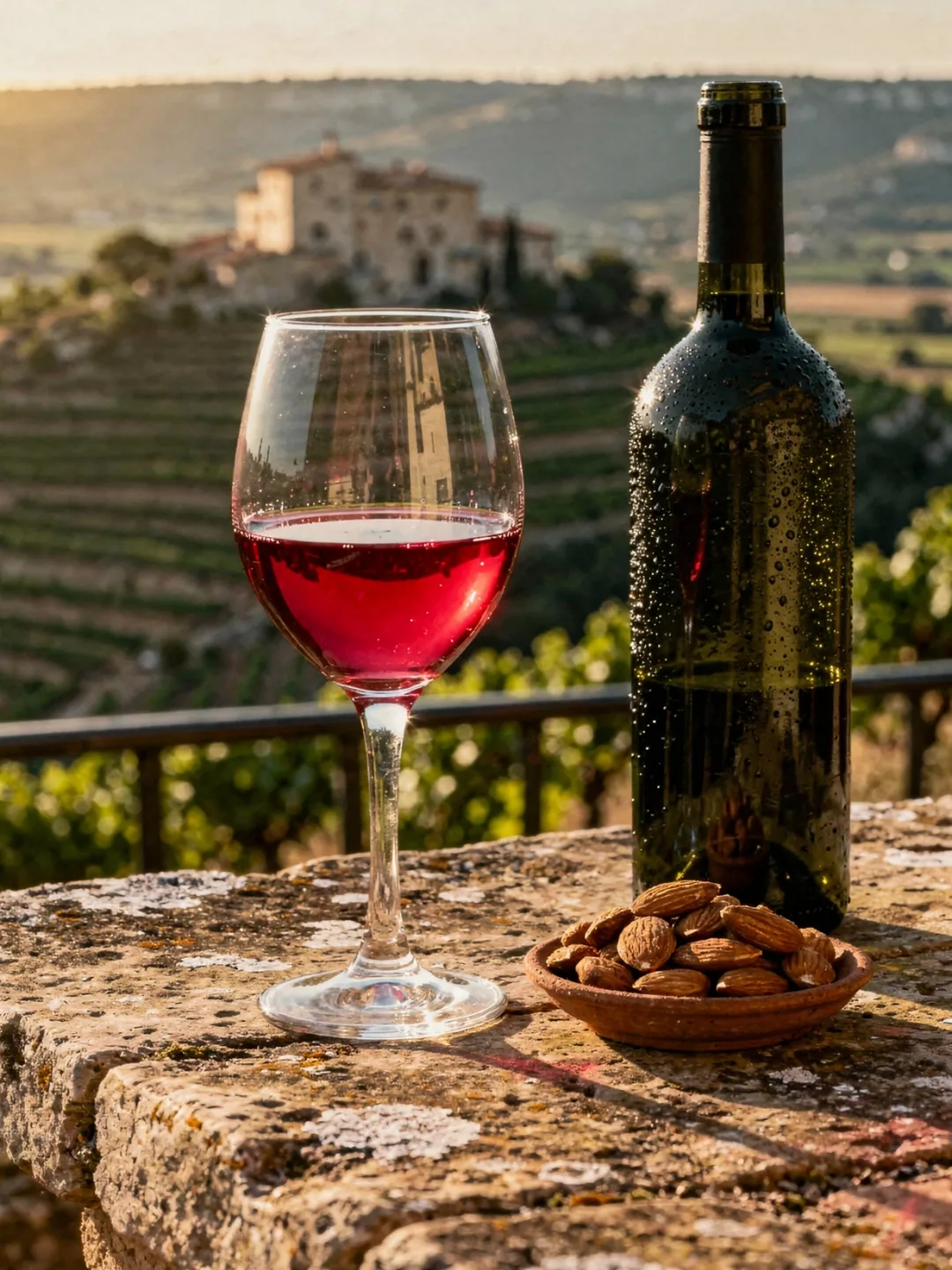
For rosado, the rule is: narrow, tall, tulip-shaped. According to the official specifications, Navarra's rosado is technically classified as dry, yet it appears intensely colored and floral-fruity on the nose – a result of the sangrado method, which pulls a lot of color and aroma from the skin in a short time without raising the sugar content. A glass that's too wide lets exactly that dissipate. A narrow opening gathers cherry, strawberry, and the floral note of the Garnacha, carrying them concentrated to the nose.
Tempranillo from Ribera Baja needs more room. A rounder bowl with a taller wall helps here. It gives the firm tannin from the cascajo soils space to unfold before the wine reaches the tongue. Too narrow, and it comes across as rough.
Temperature is where most mistakes happen, and in both directions. A rosado belongs at eight to ten degrees, almost at the fridge's coldest setting, or its freshness tips into flatness. A young Tempranillo can handle twelve to fourteen degrees, while a Reserva with barrel age needs sixteen to eighteen – at room temperature it tastes of alcohol rather than fruit.
A Gran Reserva with five years of aging needs extra air on top of that. It often carries sediment and, after so much time in the bottle, is as closed off as a drawn curtain. Half an hour in a decanter opens it up more than any amount of swirling in the glass ever could. And however you pour, never fill above the widest point of the glass – the rest is space reserved for the aroma, whatever color sits in the glass.