For Dense Red Wines
Glassware
A glass can make a wine seem bigger or smaller than it really is, and with Priorat this effect hits especially hard. With a minimum of thirteen and a half percent alcohol, deep color, and plenty of tannin, this wine needs room. Otherwise, it lands in the mouth like a fist instead of a river.
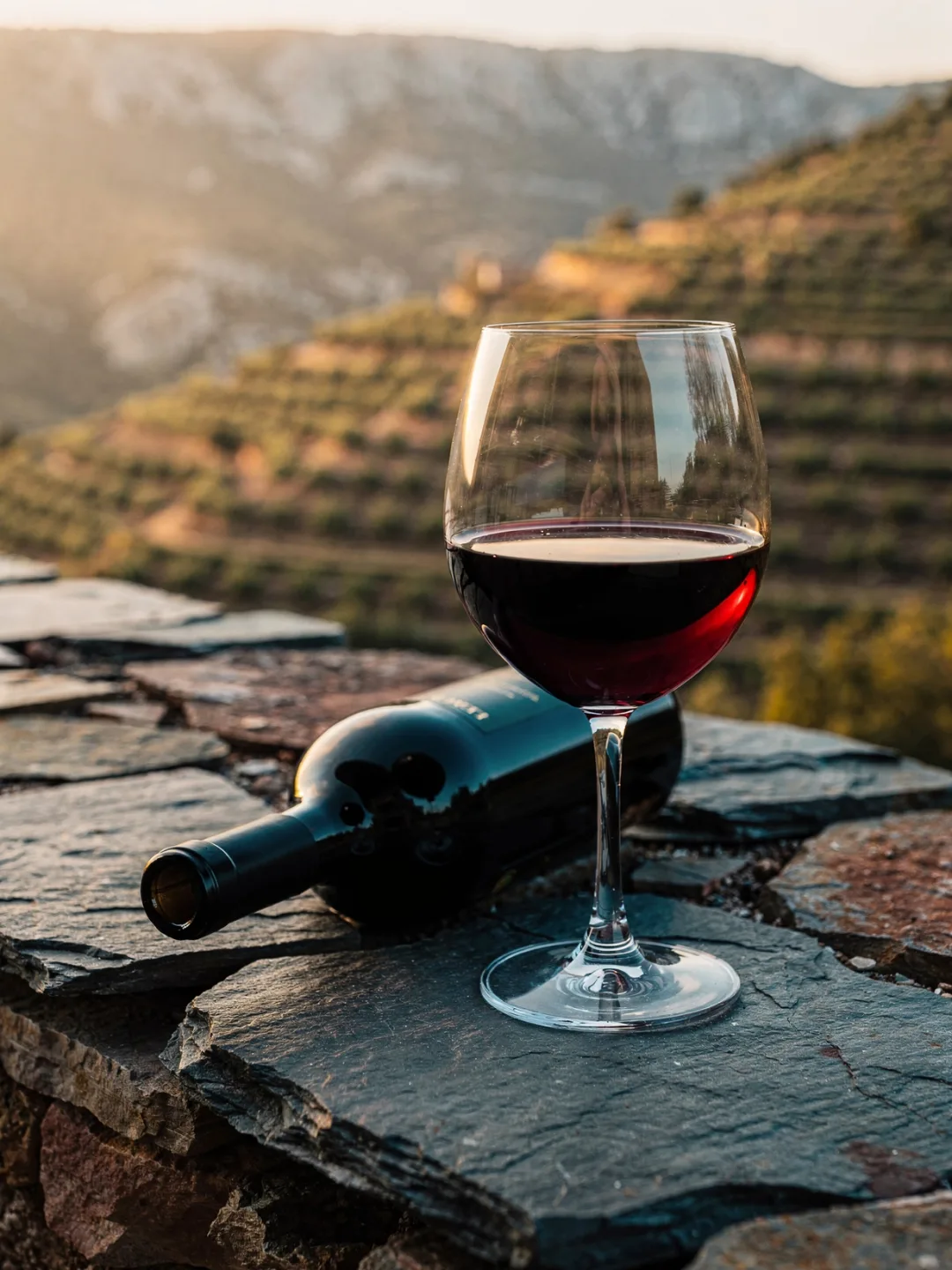
A narrow, tall glass pushes alcohol and tannin forward. It lets through little of the fruit, which already tends to take a back seat under the sheer force of Llicorella-grown grapes. A bowl-shaped glass with a wide bowl works better, similar to those used for powerful Bordeaux, giving the wine surface area where alcohol can evaporate before it reaches the nose. The rim may well narrow again, so the aromas don't escape immediately.
When it comes to temperature, the usual mistake is serving it too warm. Sixty to sixty-four degrees Fahrenheit (16–18°C) is plenty, cooler than what counts as room temperature in a Catalan summer sitting room. Anything warmer than 18°C pushes the alcohol forward. A Priorat, already powerful to begin with, then comes across as hot rather than concentrated.
In the cellars between Gratallops and Porrera, most young Priorats therefore age for twelve months in oak before they're even allowed to be bottled. It's exactly these young vintages that almost always benefit from decanting. The tannin is often still angular at this stage. An hour of air rounds off these edges without the dark fruit suffering beneath.
Finally, there's the pour: a finger's width above the widest point of the glass is enough, and for a wine this concentrated, even a touch less than you'd pour for a lighter red. Filling the glass to the brim robs the Priorat of exactly the space it needs to release its dense fruit at all.