Pulpo, Percebes, Padrón
Wine & Food
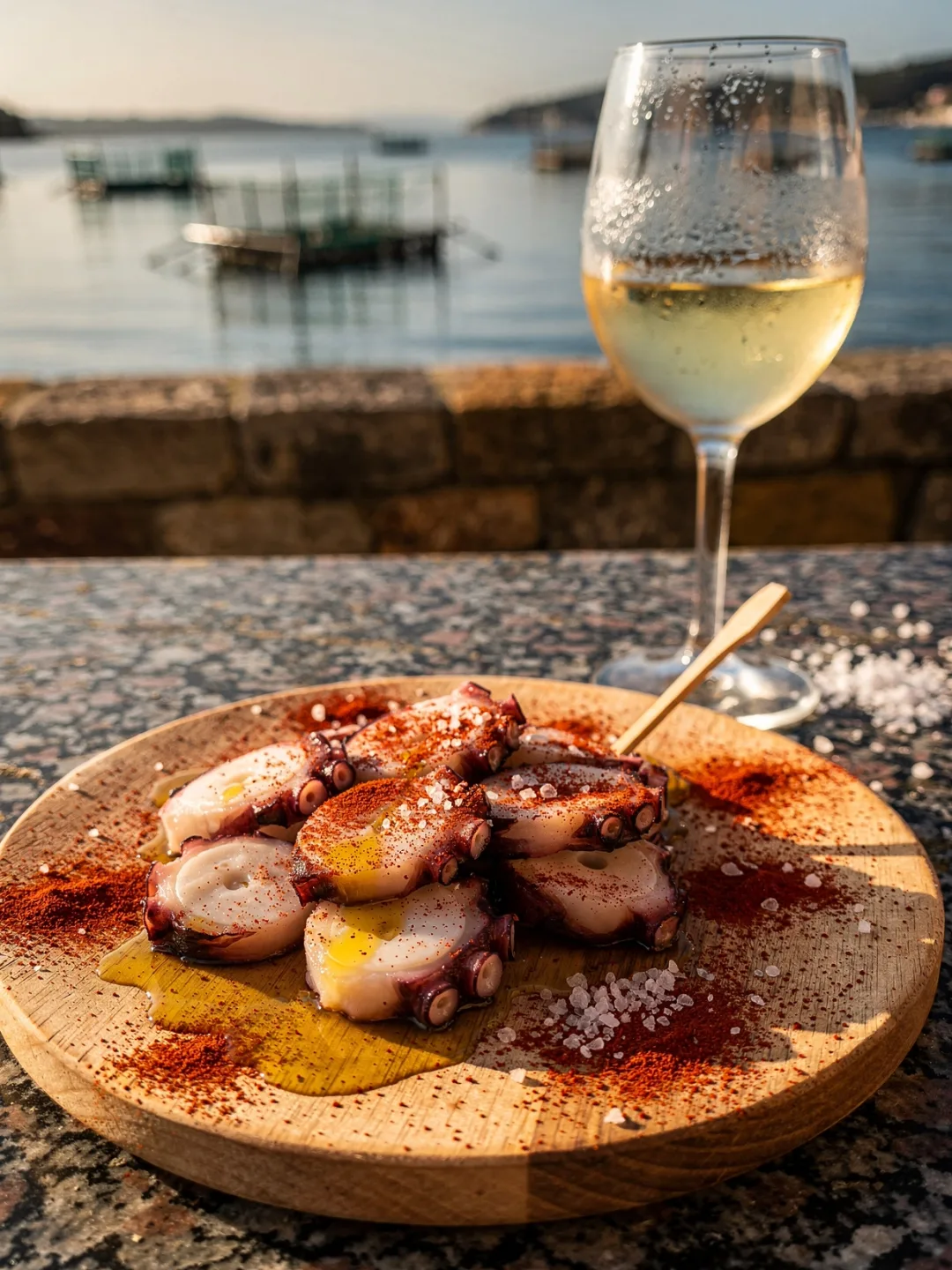
No dish represents the region quite like Pulpo á feira. Boiled octopus, sliced on a wooden plate, dusted with nothing more than coarse salt, olive oil, and sweet or spicy pimentón. Fat and paprika heat call for an acidity that can stand up to them. Albariño delivers exactly that, in abundance.
The connection shows itself even more directly with a Mariscada, a platter of everything the Ría de Arousa has to offer: percebes (goose barnacles), centollo (spider crab), nécoras (velvet crabs). Add mussels from the bateas, those floating wooden platforms on which Galicia grows more than seventy percent of its mussels. The Albariño served alongside tastes almost like the same water as the seafood itself. That's no coincidence: the vines often stand just a few kilometers from the bateas.
Quite different, but equally typical, are Pimientos de Padrón: small green peppers fried in olive oil and coarsely salted, most of which taste mild, with only the occasional one turning out hot—a kind of culinary game of chance from the area around the Ribeira do Ulla. Their richness and occasional heat call for exactly the freshness a young, unaged Albariño brings.
The same rule applies to Empanada gallega, the hearty pastry filled with tuna or meat. Salt makes acidity more approachable, and fat practically demands it. Anyone who drinks an Albariño with a warm empanada will notice how both sides make each other seem rounder, even though the wine itself hasn't changed at all.
Not everything calls for this wine. Paired with sweet pastries like Tarta de Santiago, the almond cake with its powdered-sugar cross, a dry Albariño suddenly seems thin and sour. Sweetness in food always makes a dry wine appear harsher than it really is. Still, the simplest rule remains the most reliable: whatever comes from the sea along this stretch of coast pairs almost automatically. With everything else, it's worth a second thought.