On an Albariño
Tasting
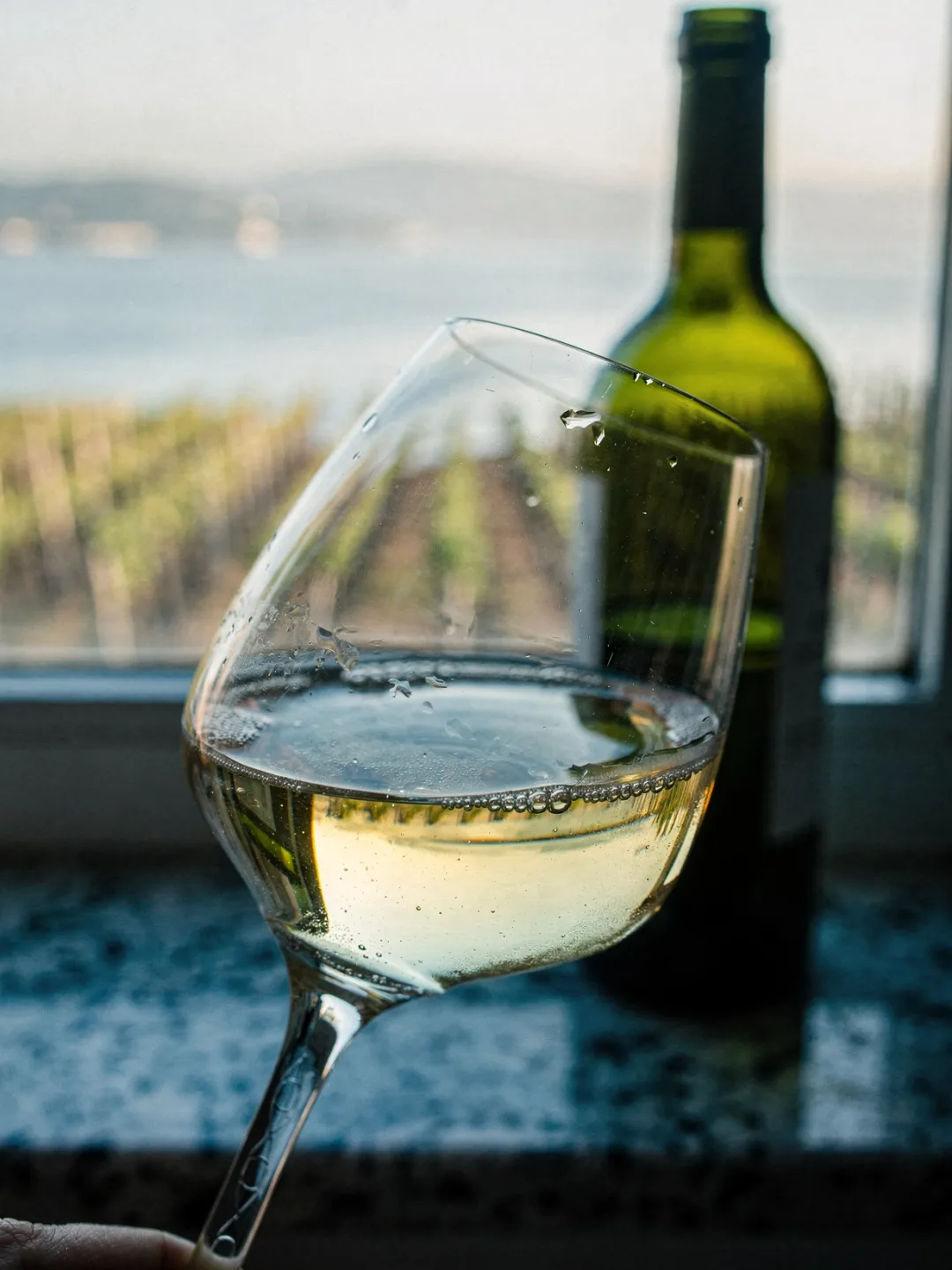
Hold a glass of Albariño up to the light. It shows pale yellow with a cool, almost greenish shimmer, bright and perfectly clear. The younger the wine, the more pronounced this greenish shimmer. Hardly any Spanish white variety displays its youth as clearly in color as this one.
On the nose, citrus comes first, lemon zest and sometimes grapefruit, followed by stone fruit like peach and apricot. Smell more closely and you'll find apple, occasionally a tropical trace of pineapple or mango. Beneath it, hardly separable from the fruit aromas, sits a salty undertone — as if the wine had carried something of the nearby Ría de Arousa along with it.
On the palate, the acidity is immediately noticeable, along the sides of the tongue, lively and downright zippy. Alongside it comes a saline note. No other white wine shows this quality so clearly, and once you've recognized it, there's no mistaking it for anything else. Warmth or heavy alcohol, on the other hand, is nowhere to be found. Albariño stays lean, even past twelve percent alcohol by volume.
On the finish, a slightly bitter edge often lingers, similar to the white pith beneath a grapefruit's skin. This isn't a flaw but part of the variety's typical character. A good Albariño lets this aftertaste linger far longer than you'd expect from such a light, pale wine. It's exactly this length that separates the simple wines of the region from the great ones.
Set an Albariño from Val do Salnés next to one from Condado do Tea, and you taste the same name from two different angles: saltier and leaner along the coast, rounder and more fruit-driven further inland along the Miño. The grape isn't to blame. The water is: here the open Atlantic, there the Miño, carrying freshwater far inland.