Monks, Phylloxera, Fiesta
Region & History
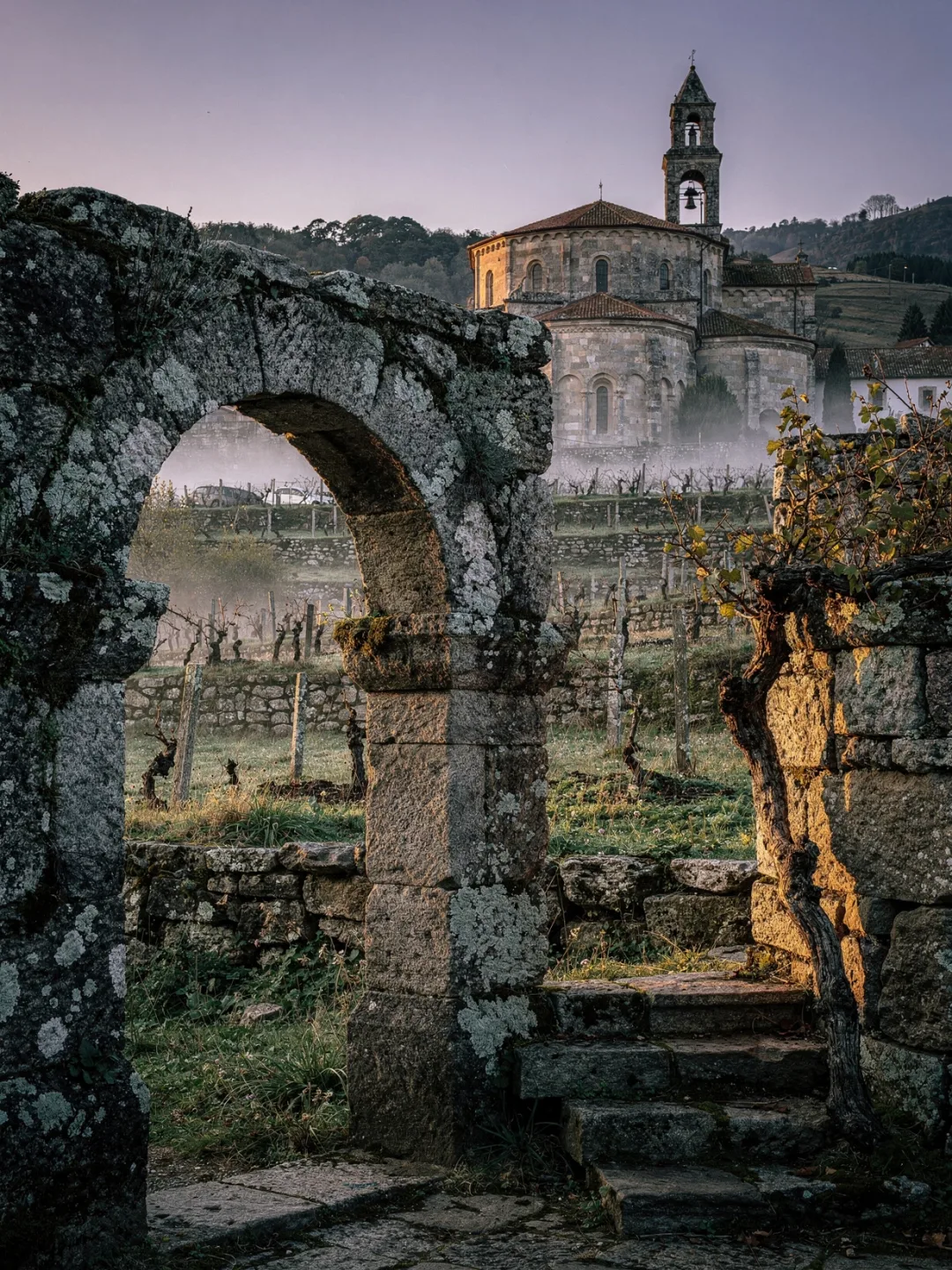
A monk is said to have brought the first vine here. At least that's how Galician writer Álvaro Cunqueiro told it: Cluniac monks from Burgundy supposedly carried it in the twelfth or thirteenth century to the monastery of Santa María de Armenteira, right in the heart of the Val do Salnés. Packed in their baggage: a vine that sounded suspiciously like Riesling. It's a good story. Genetic and morphological studies have since disproven it: Albariño is a native Galician variety, older than the monastery and with no relation whatsoever to the Rhine.
Phylloxera arrived here late and met resistance. The first cases in the province of Pontevedra weren't reported until 1899, more than twenty years after it had ravaged the rest of Spain. The traditional training of vines on the Emparrado, high above the ground, further slowed its spread. By 1909, barely four percent of the vineyard area was affected.
Long before any law protected the name, the people defended it themselves. On August 28, 1953, Bernardino Quintanilla Álvarez and Ernesto Zárate lined up the best Albariños from the area side by side in Cambados. They crowned a winner, and out of this convivial afternoon grew the Festa do Albariño, today Galicia's oldest wine festival. In 1977 it was declared a festival of touristic interest, in 1990 one of national interest, and in 2018, international interest.
The legal path came only decades later, and it was rather convoluted. On October 11, 1980, the Denominación Específica Albariño appeared in the Spanish state gazette, named after the grape rather than the place, which caused confusion for years. Only with the decree of July 28, 1988, did the Ministry of Agriculture finally recognize the Denominación de Origen Rías Baixas, this time named after the landscape rather than the grape. Since then, the regulatory council has been based at the Pazo de Mugartegui in Pontevedra.
The name itself describes the coastline where all this unfolds. Rías Baixas means "lower estuaries." It distinguishes the four broad bays reaching deep inland around Vigo, Pontevedra, Arousa, and Muros e Noia from the narrower Rías Altas further north. In these funnel-shaped inlets, the Atlantic meets freshwater from the rivers, and it's precisely in this interplay that more Albariño has grown for centuries than anywhere else.