Albariño & Alvarinho
Grape Varieties
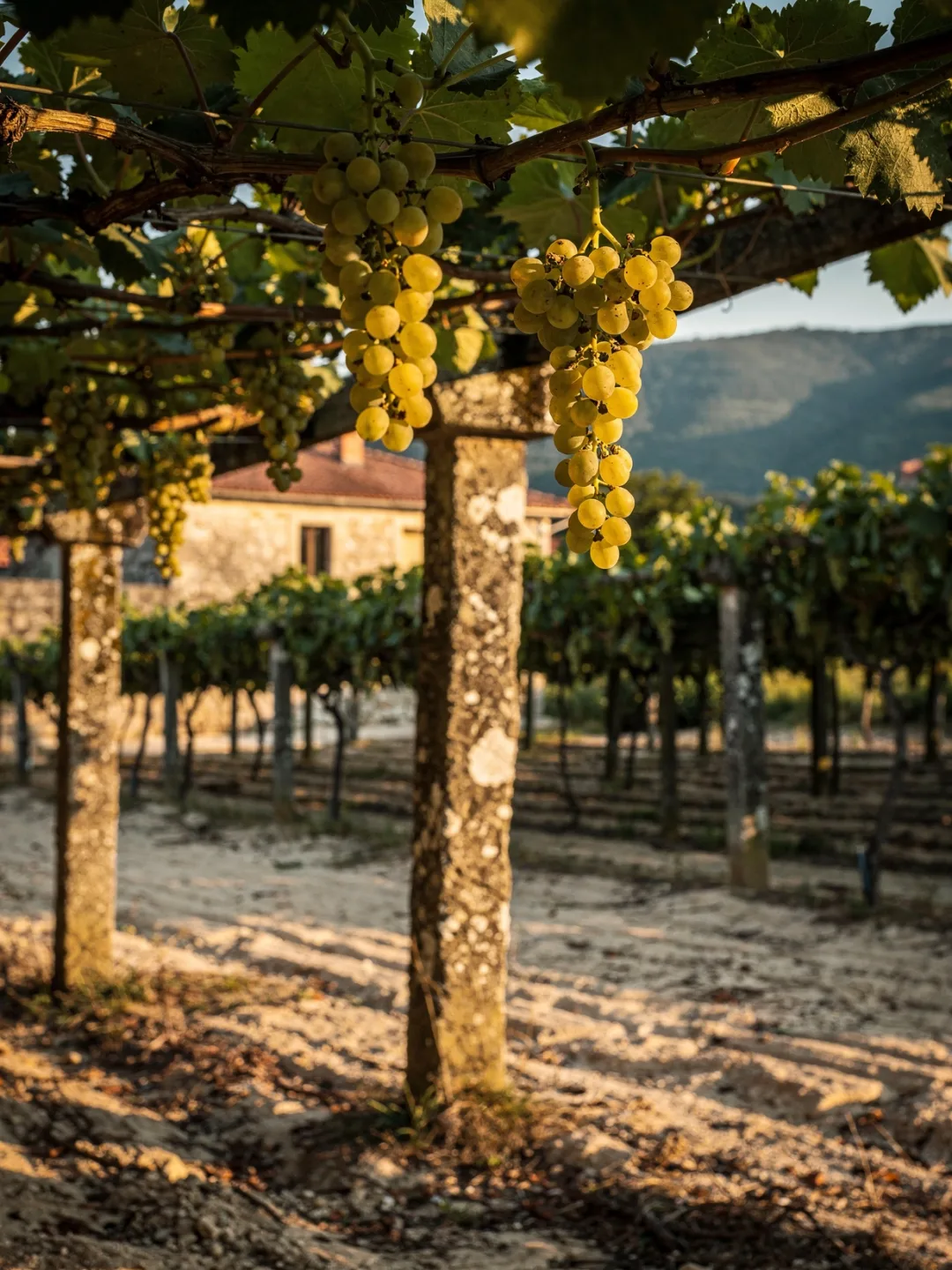
Almost every vine here is Albariño. It covers more than four thousand hectares and supplies more than ninety-six percent of what's bottled in the region — hardly any other Spanish white wine area is so concentrated on a single variety. It builds up plenty of sugar while barely losing acidity. This very contradiction defines its reputation: wines above twelve percent alcohol by volume that still taste fresh and lean, with aromas of citrus fruit, ripe stone fruit, and blossom.
Cross the Miño heading south, and the very same grape suddenly goes by another name. In Portugal, Alvarinho is only permitted to grow in the municipalities of Monção and Melgaço within Vinho Verde. Genetically, it's the identical variety. Yet there it often tastes more mineral, while in Rías Baixas it leans more toward fruit. Two names, one river between them, a noticeable difference in the glass.
How much Albariño actually ends up in the glass is regulated differently by each subzone. In Val do Salnés and the Ribeira do Ulla, at least seventy percent must come from Albariño, in the Ribeira do Ulla together with Loureira, Treixadura, and Caíño Blanco. In Condado do Tea, seventy percent Albariño and Treixadura combined suffice, and in O Rosal, seventy percent Albariño and Loureira. The remainder may come from other varieties of the subzone. Albariño never disappears entirely anywhere, but its neighbors get a say.
These neighbors have their own stories. Loureira, also called Marqués, smells of laurel and brings high acidity with little sugar, ideal for blending in O Rosal. Treixadura, at home in Condado do Tea, adds green apple and floral scent. Caíño Blanco once teetered on the edge of extinction and today grows again in O Rosal, robust enough to stand as a wine on its own. Godello ages well in barrel, while Torrontés demands plenty of care against frost and mildew.
Red varieties remain a footnote alongside all this. Espadeiro, Caíño Tinto, Sousón, Loureira Tinta, and Brancellao together make up less than one percent of the vineyard area, with the occasional Mencía thrown in. Mostly they stay among themselves, in small, often unlabeled batches for the family table. The great story of this region remains white, salty, and signed by Albariño.