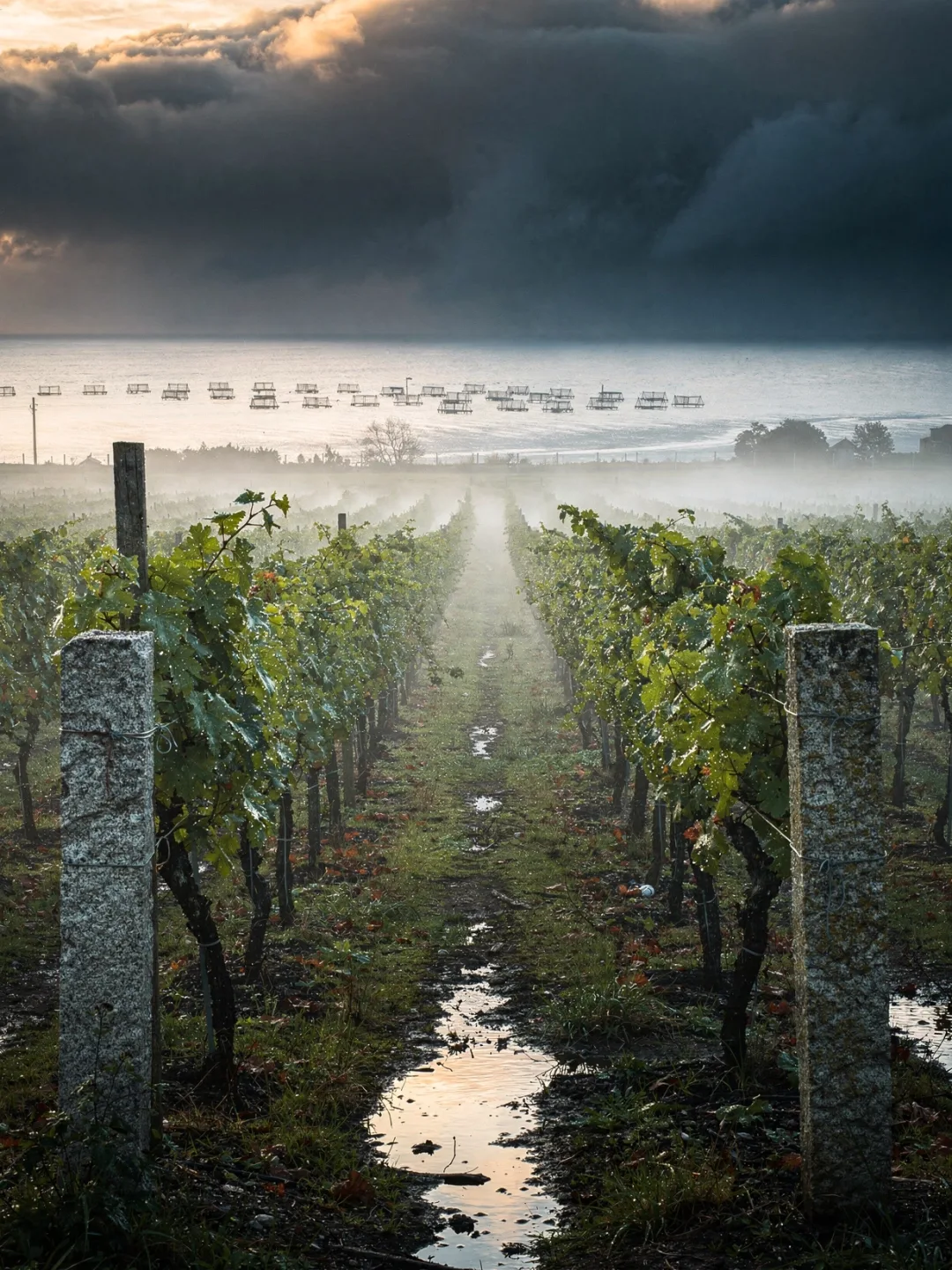
Atlantic Meets Rías
Climate
Four broad sea inlets cut deep into the land here, and each one tempers the weather a little. The Ría de Arousa, the largest and most bountiful of them all, lets cool Atlantic air travel unhindered far inland. This keeps summers from ever getting truly hot.
What the Atlantic demands in return is rain, and plenty of it. Averaged across the whole denomination, about sixteen hundred millimeters fall each year. In Val do Salnés it's usually between fourteen hundred and sixteen hundred, six hundred of which falls in winter alone. That's enormous — roughly double the rainfall of many other European white wine regions. Yet the vines along the coast almost never freeze.
The seasons here run against the usual expectations. Winter and spring bring the most rain, rarely dipping below ten degrees Celsius in January, yet without frost. Summer, by contrast, often stays dry to the point of drought, as little rainfall meets fast-draining, sandy soils. It's precisely this water shortage in August that concentrates the sugar in the berries, shortly before stormy, rainy weeks return in autumn.
Generations ago, people here found their own answer to the moisture: the Emparrado. The vines climb granite posts one and a half to two meters high, well above the ground, instead of running along wires at knee height as is usual elsewhere. This keeps the grapes away from ground moisture, while air circulates beneath the canopy and mildew finds less surface to attack. With sixteen hundred millimeters of rain a year, that's not a luxury — it's a necessity.
The large swings between day and night temperatures that many wine regions rely on for freshness are almost entirely absent along this coast. Instead, the Atlantic itself takes on that role: it keeps days mild and nights barely cooler. It's precisely this steadiness that lets Albariño hold onto its acidity for weeks, rather than losing it over a few hot days.