Lechazo & Morcilla
Wine & Food
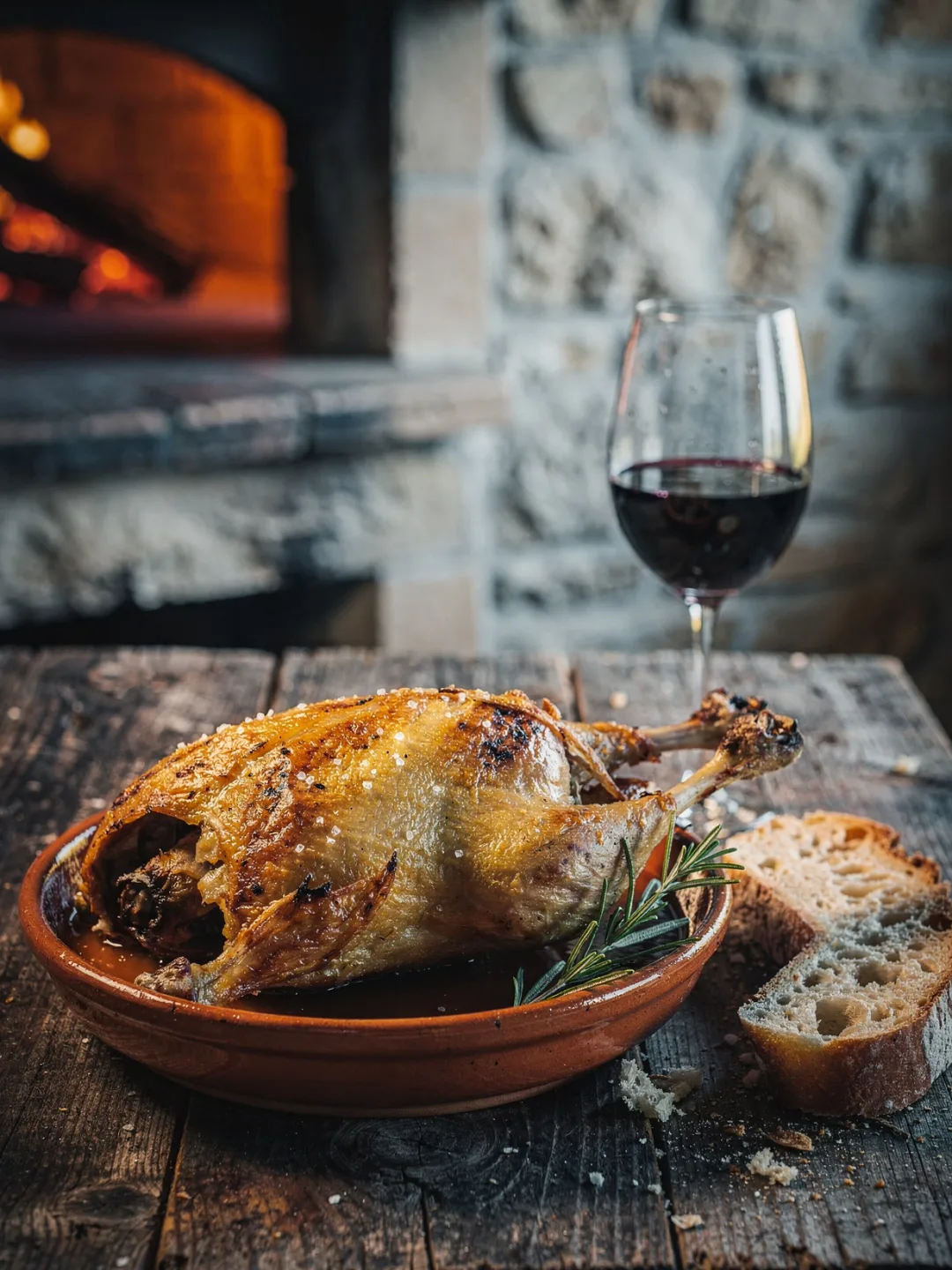
The dish that defines the region doesn't come from the vineyard, but from the oven. It's called Lechazo, a suckling lamb that has never eaten anything but its mother's milk. Only animals of the Churra, Castellana, and Ojalada breeds are allowed to take part. They're sold under the protected name Lechazo de Castilla y León. Their meat is correspondingly tender.
It's roasted in a clay dish in a wood-fired oven, with nothing but water and salt, for two hours over oak or holm oak wood. By the end, the skin is crisp. The meat practically falls off the bone. Aranda de Duero and Peñafiel are considered the strongholds of this preparation.
Ovens have been burning there for generations in the same family businesses, and the wine the region produces anyway pairs perfectly with their fat and salt. Tinto Fino, with its firm tannin and robust acidity, cuts through the lamb's fat much like a squeeze of lemon on a schnitzel. The fat itself makes the tannin feel noticeably softer. A Reserva with a few years of age suits a mature Lechazo better than a very young wine, whose tannin would still seem too raw—and that's precisely why a second dish from the region calls for a different, younger wine.
It's called Morcilla de Burgos, a blood sausage made from rice, onions, and spices, granted its own designation of origin since 2018. Pan-fried until crisp, with a crunchy crust and a soft core, it calls for less tannin and more fruit. A Roble or a simple Crianza works better here. It hasn't yet acquired the full austerity that a mature Reserva brings from the cellar.
Many of the old underground cellars beneath Aranda de Duero no longer serve wine aging today. Instead, they house small wine taverns where Lechazo, Morcilla, and a glass of Tinto Fino come together on the same table. What was once moved underground out of necessity has become something people now seek out by choice.