Blackberry & Licorice
Tasting
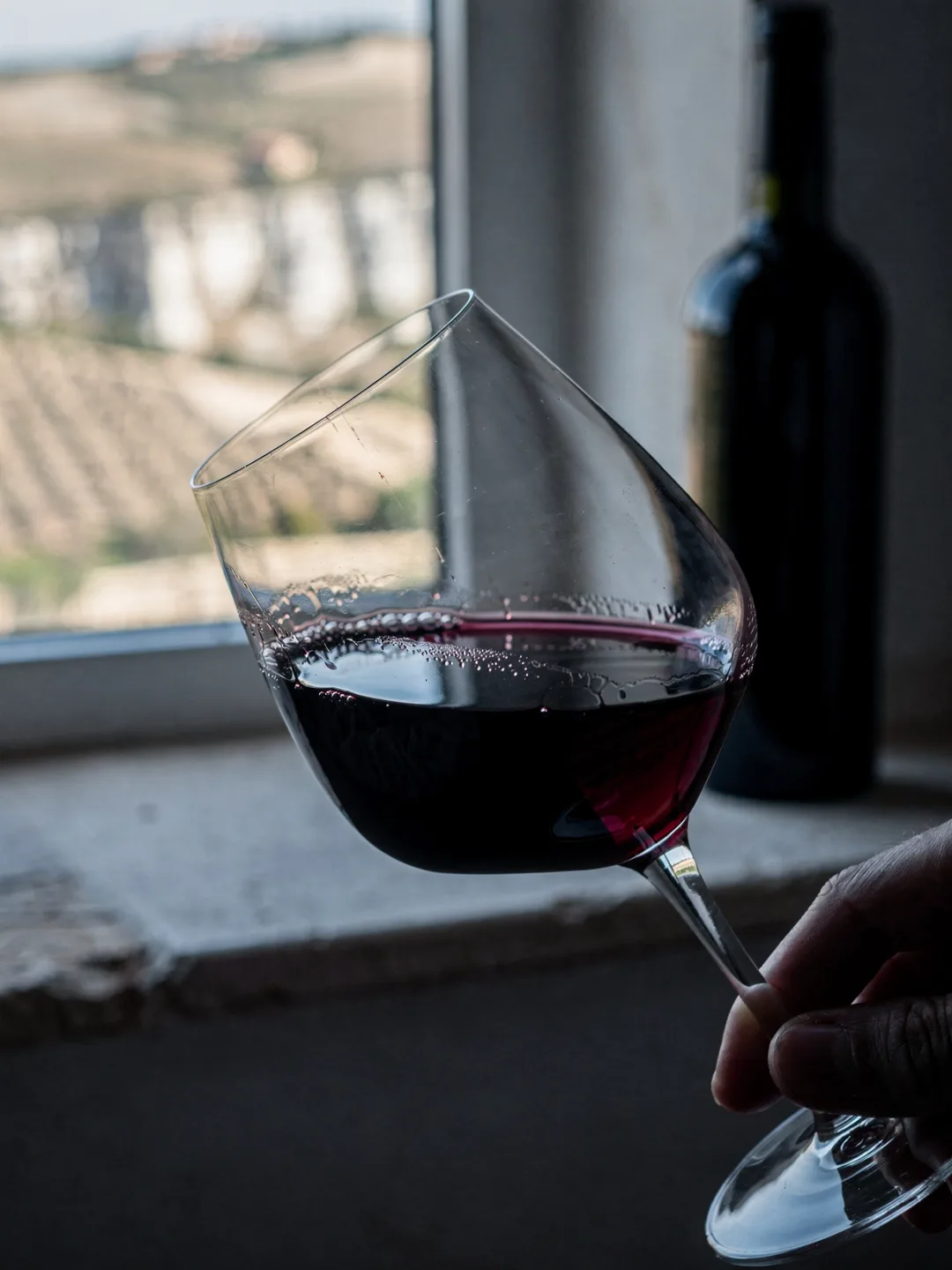
Hold a glass of Tinto Fino up against something white, and the answer comes instantly. It's dark, almost opaque at the rim, with a sheen that leans violet in a young wine. This depth comes from the thick skins a berry develops under poor soil and severe nighttime cold, and even a ten-year-old Reserva shifts only to brick-red at the rim, losing little of its color in the middle.
On the nose, dark fruit comes first: blackberry, ripe plum, sometimes a touch of blackcurrant. Then, if time in barrel was involved, a second layer follows—vanilla, toasted bread, and with American oak, often coconut too. A thread of licorice turns up in many older Reserva wines, subtle, almost in the background. But once you've noticed it once, you'll find it again.
In the mouth, it's worth attending to two things separately. The acidity sits along the sides of the tongue, held in place by the cool nights during ripening. Despite its density, this keeps the wine from feeling heavy. The tannin lies as a dry sensation across the whole palate, more powerful than in most other Spanish reds. Small berries, after all, always bring more skin relative to juice.
Finally, count how long the flavor lingers after you swallow. For a simple Roble, that's a few seconds. For a mature Reserva from a good vintage, say from Pesquera, you'll often count past twenty, sometimes thirty. That length can't be faked in the cellar, not with sugar and not with new oak.
Anyone who has drunk Rioja and now tastes a Tinto Fino from Ribera for the first time is tasting the same grape variety from a different angle. It's darker, denser, less marked by vanilla, and carries more weight on the palate. The difference doesn't lie in the variety. It lies in the Duero, in its altitude, and in its cold nights.