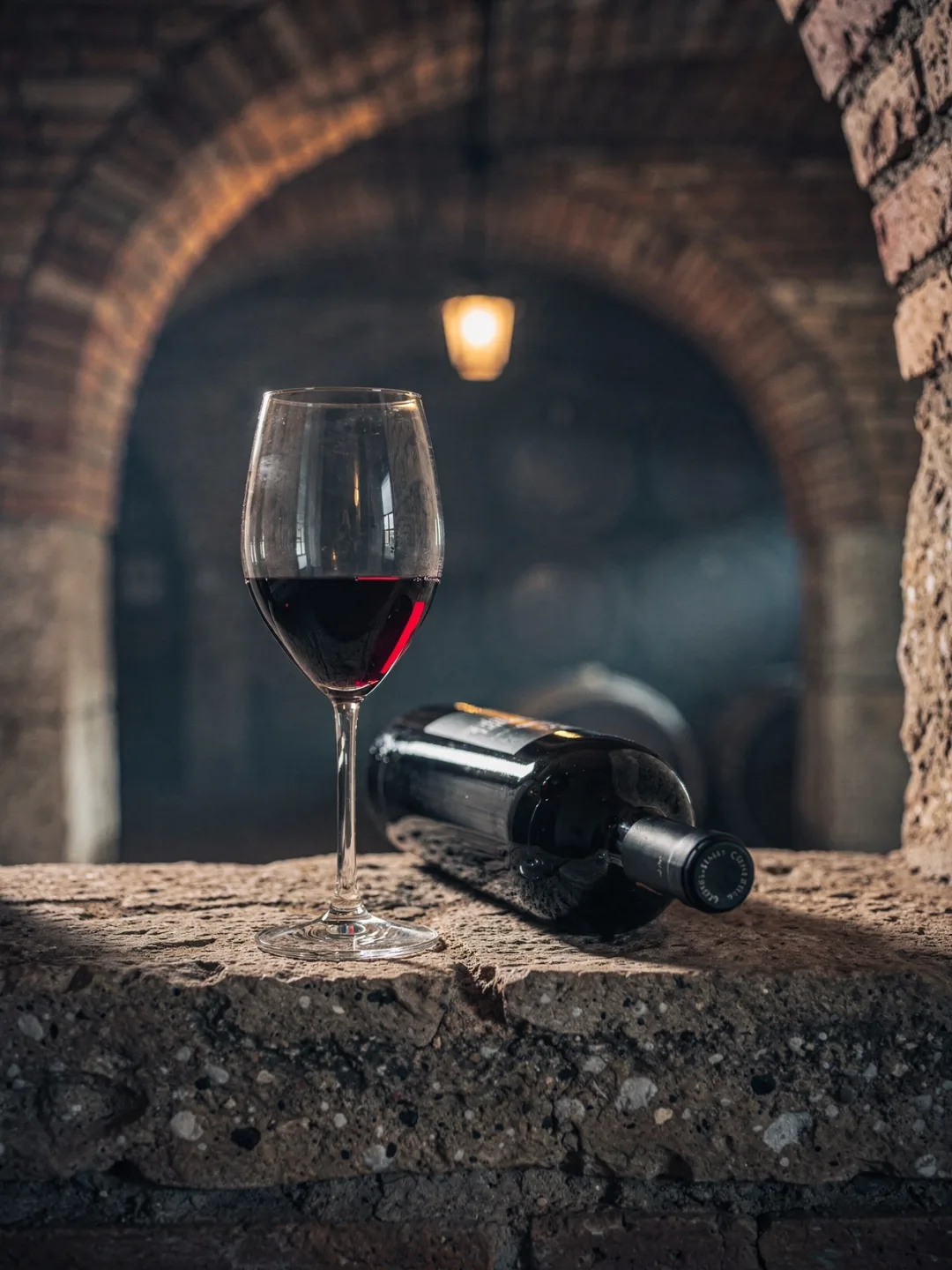
Bordeaux Shape for Tempranillo
Glassware
A glass for Tinto Fino needs, above all, room. The red wines of the Ribera are dark, dense, and rich in tannin—the rough substance from the grape skin that shows up as a dry feeling on the gums. A glass that's too narrow only makes this harshness worse.
The right shape, then, doesn't come from the region itself but from further west. A tall goblet with a large, fairly straight bowl is used, the kind favored for Bordeaux. Its height channels the wine toward the middle of the tongue and the back of the throat. There, away from the sensitive tip, acidity and tannin hit hardest. A Burgundy glass, round and wide open, would do exactly the wrong thing to a young Tinto Fino—it would spread the wine out and put the harshness on display instead of softening it.
When it comes to temperature, the usual mistake lies in the overheated living room, not in the wine. Sixteen to eighteen degrees Celsius is right—noticeably cooler than the twenty-two degrees a modern room often reaches in winter. At room temperature, the alcohol pushes to the forefront, and the tannin feels drier than it should. Twenty minutes in the fridge is usually enough.
A young Roble or a fresh Crianza needs hardly any air. A mature Reserva from Pesquera or Vega Sicilia, on the other hand, benefits noticeably from half an hour in a decanter. The long years in barrel and bottle close a wine up, and only contact with oxygen opens it again. Older vintages also carry sediment that no one wants in the glass, and the decanter holds it back in the vessel, not in the drinking glass.
Never pour beyond the widest point of the bowl—a typical serving is around a hundred fifty milliliters—leaving room above for the aromas of dark fruit and toasted notes to gather before reaching the nose. Fill the glass to the brim, and you're drinking the same wine but smelling considerably less of it.