Tinto Fino & Albillo
Grape Varieties
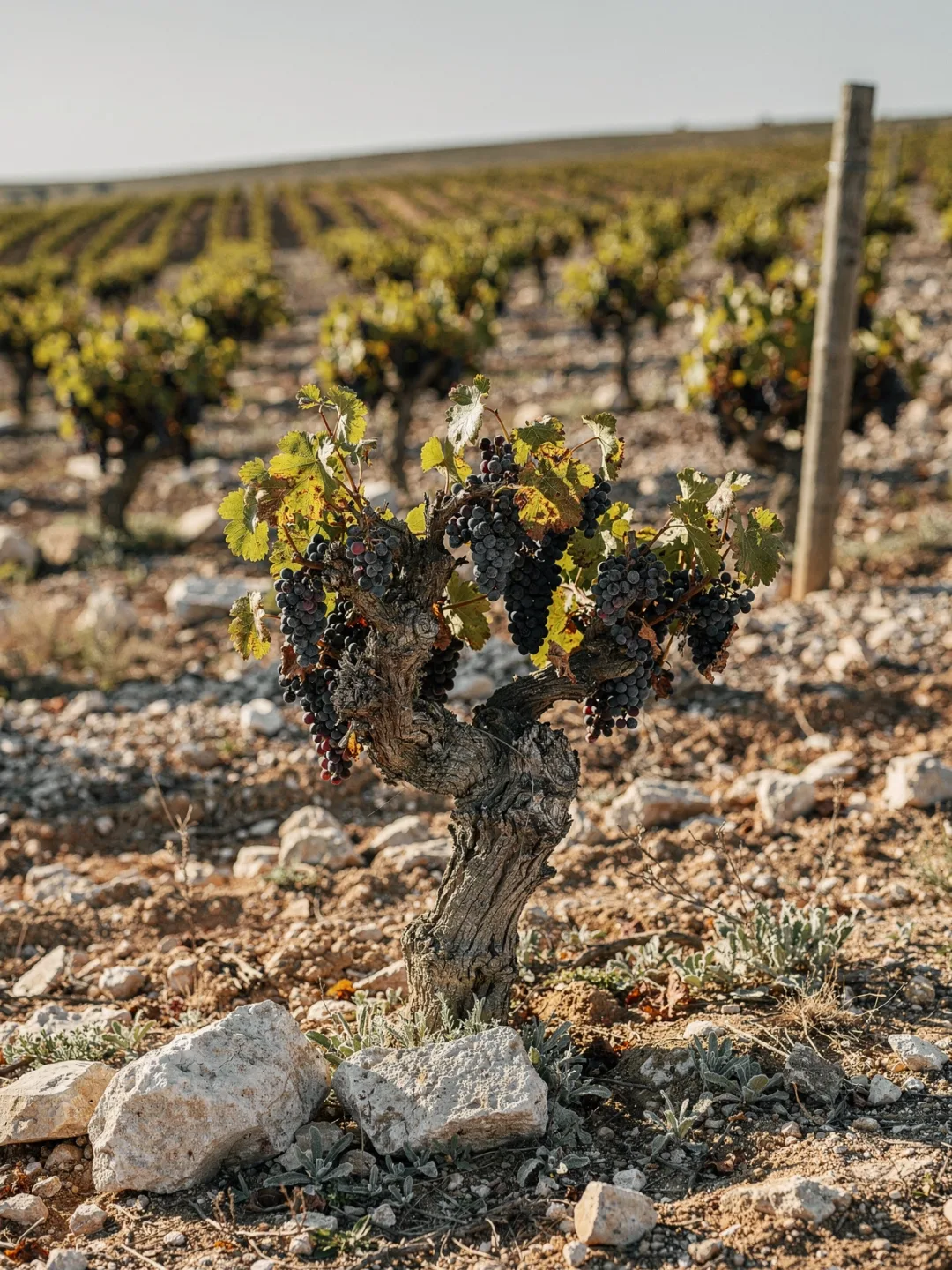
A single grape carries nearly the entire region: Tempranillo, though no one along the Duero calls it by its Rioja name. Here it's called Tinto Fino or Tinta del País, depending on who you ask. The Denominación's rules require every red wine to contain at least seventy-five percent of it. So drinking here means drinking almost always the same grape as in Rioja—just grown in a harsher place.
The difference lies not in the genetics but in the place. On the barren, high-altitude Ribera, Tinto Fino ripens more slowly than in the milder Rioja. The berries stay smaller, the skins thicker, and the wine retains more color and acidity. Winemakers speak of a distinct, regional expression of the variety, shaped by centuries on this exact slope, by this exact river.
Alongside the main variety, the rules permit four others, though only in small proportions. Vega Sicilia already brought Cabernet Sauvignon, Garnacha Tinta, Malbec, and Merlot from Bordeaux in the nineteenth century, originally intended for brandy, not great red wine. Some estates still blend a splash of Cabernet into their Tinto Fino today, noticeable in a darker fruit character and a sterner edge. Almost everywhere, though, the native grape remains dominant.
A white grape also belongs to the family, even if it rarely takes center stage. It's called Albillo Mayor, simply Albillo in the region, and has been at home here since time immemorial. Winemakers once added a few of its grapes to the red must to bring in freshness, long permitted only within tight limits—but since 2023, up to twenty-five percent instead of just five. A standalone white wine made from Albillo Mayor needs at least seventy-five percent of the variety and tastes, unlike its red neighbor, of ripe pear and chamomile.
A remnant from an older time survives in a few parcels planted before July 21, 1982. There, scattered old varieties with almost-forgotten names like Valenciana or Chasselas Doré are still allowed to stand alongside the rest. They're footnotes, not pillars. But they show how many vines once grew side by side here before a single one came to dominate.