Altitude Versus Heat
Climate
Drive through the vineyards of the Ribera in August, and you'll sweat. Take the same road in January, and you'll freeze to the bone. The region's official climate profile lists forty-two degrees Celsius at the height of summer and as low as minus twenty in winter as recorded extremes, with almost nothing mild in between. Experts call this a continental Mediterranean climate with an Atlantic influence—a compromise among several weather systems, none of which rules alone.
The main reason is altitude. The vineyards sit between roughly seven hundred fifty meters in the valley floors and a good thousand meters on the hilltops, right in the middle of the Castilian meseta, far from the sea. For Spain, that's high. This elevation cools even a hot summer day the moment the sun sets.
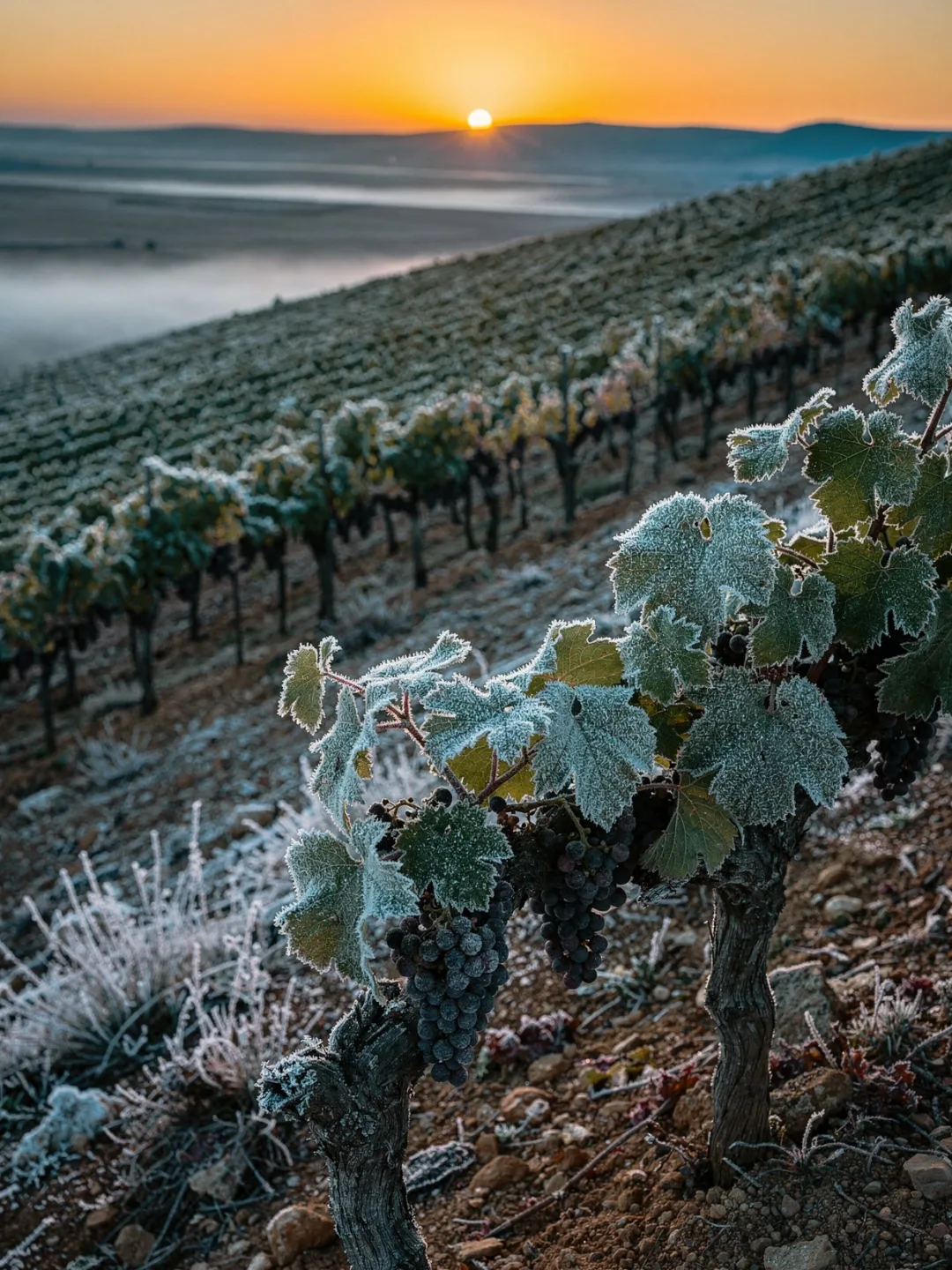
It's precisely this nightly plunge that makes the wine. During ripening, daytime temperatures climb to summer highs, while nights drop by fifteen to twenty degrees, and the vine reacts to both. By day it builds sugar and color; by night the cold locks in the acidity that unchecked heat would long since have burned off. Without this swing, Tinto Fino would taste flat.
Frost, though, remains a threat over an alarmingly long stretch: the risk runs from September 17 to June 6, nearly nine months of the year. Rainfall, meanwhile, is scarce—around four hundred millimeters annually on average, with Aranda de Duero's long-term mean at roughly four hundred thirty-five millimeters. Little about this climate is reliable except its harshness.
Rainfall totals alone say little, then. What matters is when the rain falls, and mostly it falls in spring and autumn, not summer, when the vines need water most. What the sky doesn't provide, the soil has to store—and release again during the dry weeks.