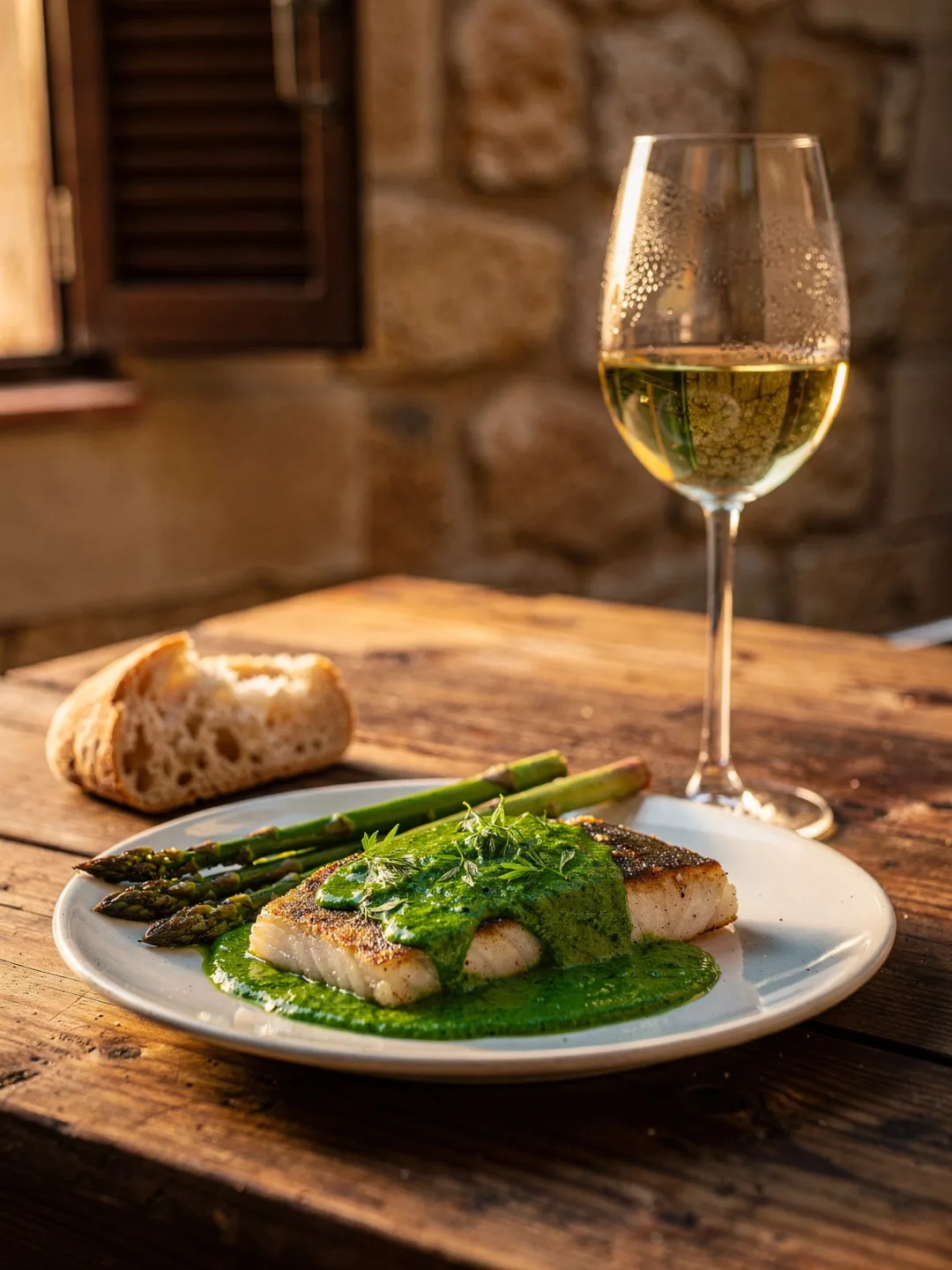
Espárragos and Fish
Wine & Food
Rueda lies far inland, more than two hundred kilometers from any coastline. Yet fish remains one of the most classic partners for its white wine. The reason is acidity. It acts on grilled or pan-fried fish much like a splash of lemon that you'd otherwise have to add separately, and a young Verdejo already delivers exactly that in the glass.
It pairs especially well with dishes that are themselves cooked with a salty, savory edge: grilled sardines, clams in garlic sauce, mussels marinera-style, or hake in green parsley sauce. The acidity cuts through the oil without masking the delicate flavor of the fish. The wine's slightly bitter finish then acts like a second cleanup in the mouth.
A second, unusual rule applies to espárragos trigueros, the wild green asparagus from around Medina del Campo. They taste faintly bitter and grassy themselves. Rather than clashing, wine and vegetable reinforce each other. This is a rare case where two bitter flavors together feel rounder than either does alone.
Dorado and Pálido work in a completely different way. These oxidatively or biologically aged Vinos Generosos have alcohol, richness, and toasty notes that a dry young wine lacks. That's why they hold up effortlessly against Iberian ham or aged sheep's cheese, for much the same reason a Spanish Fino pairs with Jamón: salt needs a counterweight, not a delicate play of acidity.
If you only want to remember one sentence, make it this one. Young Verdejo calls for sea and green, while Dorado and Pálido call for fat and salt. Swap the two poles, pairing a delicate fish with a Dorado or ham with a delicate young Verdejo, and neither pairing will bring you joy.