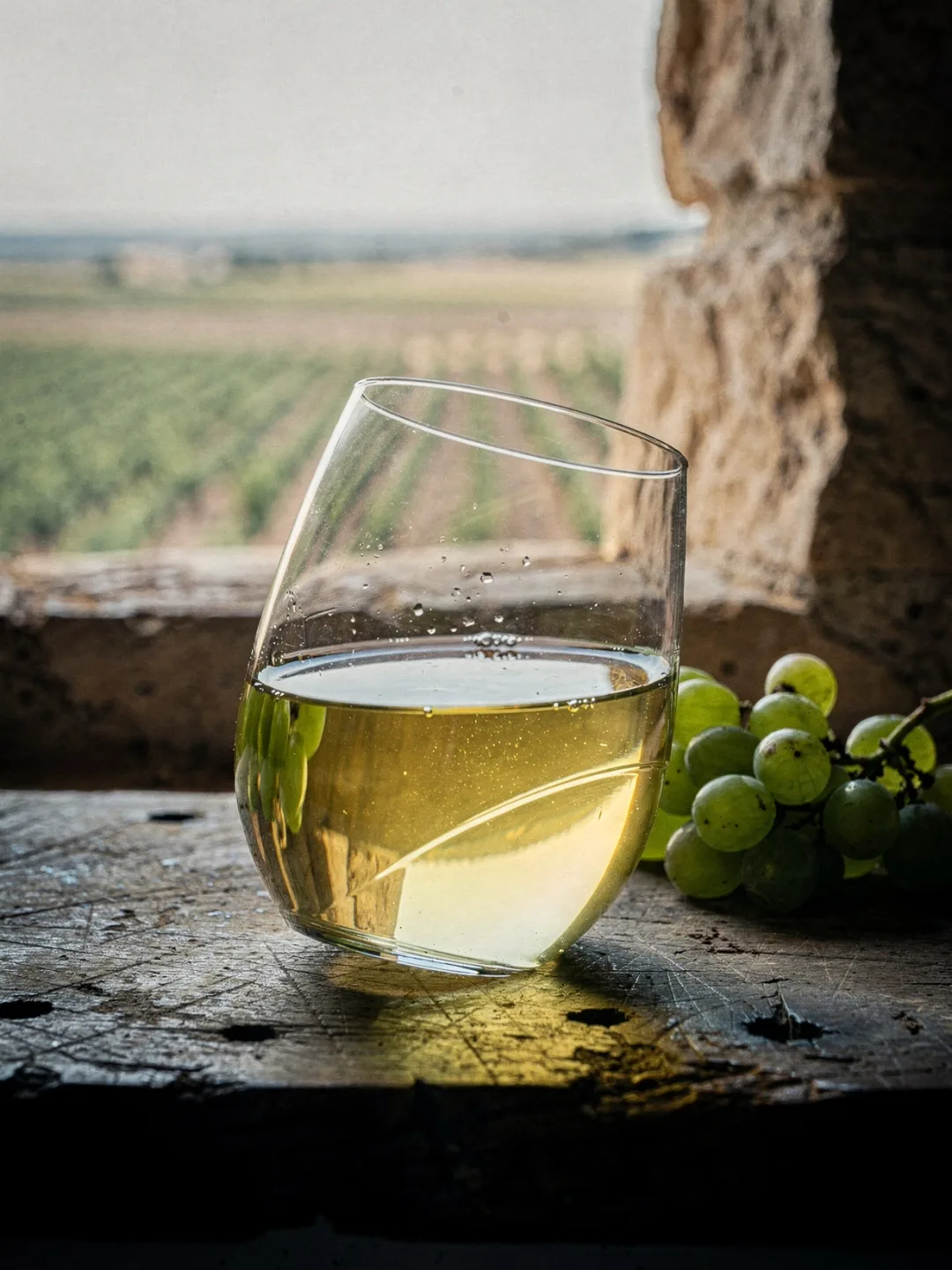
On a Verdejo
Tasting
Hold a glass of Verdejo against something bright and look at the color. Straw yellow, with a greenish shimmer at the rim: that's how a young wine looks, almost like unripe lime, before a few years in barrel slowly shift it toward gold. Being pale has nothing to do with maturity. It's simply how this grape looks, regardless of how good the vintage was.
Then smell twice, with a clear pause in between. In the still glass, the light molecules rise first, with Verdejo mostly citrus and white peach. Only after swirling does the fennel emerge. Freshly mown grass follows, sometimes a hint of pineapple. Once you've consciously smelled this combination of fennel and citrus, you'll recognize Verdejo in any glass afterward, no matter which estate the bottle comes from.
In the mouth, a surprise follows. Many aren't prepared for it. A slightly bitter finish, similar to grapefruit pith, wipes the palate clean rather than disturbing it. This isn't a flaw in the wine but a hallmark of the variety, and it makes Verdejo one of the few white wines where bitterness is regarded as a mark of quality rather than a warning sign.
Also pay attention to the weight on the tongue. A wine aged purely in stainless steel feels lean and linear. A Gran Vino de Rueda from thirty-year-old vines, by contrast, feels noticeably denser, with a markedly longer finish. That's the difference between a vine bred for quantity and one that has had to struggle for decades just to find water.
Finally, count how long the flavor lingers after swallowing. Two seconds is short. Fifteen is already a lot for a young white wine. This length can hardly be manufactured in the cellar; it comes almost exclusively from old vines and low yields. That's exactly why it comes at the end of every serious tasting, right after the question of whether the wine was even fresh enough to reach it.