Bacalao & Zamorano
Wine & Food
The cuisine around Toro grew on the same austere sandy soil as the wine, and you can taste it. Fish from the local river was rarely abundant. Instead, there was plenty of pork, game, and dried fish from the coast. Garlic, paprika, and olive oil carry almost every dish, and a robust, tannic red wine suits that far better than a delicate one.
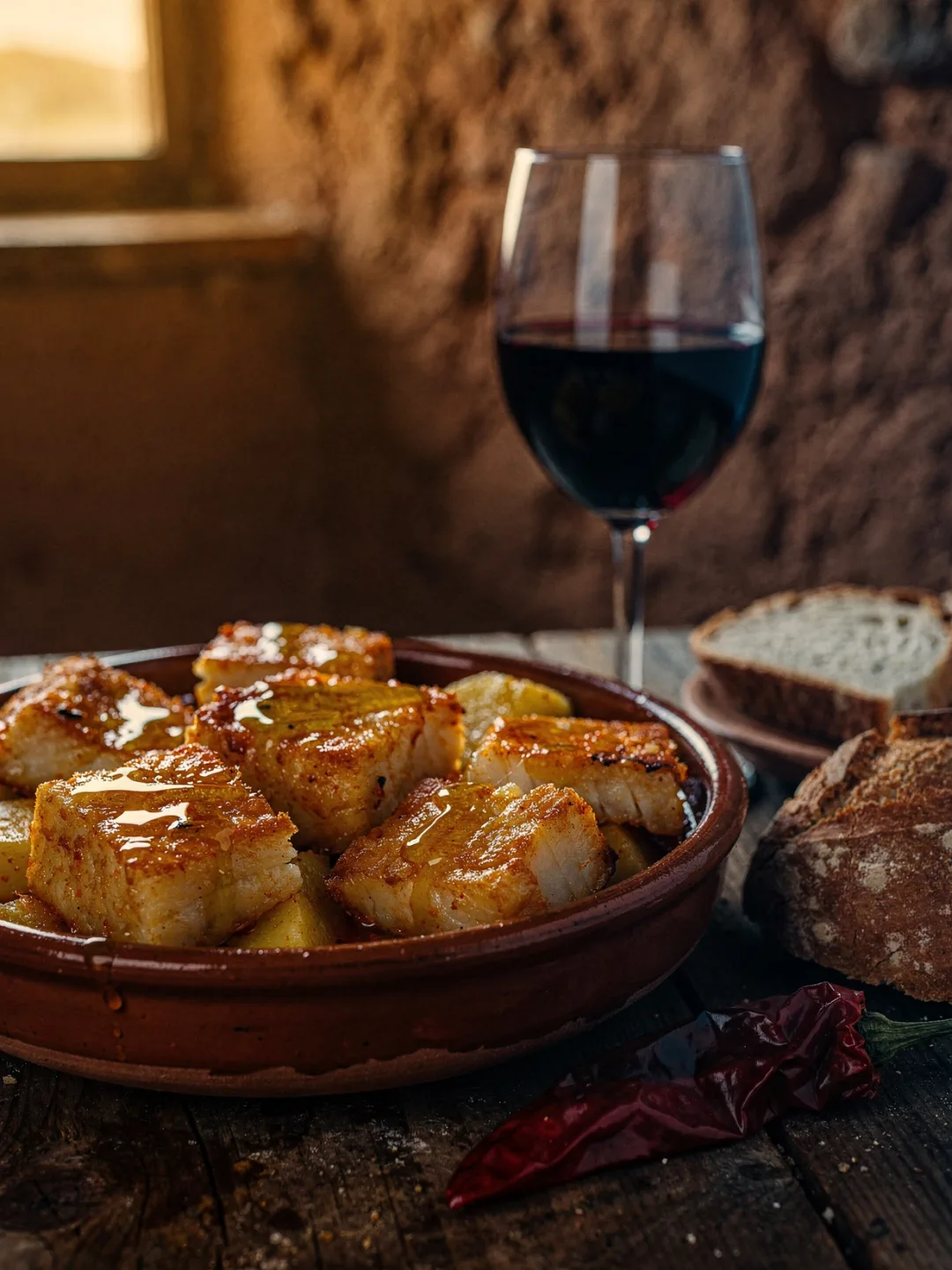
Nothing shows this more clearly than bacalao a la tranca: soaked salt cod fried in oil with plenty of garlic and paprika, served with potatoes—a dish that appears on almost every table around Toro and Sanabria during Holy Week. That a fish dish can hold its own next to a robust Tinta de Toro only surprises those thinking of delicate white fish. Garlic, heat, and olive oil give the dish so much weight that the subtle fish note fades into the background. That's exactly where it meets the wine on equal terms.
A second dish brings the pairing even more directly to the plate: jabalí, wild boar, braised in the very red wine that's later poured alongside it. The acidity in the wine breaks down the firm meat during braising. In the glass, the same tannin then meets the robust game flavor at eye level. A lighter wine would simply disappear next to this dish.
With cheese, the rule shifts. Queso Zamorano, an aged sheep's milk cheese from the province with its own protected designation of origin, brings salt and fat to the table, and both soften the firm tannin of Tinta de Toro noticeably. A young wine often seems too raw beside it. An aged Reserva shows its calmer, rounder side here.
Not every dish can handle the power of a Reserva. Arroz a la zamorana, a hearty stew of rice and pork, pairs better with a young, uncomplicated wine. The dish itself already brings plenty of fat and seasoning. More power in the glass would only pile on top.