Dark, Dense, Powerful
Tasting
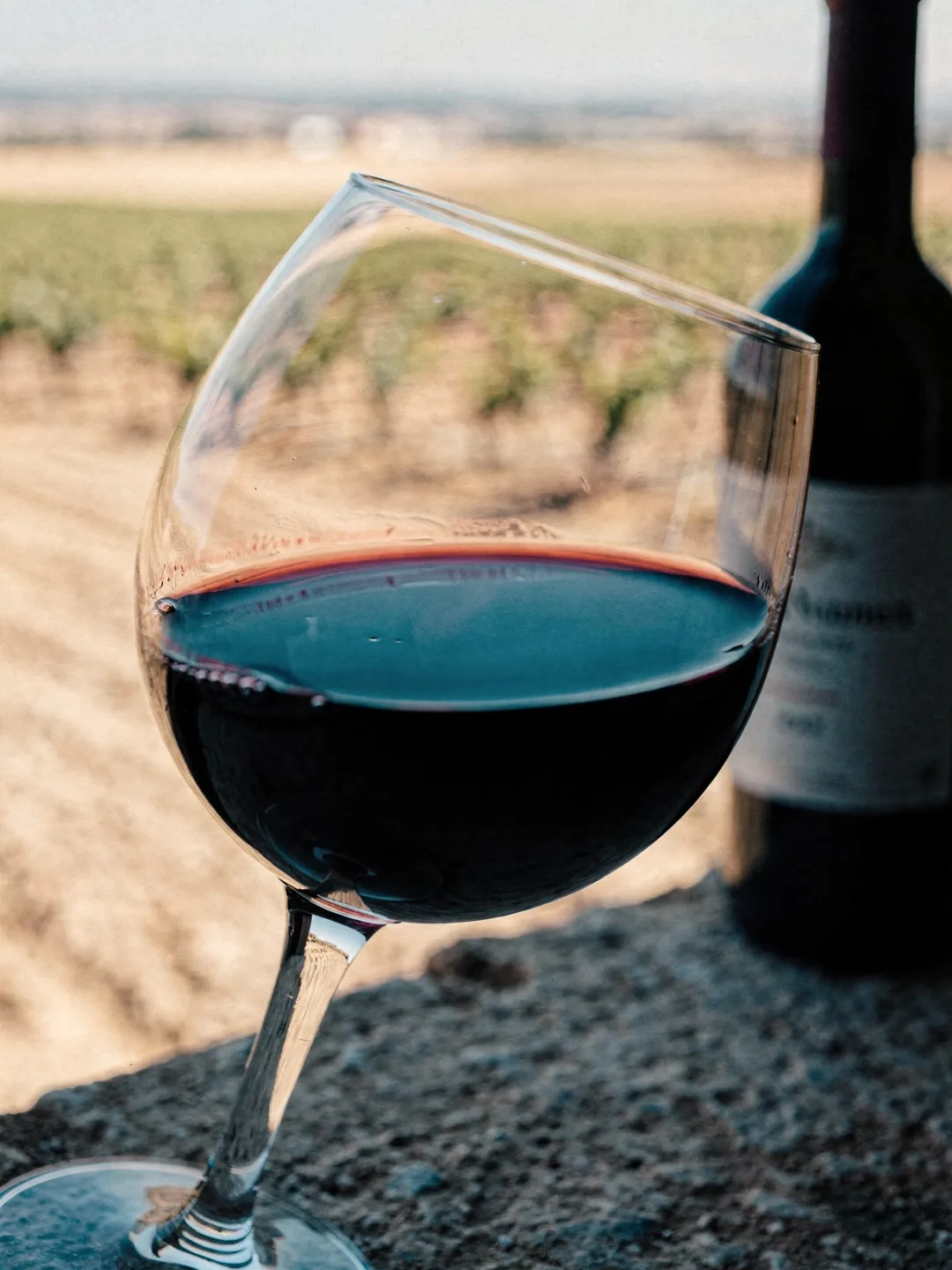
Hold a glass of Tinta de Toro at an angle to the light, ideally over something white, and the region's power shows itself before you've even taken a sip. The wine is nearly opaque, cherry-red to violet in young vintages, and even after ten years in the cellar the core stays dense, while only the rim shifts toward brick red.
On the nose, dark, ripe fruit comes first: blackberry, black cherry, sometimes ripe plum. After swirling, if the wine has had time in oak, a second layer follows of toasted bread and vanilla, and in older Reserva wines a touch of licorice or something balsamic often appears as well. Once you've consciously identified this scent, you'll find it again in almost every serious Toro afterward.
On the palate lies the real distinction. The region's governing body describes its own wines this way in comparison to neighboring regions: more structured and richer in tannin and polyphenols, yet noticeably less acidic and with a higher pH. That sounds like a contradiction, but it's simple chemistry: Tinta de Toro stores a lot of potassium, and potassium binds acidity. A Tempranillo from Toro therefore tastes rounder and softer on the palate than the same grape from Rioja or Ribera del Duero. Its tannin, meanwhile, grips at least as firmly.
The alcohol plays its part too. Fourteen to sixteen percent by volume is typical, and on the finish this shows up as a slight sweetness and warmth, almost like a sip of dark Port, only dry. This warmth is no flaw. It's the very reason the wine once survived weeks at sea.
In the end, what counts is length. How long does the taste linger after you swallow? With a simple Roble, it's a few seconds; with an aged wine from Numanthia or Pintia, often over twenty. This length comes from the vineyard, not the cellar. No ingredient can replace it.