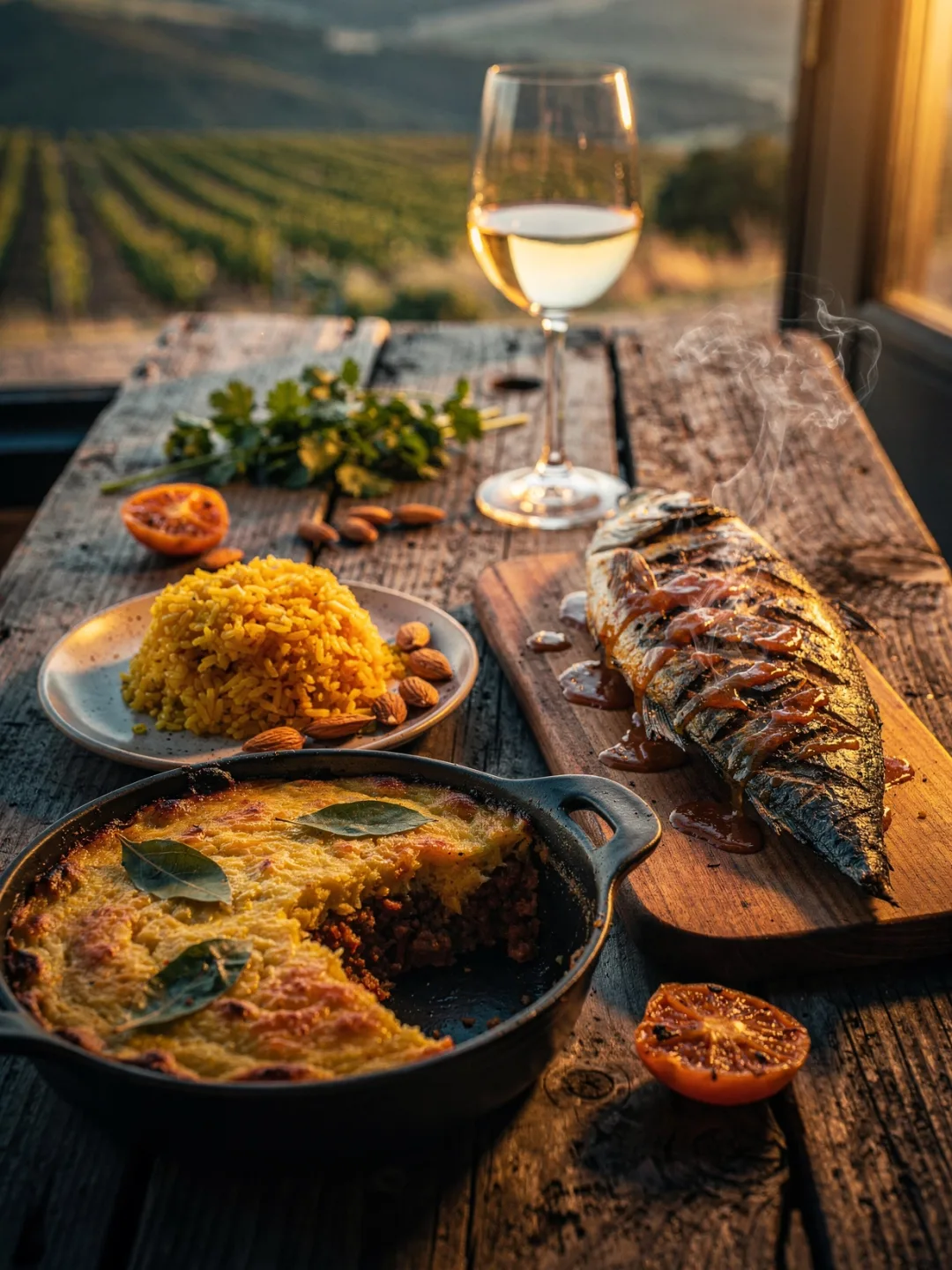
Snoek and Bobotie
Wine & Food
From the 17th century onward, the Dutch East India Company brought enslaved people to the Cape. Many came from what is now Indonesia, along with Madagascar and India. Their culinary traditions gave rise to what is known today as Cape Malay cuisine: spicy, sweet-and-hot, and rich with spices like turmeric, coriander, and cinnamon. This is the cuisine most often paired with local wines in Constantia.
Bobotie, often called South Africa's national dish, is spiced ground meat sweetened with apricots or raisins and baked under a creamy egg custard topping. The dish's subtle sweetness and the heat of the curry spices call for a wine with plenty of acidity to balance both elements without tasting sweet itself. A young Sauvignon Blanc from Constantia fills this role almost perfectly, as if it were made for it.
Right on the coast, less than twenty kilometers from the vineyards, freshly caught snoek goes straight onto the grill. It's brushed with apricot jam and smoked over charcoal. The smoky, oily fish meets the same bright acidity that worked so well with bobotie, and the green, herbaceous notes of the Sauvignon Blanc pair surprisingly well with the smoke.
Vin de Constance, by contrast, doesn't need a main course at all—at most a dessert that won't steal its thunder. A wedge of ripe, robust blue cheese is a classic match; the salt really brings out the wine's sweetness. Malva pudding works just as well—a warm cake from Cape cuisine soaked in apricot jam, its caramel notes echoing the honey in the glass.
There's really only one rule to remember, and it holds true in Constantia as much as anywhere else: the wine in the glass must be sweeter than what's on the plate. Otherwise, even a Vin de Constance can suddenly taste thin and sour next to a dessert that's too sweet—even though it would never taste that way on its own.