Sauvignon Meets Muscat
Tasting
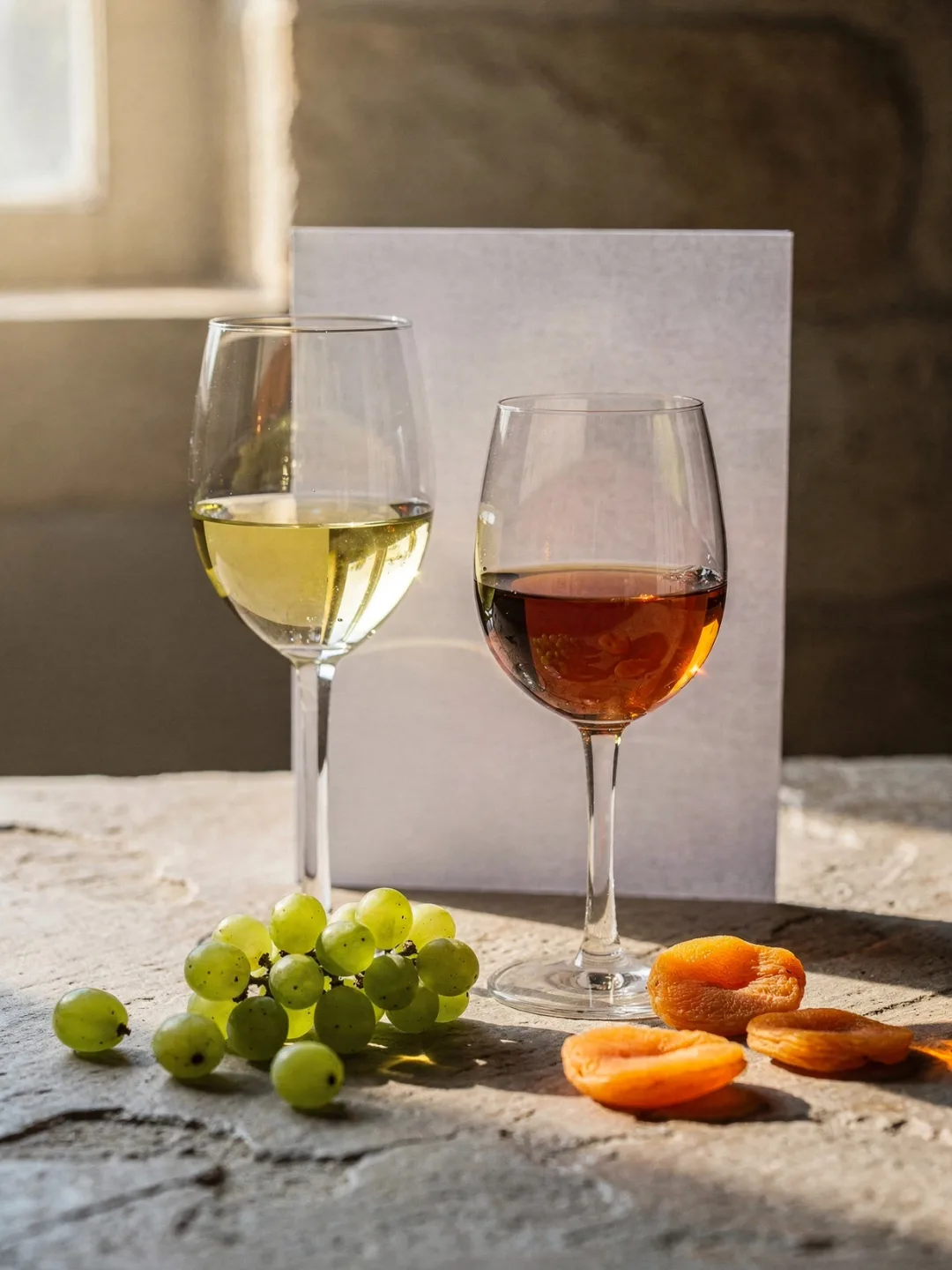
Picture two glasses side by side. One is pale green-yellow and clear as water, the other a deep amber, almost like liquid honey. Both come from Constantia, and the color alone reveals the fundamental difference — one dry and fresh, the other intense and sweet.
The Sauvignon Blanc smells green at first: blackcurrant leaves, sometimes a hint of gooseberry. Alongside that comes a stony, almost saline note, which many tasters attribute to the clay-rich granite soil. On the palate, taut acidity cuts across the tongue, and the finish stays short and crisp rather than long and heavy. This is not a wine that takes its time.
Vin de Constance, on the other hand, demands patience. On the nose comes dried apricot, orange marmalade, and a hint of orange blossom, often joined by honey and a subtly spicy note from the oak barrel. Despite all this sweetness, the wine never turns cloying, because a robust acidity runs beneath it, the very same acidity found in the dry wine from the same grape. It keeps the concentration from overwhelming the palate.
It's precisely in this contrast between bone-dry and richly sweet that the breadth of a single small valley reveals itself. Those who know only the Sauvignon Blanc underestimate just how concentrated Muscat de Frontignan can become when left hanging on the vine for weeks. Those who know only the sweet wine, in turn, overlook how cool and taut the dry white wines taste alongside it.
Count the seconds after you swallow. With Sauvignon Blanc, it's rarely more than five or six seconds—fresh, then gone. Vin de Constance, on the other hand, can leave a finish of apricot and honey lingering in the mouth for a full minute. That shows just how concentrated grape juice dried on the vine can become.