From the Cape Colony to Napoleon
Region & History
On 6 April 1652, Jan van Riebeeck dropped anchor with three ships of the Dutch East India Company in the bay at the foot of Table Mountain. His task was simply to set up a supply station for passing trade vessels: fresh water, vegetables, meat. As early as 1655, he had the first vines planted, brought from France, the Rhineland, and Spain. On 2 February 1659, his diary recorded a single, almost reverent sentence — for the first time, wine had been pressed from grapes grown at the Cape. But it would be another quarter century before the story reached Constantia.
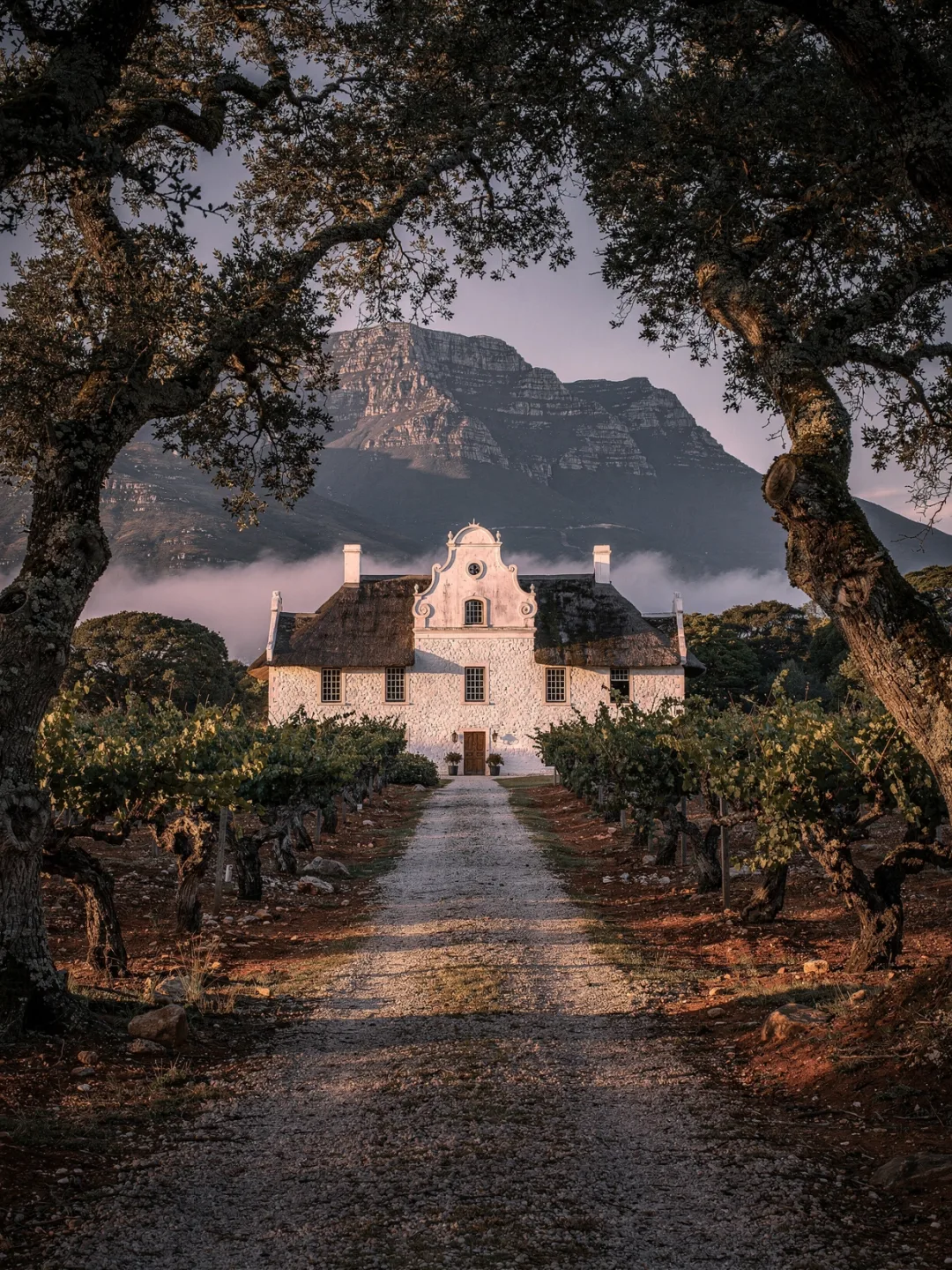
It wasn't until 1685 that Governor Simon van der Stel got his turn. He had a piece of land allocated to him at the foot of the Constantiaberg, a good seven hundred and fifty hectares southeast of the young Cape Town, and named it Constantia, after the constancy he wished for the young colony. Seven years later, his manor house stood complete, a whitewashed Cape Dutch homestead with a curved gable. Today it bears the name Groot Constantia, is recognized as a national monument, and is considered South Africa's oldest continuously producing wine farm.
Van der Stel died in 1712, and his heirs divided up the estate. One property became three: Groot Constantia remained the core, while Klein Constantia and Bergvliet, now known as Buitenverwachting, emerged alongside it. On all three, the same sweet wine made from Muscat grapes matured, soon traveling through Europe as Vin de Constance. It lay in barrels among spices and porcelain, aboard the very same VOC ships that had once been sent only to fetch water. No other wine from a European colony achieved a comparable reputation at the time.
At European courts, Vin de Constance became almost obligatory. Napoleon Bonaparte had more than a thousand liters shipped to him annually on St. Helena, where he lived in exile until his death in 1821. Jane Austen has her character Mrs. Jennings recommend the wine for a broken heart in Sense and Sensibility, and it was also drunk by Frederick the Great, George IV of England, and later Otto von Bismarck. For a wine estate on the furthest edge of the then-known world, this was a reputation that few regions today could dream of matching.
Then came phylloxera, and with it, an ending. Towards the end of the nineteenth century, the old Muscat vineyards died, and with them the wine that half of Europe had known. For nearly a hundred years, Vin de Constance remained little more than a footnote in wine books, until Klein Constantia began, in the 1980s, to reconstruct the recipe from historical records. The first new vintage went on sale in 1986, once again made purely from Muscat de Frontignan. Since 1973, the state-run Wine of Origin system has overseen such designations of origin, and today Constantia holds the status of its own ward within the Cape Town district.