Sauvignon & Muscat
Grape Varieties
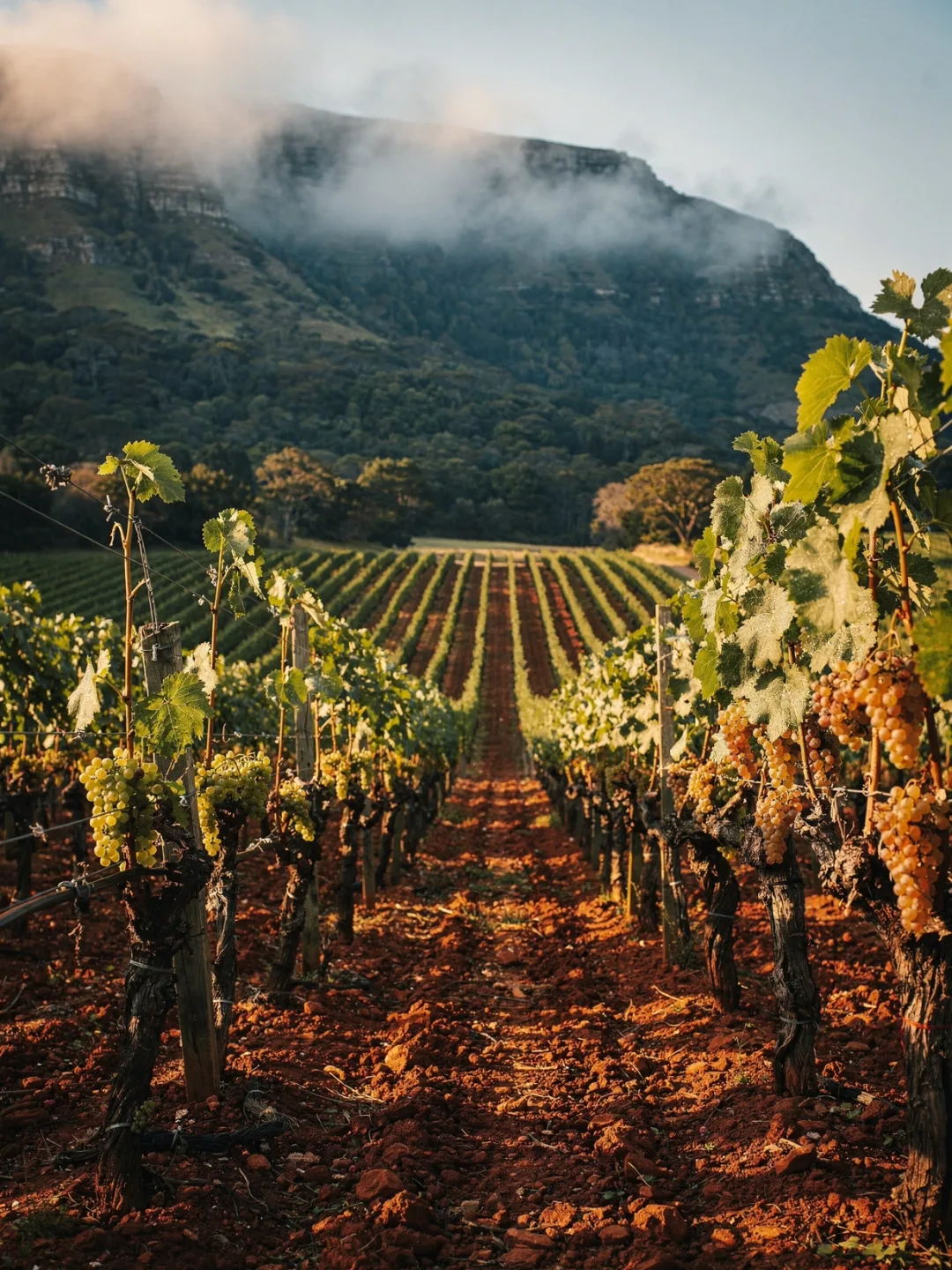
Drive through the valley today and one grape dominates the view: Sauvignon Blanc. It covers a good two out of every five hectares under vine in Constantia, making it by far the most widely planted variety in the ward. That wasn't always the case.
For two hundred years, the most important white grape at the Cape was known simply as Groendruif, the green grape — meaning Semillon. Around 1820, it accounted for over ninety percent of all vineyard area in the colony, including Constantia, and hardly anyone knew its French name. Today only a small but respected remnant of that dominance survives. Nearly forgotten, but not quite. A few estates, such as Steenberg, still vinify it as a single varietal or blend it with Sauvignon Blanc into dense, Bordeaux-like white wines.
For the sweet Vin de Constance, however, only one variety counts: Muscat de Frontignan, also known as Muskateller or Muscat Blanc à Petits Grains. Its berries carry thicker skins than almost any other grape variety, and that's precisely what protects them from rot as they shrivel into raisins on the vine under the sun. It's as simple as that. Without this resilience, the wine wouldn't exist in its current form.
Higher up the slope, where the coolness is even more pronounced, red Bordeaux varieties grow: Cabernet Sauvignon, Merlot, Cabernet Franc, Malbec, and Petit Verdot. Constantia Glen blends all five into its flagship wine, simply named Five. Groot Constantia, too, has long produced a red blend alongside its historic sweet wine. Between the Sauvignon Blanc down in the valley and these late-ripening reds up the slope, there are often only a few hundred meters of elevation, yet the difference in the glass is enormous nonetheless.
A 2021 first shows just how seriously the valley takes this. The Constantia Sauvignon Blanc Route was the world's first wine route dedicated to a single grape variety. Eight estates invited visitors to taste the same grape grown on the same narrow strip of land in wildly different styles, dry, oak-aged, sometimes with a touch of residual sweetness. Few places allow such a direct comparison of the influence of site and winemaker's hand. A comparison as precise as in a laboratory.