Wax in the Glass
Tasting
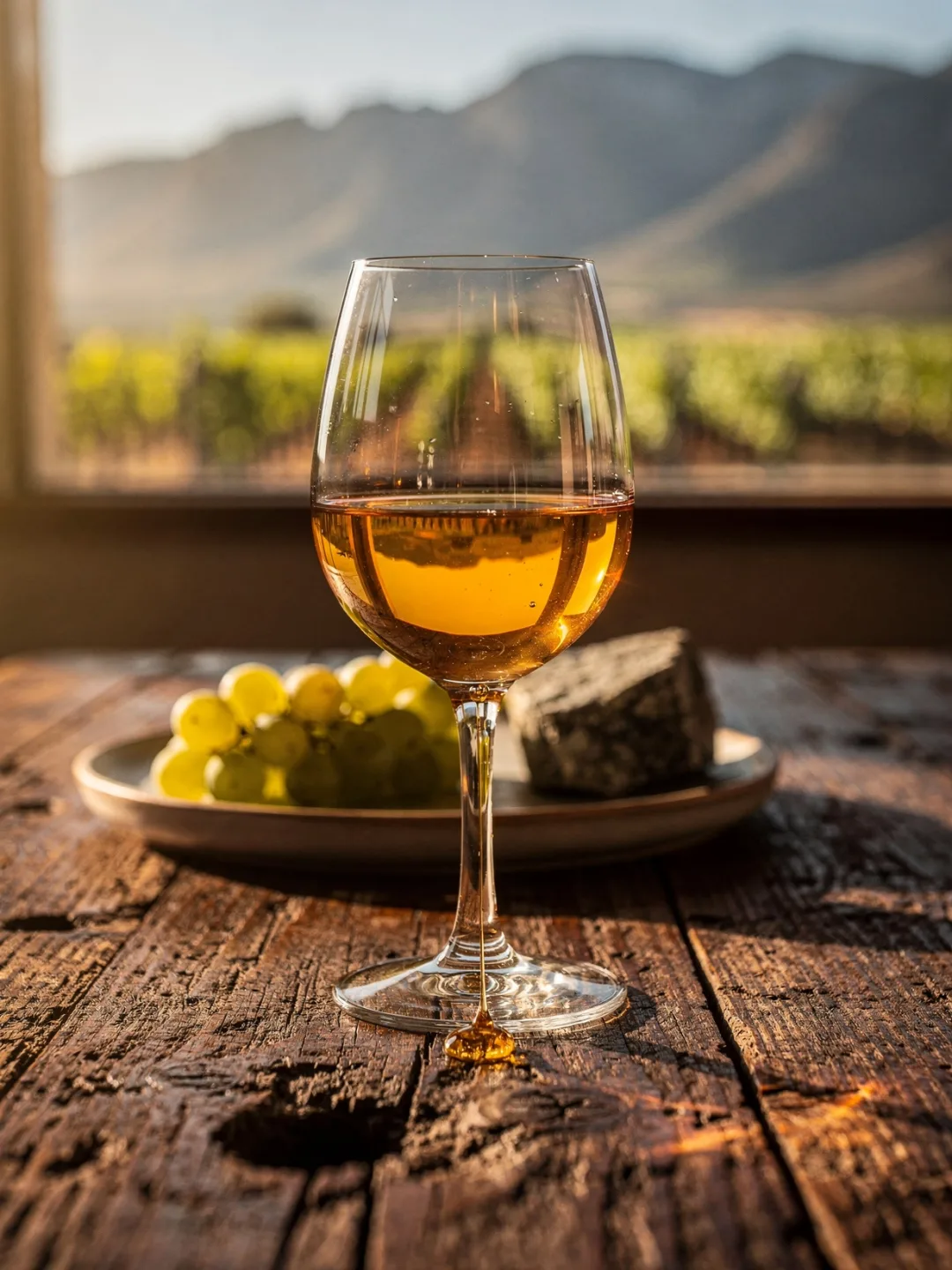
An old Franschhoek Semillon first reveals its age through color. Young Semillons are pale yellow, but after five to ten years in the cellar, the color drifts toward gold, sometimes with a tiny coppery sheen from the Semillon Gris berries in the blend. That's not a flaw. It's the signature of the old vines. An Eikehof Semillon from the early 2000s shows this especially clearly.
Next, smell the glass while it's still. Beeswax often comes first, then dried quince, and with a little air, a hint of lanolin, the fat from unwashed sheep's wool, as tasters typically describe this note. These three notes exactly, wax, quince, lanolin, are considered by connoisseurs to be the fingerprint of old Cape Semillon.
On the palate, weight is the first thing you notice, broader and oilier than most white wines, almost like diluted oil on the tongue. Then comes the acidity, which in good examples carries the whole wine and keeps it from turning heavy.
A Cap Classique's color also betrays its age, moving from pale straw yellow to deeper gold. With Cap Classique, the examination works differently. Tilt the glass slightly and watch the bead from below. Fine, even strings of bubbles rising steadily from a single point at the bottom of the glass point to extended lees aging. Coarse, irregular bubbles that vanish quickly reveal a young, barely aged wine, regardless of what the label might promise.
On the palate, look for brioche and toasted bread, along with a trace of ripe apple. If both are completely absent, the bottle likely spent little more than the legally required twelve months on the lees.