Braai and Goat Cheese
Wine & Food
When the grapes come in during February, Paarl smells of smoke. Many estates treat their harvest workers to a braai, the South African barbecue. Boerewors, a spiced grilling sausage of beef and pork, and sosaties, marinated meat skewers, come straight off the fire, and rarely does anyone drink anything delicate alongside them.
With smoky meat, a robust Pinotage suits better than a light white wine. Its own smoky note picks up the char in the food instead of fading beside it, and its tannin cuts through the fat of the sausage, much like a sip of strong coffee after a heavy course. A wine that's too subtle simply gets lost next to the fire.
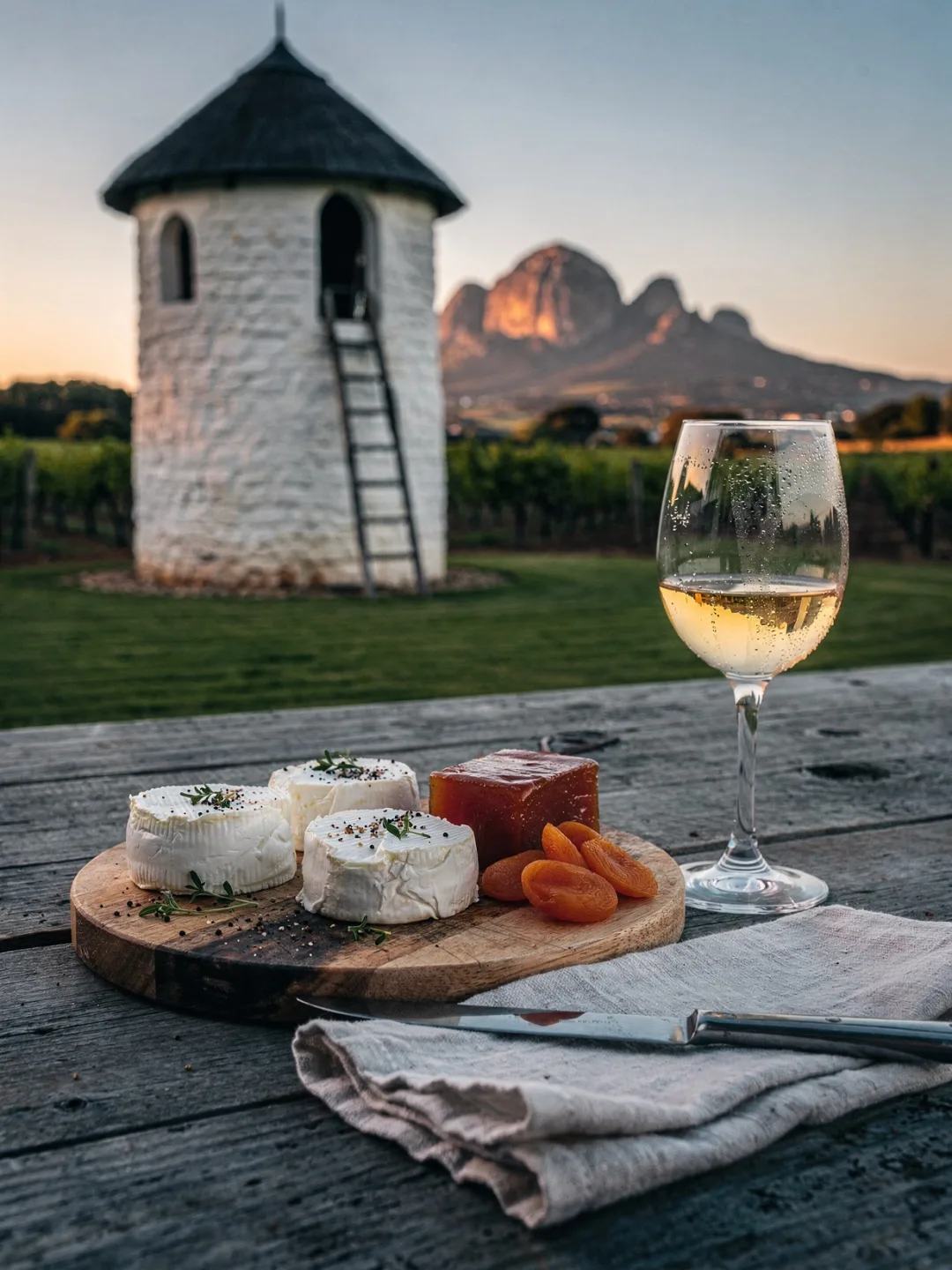
At the Fairview farm at the foot of the Paarlberg, goats stand in a two-story tower. Their milk becomes goat cheese, which calls for an entirely different wine pairing. With young, creamy goat cheese, a cool, unwooded Chenin Blanc works better than any red. Its acidity cuts through the cheese's fat, much like a squeeze of lemon on fish. Tannin, by contrast, just tastes bitter alongside goat cheese.
For dessert, it's often the same grapes that go into the glass alongside the food, freshly pressed or not. Dried apricots and raisins from the dried-fruit factories around Paarl make an appearance, paired with a glass of Hanepoot or Jerepigo. Sweet with sweet sounds wrong, but here it's exactly right, since a dry wine next to real sweetness instantly tastes thin and sour. At harvest time, this is often accompanied by mosbolletjies, a bread leavened with fresh grape must that only tastes right as long as the cellar next door still smells of fermenting must. That's how the circle closes.