On a Pinotage
Tasting
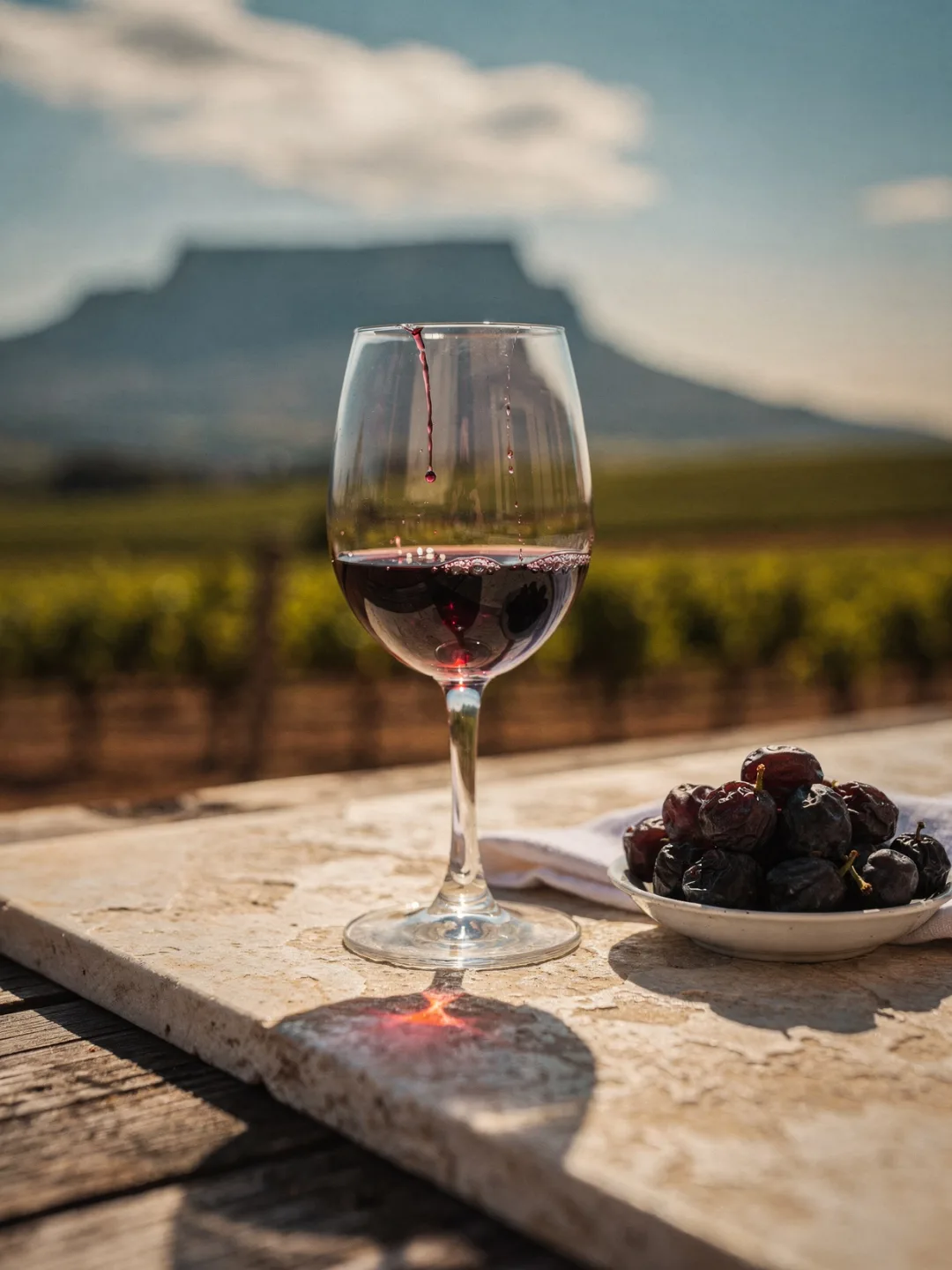
Tilt a glass of Pinotage from Paarl against a sheet of white paper. At the rim, you'll almost always see a deep purple, darker than in most other South African reds. The reason lies in the variety itself, which naturally carries a great deal of pigment in its skin. A young vintage can look almost opaque at the center of the glass.
Smell first without swirling the glass, then again after swirling. In the still glass, banana or nail polish remover often rises up, a warning sign that lingers in poorly made Pinotage. In good Pinotage, this recedes after swirling, giving way to ripe plum, smoke, and a touch of licorice. Anyone who's experienced this shift firsthand understands why the variety is both loved and feared in equal measure.
On the palate, warmth is the first thing you notice. Wines from the granite slopes of Simonsberg-Paarl often reach fourteen to fifteen percent alcohol, and this warmth carries fruit and tannin forward instead of masking them. The tannin itself is grippy but rarely hard, since the variety's skins contain less bitter tannin than, say, Cabernet Sauvignon. This is exactly what makes Pinotage drinkable even young, while a Bordeaux blend from the same site often still needs years.
In the end, length is what counts. In a simple everyday wine, the flavor vanishes after a few seconds. In a carefully made Pinotage from old vines, it holds for twenty seconds or longer, with smoke lingering well after the swallow. Set a glass of Hanepoot beside it. Where the Pinotage finishes warm and dry, the Hanepoot stays sweet and syrupy on the tongue, a contrast that shows just how differently two wines from the same district can taste.