Bobotie & Boerewors
Wine & Food
The cuisine around Stellenbosch carries two influences at once: that of the Dutch settlers and that of the enslaved people brought to the Cape from Java, Sumatra, and Bengal in the seventeenth century. They brought their spices with them. From this mix emerged Cape Malay cuisine, sweet, savory, and mildly spiced all at once.
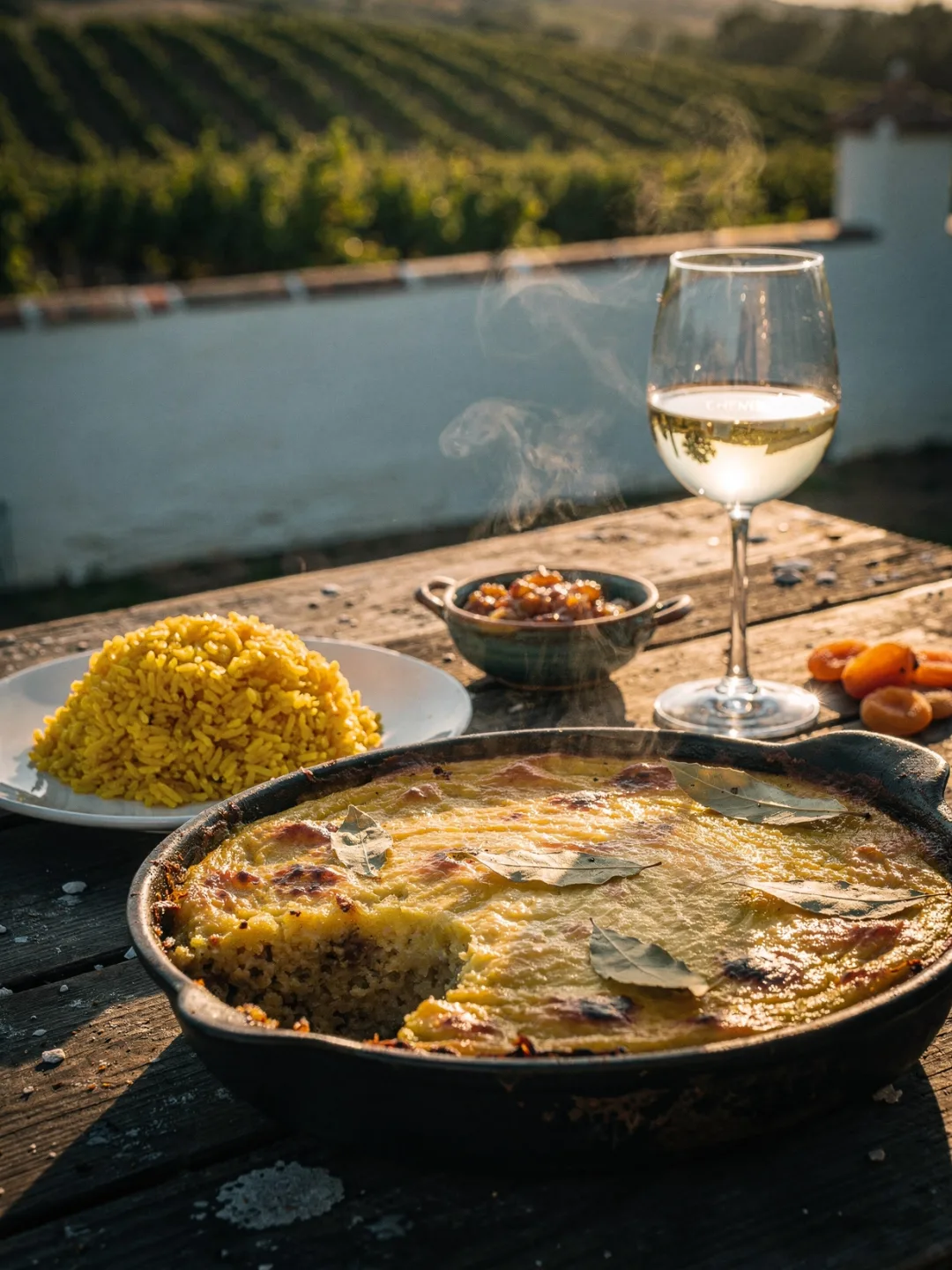
Its best-known dish is bobotie: spiced ground meat, usually lamb or beef, mixed with raisins, curry, and apricot jam, baked in the oven under a layer of egg custard, and served with yellow rice. The combination of sweetness and curry spice needs a wine with some backbone of its own, or it ends up thin and mute next to the dish.
A dry Chenin Blanc with a touch of residual sweetness, or a fruit-forward Pinotage, fills this gap well. Both bring enough fruit of their own to stand up to curry and apricot without smothering the spice.
The district's connection runs even deeper with the braai, South Africa's tradition of grilling over an open wood fire. Boerewors, a coarsely spiced sausage of beef and pork, is practically mandatory. Smoke from the fire meets smoke from the barrique. That's why many here consider Pinotage, quite naturally, the ultimate braai wine, with enough tannin to stand up to the fat of the sausage.
Biltong, the air-dried, heavily spiced dried meat found at every gas station in Stellenbosch, calls for little tannin, though. A dry Sauvignon Blanc from the cooler sites near False Bay cuts through the fat without fighting the spice.