Banana & Smoke
Tasting
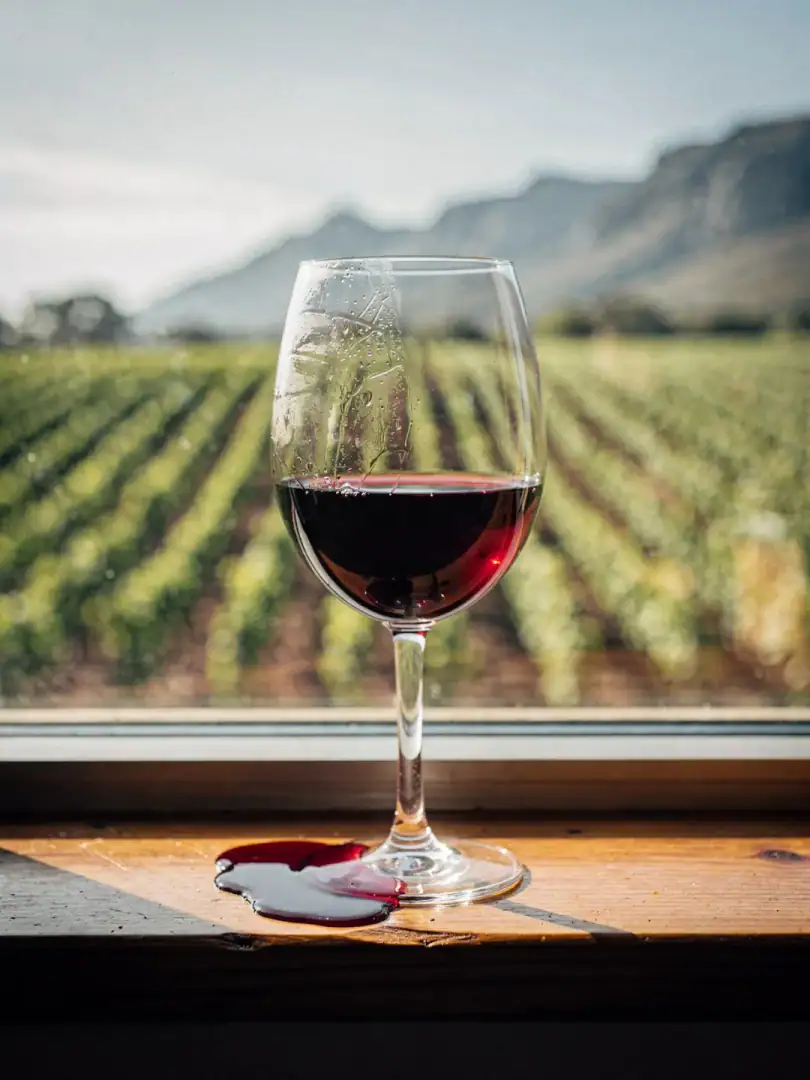
Hold a glass of Pinotage at an angle against something bright. The color ranges from vivid purple in young wines to a dark, almost opaque ruby in aged vintages. This is notably denser than in most European red wines, thanks to the variety's thick skin, which yields plenty of pigment.
On the nose, fruit comes first: ripe plum, sometimes cherry. Many examples also carry a hint of banana, coming from a fermentation compound called isoamyl acetate. Smoke, roasted coffee bean, and an earthy undertone follow only after swirling, once the heavier aroma molecules finally release from the glass.
When that hint turns into more than a hint, things go wrong. Too much isoamyl acetate smells like nail polish remover, and in poorly temperature-controlled fermentations of the past, a note of burnt rubber often joined in. This exact flaw is what gave Pinotage its questionable reputation for decades, even though clean, carefully controlled fermentations today show virtually none of it.
On the palate, pay attention to two distinct sensations. Tannin registers as a dry, almost dusty coating on the gums. Acidity pulls at the sides of the tongue and gets the saliva flowing. In a good Pinotage, both stand in balance with plenty of fruit behind them; otherwise the wine comes across as hard and angular rather than juicy and alive.
A Cabernet from the granite slopes of the Simonsberg, by contrast, often shows more blackcurrant and cedar, with tighter, longer-lingering tannin. How long the flavor lasts after swallowing, two seconds or twenty, is called the finish. It's hard to fake in the cellar.