Bobotie, snoek, braai
Wine & Food
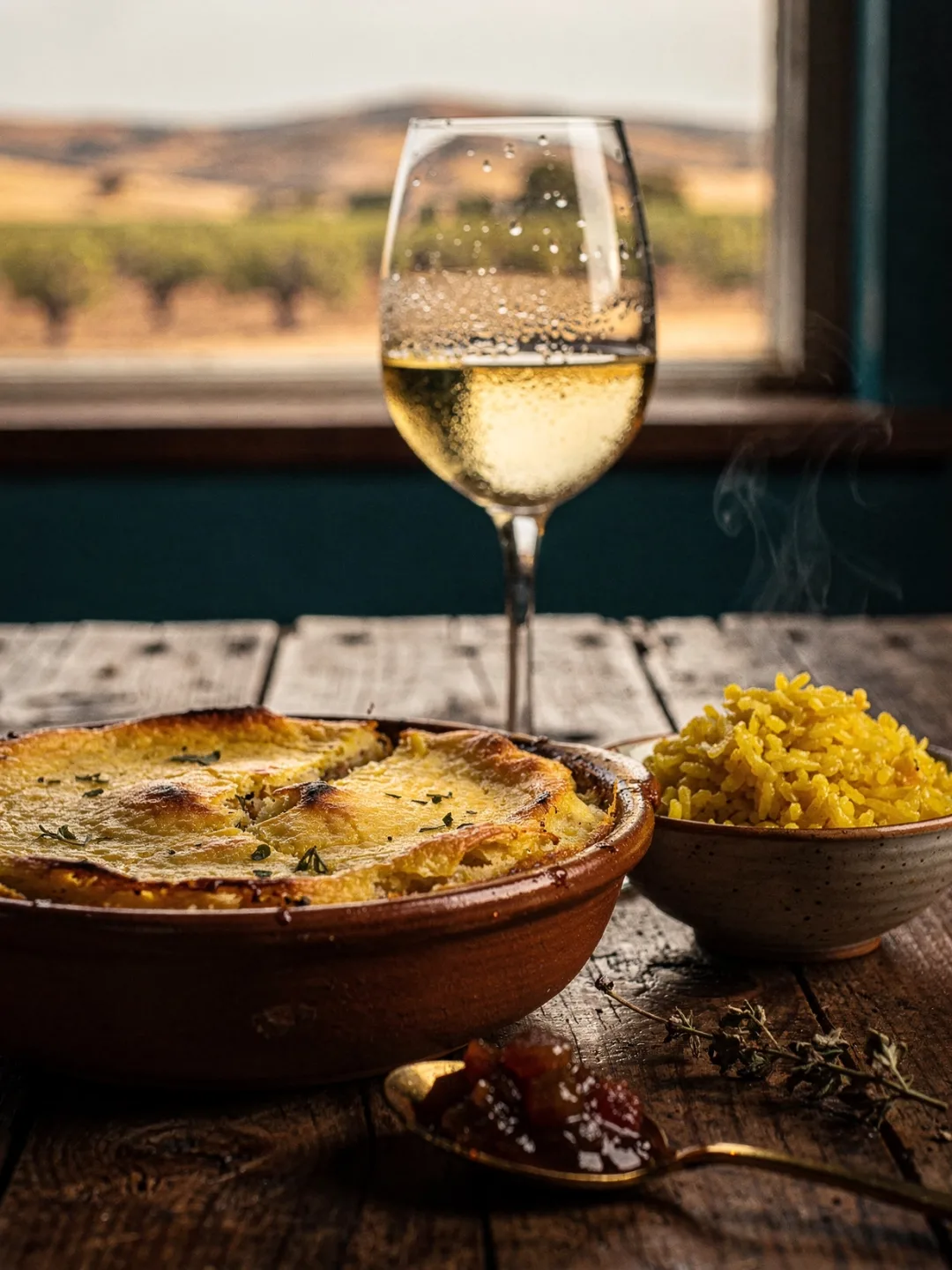
Eating in the Swartland means sitting at the crossroads of two cuisines. One arrived with the first Dutch-French settlers. The other is Cape Malay cuisine, brought to the Cape by enslaved and later free people from Southeast Asia. Bobotie represents this fusion like no other dish — spiced minced meat with curry, almonds, and raisins, baked under an egg topping, served with yellow rice and sweet chutney.
Sweetness and spice together need a wine that can carry both without being sweet itself. An old bush vine Chenin, with its slightly oily texture and subtle fruit sweetness, holds its own. A dry, tannic red usually turns bitter and thin next to the curry.
On the nearby west coast at St Helena Bay, itself its own Swartland ward, fishermen catch snoek, a long, silvery predatory fish. Traditionally it's grilled whole over open coals and basted with apricot jam. Smoke and sweetness merge on the skin this way. This calls for a chilled, saline Chenin, not a heavy red.
Waterblommetjiebredie is the wintertime answer. It's a stew of mutton and waterblommetjies, the edible flowers of a native water plant that bloom in the wetlands of the Western Cape between June and September. Their slightly tart, floral flavor suits a red wine with enough fruit to stand up to it, but without so much tannin that it crushes the delicate acidity of the flowers.
On weekends, the braai replaces the stove almost everywhere. Boerewors and lamb chops sizzle over the open flame, alongside roosterkoek, bread baked right over the coals. Smoke and fat call for structure, which is why a robust Syrah ends up on most Swartland tables — the same wine that battles the same dry heat in the vineyard by day that fuels the fire by night.