Garrigue, warmth, salt
Tasting
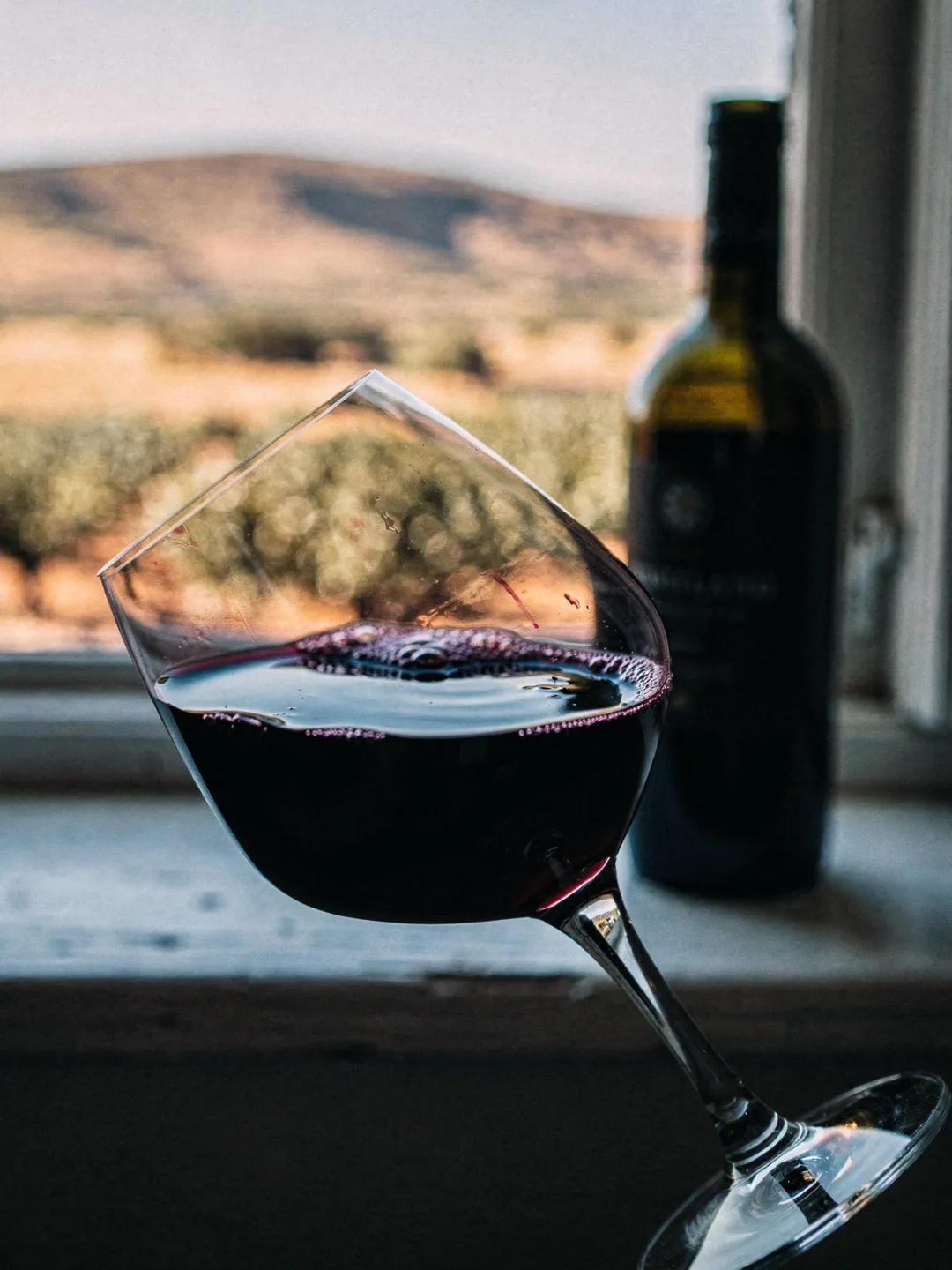
Hold a Swartland Syrah up to the light. The color instantly reveals the sun it comes from: deep, almost opaque violet in young vintages, shifting toward garnet after ten years. A pale Swartland red is rare — the small, thick-skinned berries of the unirrigated bush vines see to that.
On the nose, dark fruit comes first: blackberry, stewed plum, often a hint of white pepper from the Syrah grape. Swirl the glass, and a second layer follows that surprises many: dry scrub, rosemary. Sometimes a smoky note joins in, recalling the Renosterbos landscape surrounding the vineyards.
On the palate, warmth dominates at first. Above thirteen and a half percent alcohol is the rule rather than the exception in the Swartland, felt as a gentle heat at the back of the palate. Tannin is plentiful, but thanks to the dry farming of the bush vines it's usually ripe and rounded rather than angular. Despite its power, the wine never feels harsh.
With old bush vine Chenin, the tasting unfolds differently. The color turns golden, the aroma recalls quince, honey, and sometimes wet chalk. On the palate, a noticeable, almost saline minerality carries the wine, which many attribute to the koffieklip soil where some of these vines grow.
In the end, length is what counts again. A good Columella or Palladius holds its flavor for twenty seconds or more, while simple cooperative wines from the same area often fade after just five. That's the difference between a wine from an old bush vine and one from a young, high-yield planting.