Tasting a Pinot
Tasting
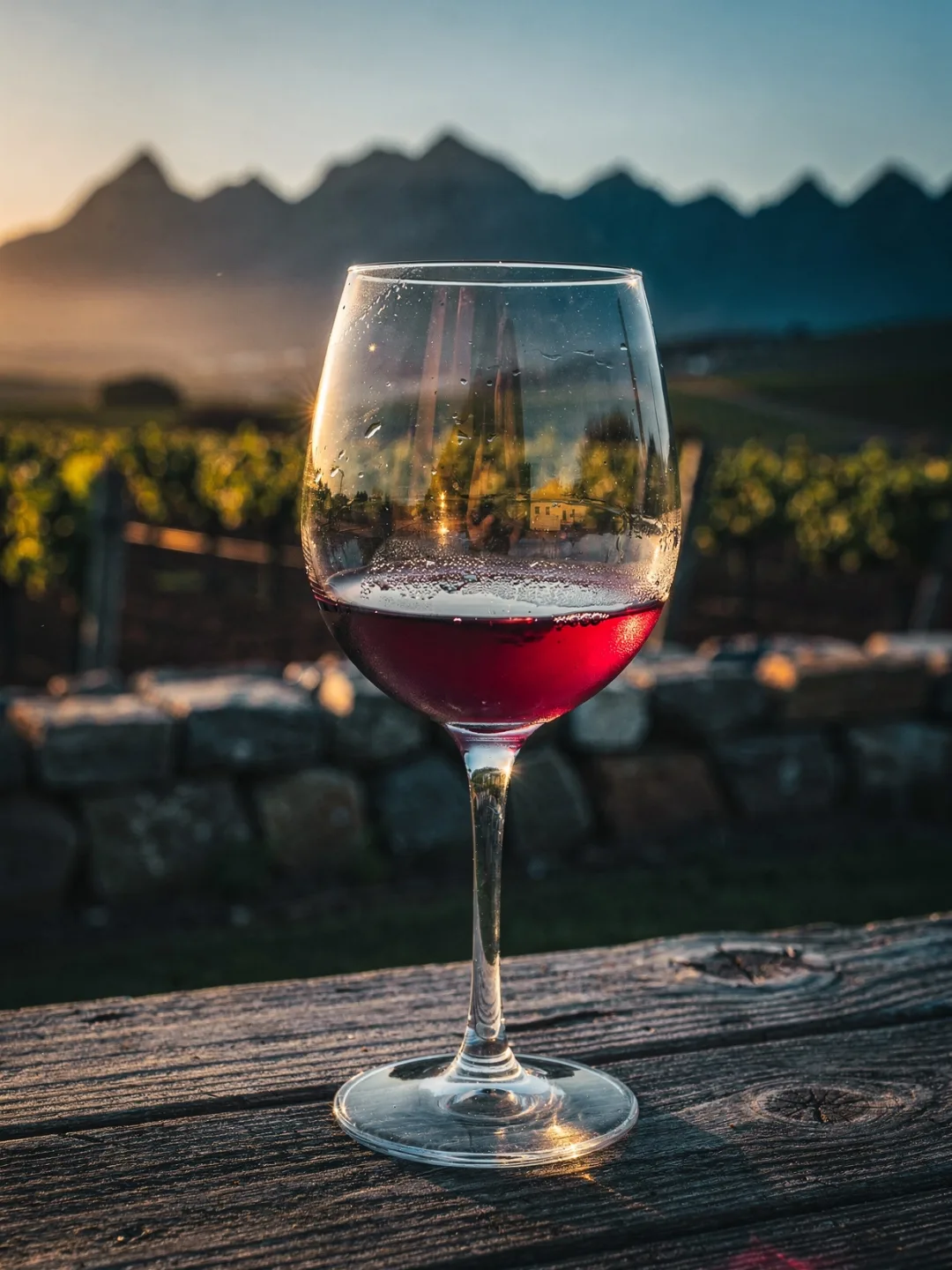
Tilt a glass of Pinot Noir from the Hemel-en-Aarde Valley against something white and look closely. The color surprises almost everyone the first time: pale, almost translucent cherry red with a violet shimmer at the rim when the wine is young, since this variety builds only little pigment into its skin — and that's not a shortcoming, it's simply its nature.
Smell it twice: once with the glass still, once after swirling. In the still glass, red fruit rises first — sour cherry, cranberry, a hint of pomegranate. These light aroma molecules evaporate fastest. After swirling, what's heavier and slower follows: an earthy, almost mossy note. Sometimes a whisper of smoke from the oak in which the wine matured joins in.
In the mouth, pay attention to two things separately — it's worth tasting closely. You feel the acidity along the sides of the tongue, sharp and direct, a straight legacy of the cool nights off the Benguela Current that keep the grapes fresh. The tannin, meanwhile, the rough feel on the gums, stays fine and almost restrained in this variety, quite unlike a Cabernet Sauvignon from warmer sites.
Often there's also a salty undertone, which winemakers attribute to the closeness of the Atlantic, just a few kilometers away. It's not proven. Still, hardly anyone who's paid close attention has missed it.
Finally, count: how long does the flavor linger after you swallow? With a good Hemel-en-Aarde Pinot, that's often twelve to fifteen seconds, carried by the very acidity that made it feel so alive to begin with — and that length can't be engineered afterward in the cellar. It either comes from the cool valley, or it doesn't come at all.