Old Oak & Whole Cluster
Winemaking
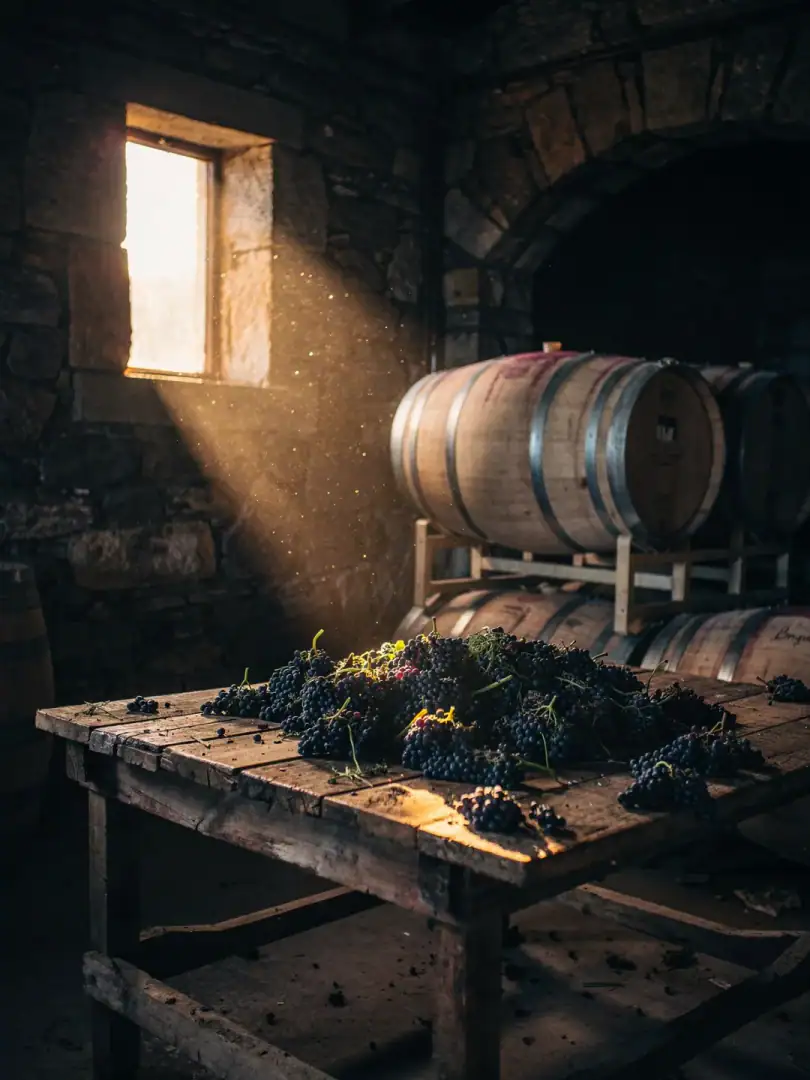
With Pinot Noir, the skins stay in during fermentation; with straightforward Chardonnay, they don't. That's the basic difference between red and white winemaking, and in the Hemel-en-Aarde Valley it's handled with particular care. Many producers age their Pinot Noir in used rather than new French barriques, small oak barrels of around 225 liters, so the wood imparts only subtle flavor and doesn't mask the variety's delicate fruit. Less is more here.
Some winemakers also add whole, uncrushed bunches of grapes, stems included, to the fermentation vessel instead of destemming each berry beforehand — so-called whole-cluster fermentation. That takes nerve. It gives the finished wine more structure and a spicy, faintly peppery note, but demands ripe, firm stems, or the wine turns bitter instead of spicy.
With Chardonnay, it works the other way around. The must often ferments directly in the barrel, and the young wine then sits on its lees for months, stirred from time to time. This lees contact gives the wine creaminess and a subtle bready aroma without masking the salty freshness recognizable in the glass as oyster shell.
Almost every wine then undergoes malolactic fermentation, a second, softer fermentation that converts sharp malic acid into milder lactic acid. The effect is noticeable. In a wine with this much natural acidity from the cool nights, the difference is clear. It's what separates angular from approachable.
Southern Right's Pinotage calls for the opposite kind of patience: extended aging in oak. This softens the variety's naturally firmer tannins, often for a year and a half to two years before the wine is even bottled. Anthony Hamilton Russell wanted to prove with it that Pinotage can be more than the quick, fruit-forward everyday wine it's often taken for.