When aroma turns
Wine faults
Wet cardboard, rotten eggs, barnyard, browned apple: four entirely different off-odors that all have the same effect. They mask a wine's true aromas, often at concentrations far too small for any lab equipment to detect without a trained nose.
Cork taint: wet cardboard in nanogram amounts
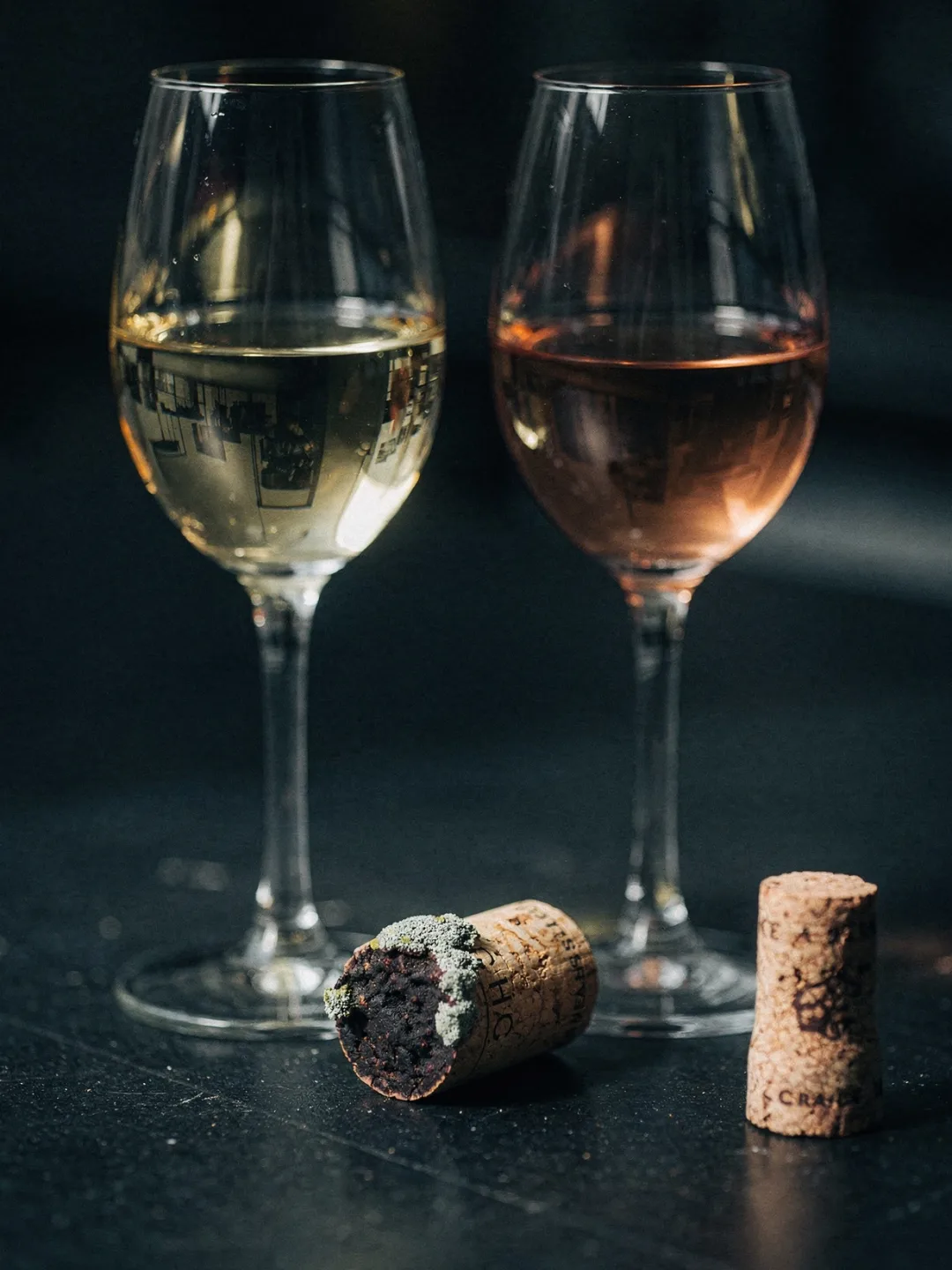
The most well-known wine fault is cork taint, and it has only an indirect connection to the cork itself. The culprit is usually a compound called trichloroanisole, or TCA for short, which forms when chlorine residues from old cleaning processes meet natural fungi in the cork material. The result smells like damp cardboard or a musty cellar, and it settles over the wine's entire remaining aroma like a haze.
TCA is among the most potent fault compounds known. Just one to a few nanograms per liter are enough for a trained nose to detect it, an amount that chemical instruments can sometimes only measure with great effort. It's precisely this extreme sensitivity, combined with the unpredictability of natural cork, that has driven many wineries over recent decades to switch to screw caps or synthetic closures.
Reduction (böckser): the smell of rotten eggs
An entirely different fault hides behind the German term böckser: a smell of rotten eggs or burnt matches, caused by hydrogen sulfide. This gas forms during fermentation when yeasts suffer from nitrogen deficiency and are forced to draw sulfur from other compounds in the must instead.
In mild cases, hydrogen sulfide simply dissipates during racking or vigorous swirling in the glass, since it's highly volatile itself. It becomes more problematic when it bonds beforehand with other molecules in the wine to form mercaptans, which smell of garlic, rubber, or onion and are difficult to shake off even with aeration.
Brett: farmyard in a glass
Brettanomyces, or Brett for short, isn't a chemical compound but a wild yeast species that can take up residence in poorly cleaned barrels or cellars. It produces mainly two substances: 4-ethylphenol, which smells like Band-Aid, leather, or a barnyard, and 4-ethylguaiacol, with a more smoky-clove-like note.
Both compounds become clearly noticeable only above several hundred micrograms per liter; in tiny amounts below that, they blend almost unnoticeably with other spice notes. Most wine styles treat Brett clearly as a fault. Some traditional red wines from the southern Rhône, and part of the natural wine scene, actually accept a light barnyard note as a stylistic feature, as long as it doesn't completely overwhelm the fruit.
Oxidation: too much of a good friend
Oxidation is the rare case of a fault that's even desired in small, controlled doses. Sherry and Tawny Port, from the section on tertiary aromas, are created precisely through deliberate oxygen exposure over years. In a wine meant to stay fresh and fruity, however, that same oxygen exposure is a clear fault.
A leaky cork or storage that's too warm gradually lets air seep into the bottle. The very same reactions that give a Sherry its character then unintentionally turn a young white wine into something else entirely. It ends up tasting of brown apple and nutshell, its color dulled to a brownish tone instead of its original freshness. Where exactly the line runs between intentional maturity and this final, unwanted flaw comes down to the same question that has run through this entire journey. What does your nose actually detect, and what is it merely guessing at?
How to tell a fault from a style
One simple test helps when in doubt: the bottle next to it. If a second bottle of the same cuvée tastes noticeably different, you're likely dealing with a fault. A genuine style, even an unusual one, repeats reliably from bottle to bottle.
Cork taint shows this pattern especially clearly. TCA lodges in an individual cork, not throughout the whole batch. One bottle can be affected while the bottle right next to it is perfectly clean. Deliberate stylistic choices, like a light Brett note or a purposefully oxidative maturation, affect the entire bottling equally.
How a wine evolves in the glass over time also reveals a lot. A genuine fault rarely improves with air contact, and often gets worse. A young, still-closed wine, on the other hand, usually opens up the longer it sits in the glass. Ten minutes of patience can settle many a doubt.
When in doubt, a second opinion is worth more than your own uncertainty. A sommelier or a practiced friend often picks up the same fault faster. If you're unsure in a restaurant, don't hesitate to send the bottle back—that's exactly what the taste at the glass, before pouring, is for.
This whole journey began with the nose, and it ends there too. Every stop along the way, from fruit to oak to fault, ultimately leads back to the same simple exercise: smell, taste, and trust your own impression.