Tannin and weight
Tannin & Body
You don't taste tannin, you feel it: a dry, sometimes rough sensation on the tongue and gums. Together with alcohol and extract, it determines how heavy or light a wine feels in the mouth.
Why tannin is a feeling, not a flavor
Tannin belongs to its own perceptual category, one that is neither smell nor taste in the strict sense: astringency, a purely mechanical tactile sensation. Saliva contains certain proline-rich proteins that normally keep the mouth smooth and slick. Tannin disrupts exactly that. Its molecules bind to these proteins, causing them to clump together and partially precipitate out.
Without this protective layer of saliva, the mucous membranes in the mouth rub noticeably rougher against the tongue and gums, a sensation many mistakenly describe as bitter taste. In fact, astringency can be clearly distinguished from true bitterness. Bitterness sits mainly at the back of the tongue. Astringency spreads across the whole mouth and often lingers noticeably longer.
Where tannin comes from
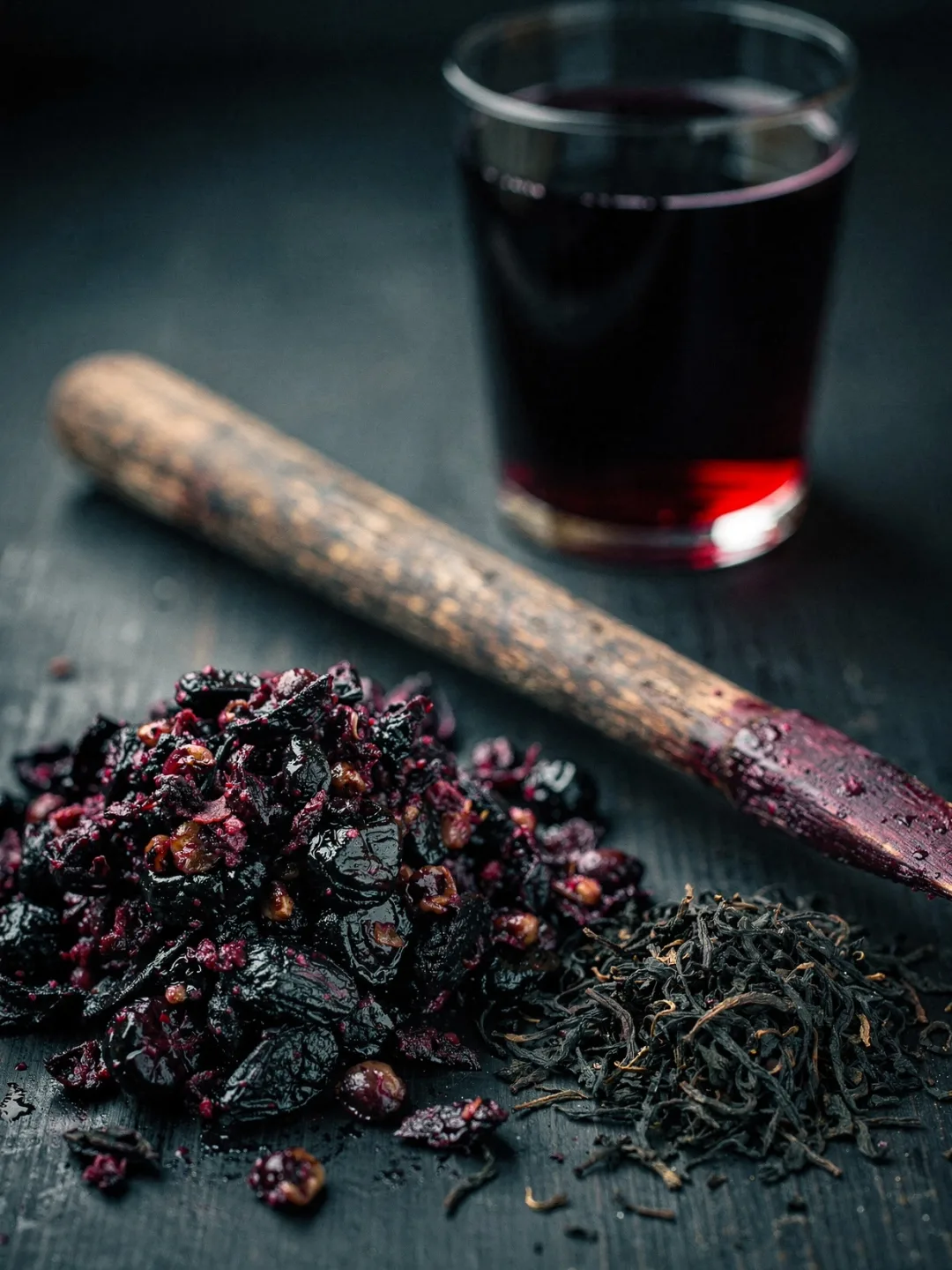
Tannin comes from several parts of the grape as well as from the barrel. Grape skins provide the softest form, grape seeds a considerably harder, more angular variety that mainly enters the wine when the seeds are crushed too forcefully during pressing. Stems count too. They also contain tannin, which is why some winemakers deliberately ferment a portion of them along with the grapes to gain extra structure.
How much of this ultimately ends up in the glass is controlled by winemakers through maceration time. This determines how long skins, seeds, and possibly stems stay in contact with the fermenting must, along with the chosen temperature. An oak barrel adds a third, chemically distinct type of tannin to the mix, which together with the grape tannins forms the finished structural backbone of the wine.
How tannin changes over time
Over time, tannin visibly changes in the glass, even without any further intervention from the winemaker. Small tannin molecules slowly link together into ever-longer chains, a process that continues in the bottle for years. Some of these long chains eventually grow so large that they become insoluble and fall out of the wine as a fine sediment.
This is exactly why a ten-year-old red wine feels softer than it did in its youth. Chemically, hardly any tannin has actually disappeared, it simply exists in a different, less astringent form. The fine sediment at the bottom of an old bottle isn't a flaw, it's precisely this process made visible.
Body: more than just tannin
Body describes a completely different impression from tannin, though the two are often confused. It refers to the sheer weight of a wine in the mouth, similar to the difference between water and oil on the tongue. Alcohol carries the most weight here. It creates a certain viscosity on its own, along with a slight warming sensation in the throat.
Then comes the dissolved extract: glycerin, residual sugar, and other phenols, which together make the liquid feel fuller in the mouth. The common classification into light-, medium-, and full-bodied is therefore not a fixed category with sharp boundaries. It's a rough guide along a continuous scale, much like the aroma wheel itself offers only broad categories as a first step toward more precise terms.
Why red wine has more tannin than white
The difference starts right at pressing. Red wine typically ferments for days together with the skins, sometimes with seeds and stems as well. Most of its tannin comes directly from this contact. White wine, by contrast, is almost always separated from the skins immediately, before fermentation even begins.
Without extended skin contact, hardly any tannin remains in the finished white wine. This is why a white wine almost never feels astringent, even after years in barrel. There are exceptions that prove the rule: orange wine deliberately ferments white grapes on their skins, giving it noticeable tannin, unusual for a white wine.
Even among red wines, tannin levels vary widely. Short skin contact produces a light, barely astringent red wine, often intended for quick enjoyment. Long maceration over several weeks produces the opposite: powerful, long-lived wines with noticeable grip in their youth. Rosé sits technically somewhere in between, the skins stay in contact with the must for only a few hours, enough for some color but usually too little for noticeable tannin.
Anyone who understands this connection can almost automatically recognize the winemaking method from the first sip. High tannin almost always means extensive skin contact, usually in red wine. Little or no tannin means brief or no contact at all, usually in white or rosé.