California beats France
New World, old verdict
Until the 1970s, most wine experts took it as settled fact that the world's best wines had to come from France. A single afternoon in Paris in 1976 called that certainty into question. It opened the door to the world's top ranks for California, Australia, and later many other countries.
An Englishman stages a provocation
Steven Spurrier was an Englishman who ran a wine shop and wine school in Paris. Together with his American colleague Patricia Gallagher, he planned a tasting to mark the two-hundredth anniversary of American independence. On May 24, 1976, he invited nine respected French critics, winemakers, and sommeliers to a blind tasting at the Hôtel InterContinental in Paris. No one knew which glass held which wine.
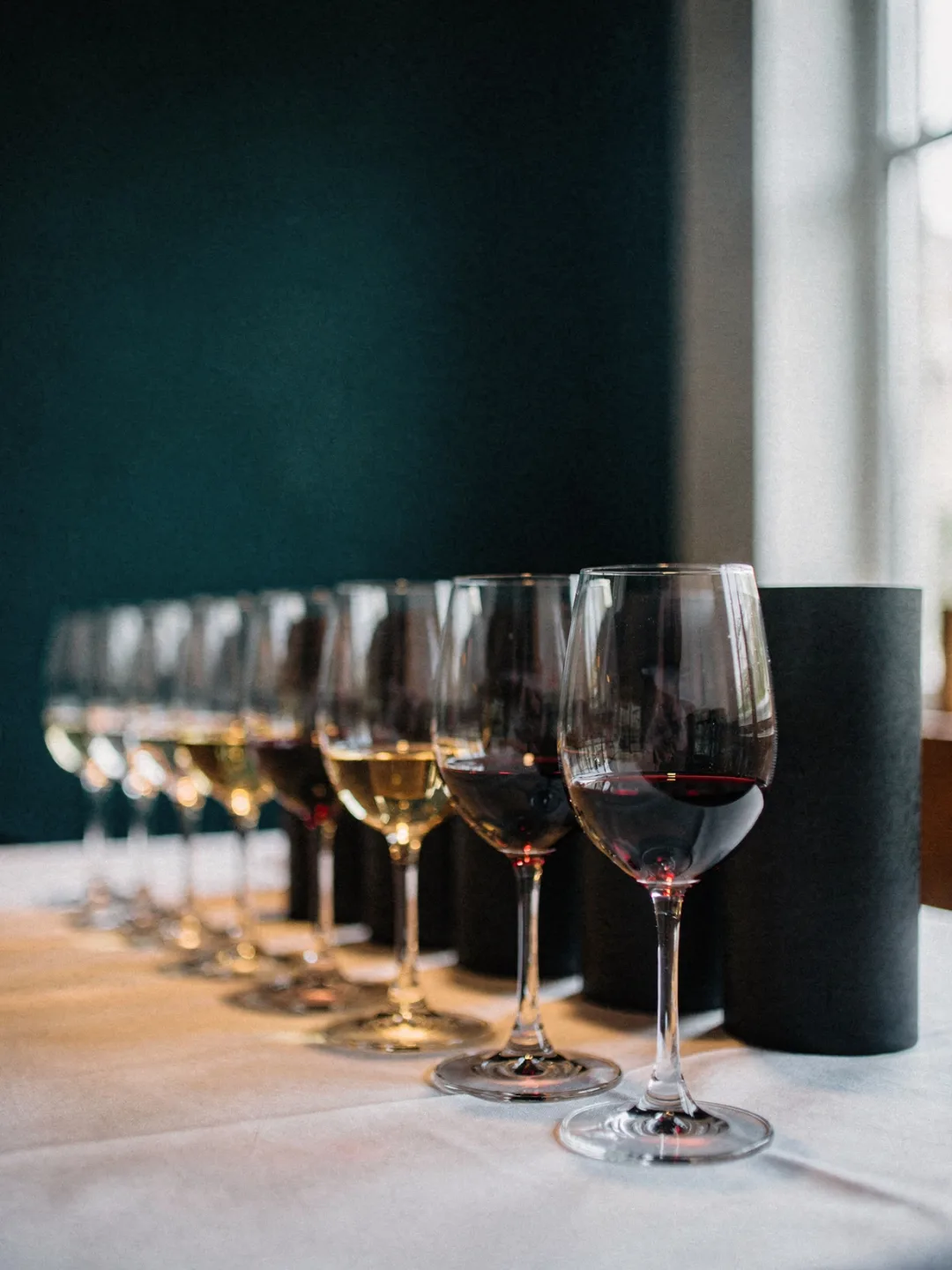
Californian and French wines competed head-to-head in two categories: white wine from Chardonnay and red wine chiefly from Cabernet Sauvignon. The jury consisted almost entirely of French experts. They were convinced they would easily recognize and favor their own top-tier wines from Burgundy and Bordeaux. Spurrier himself did not take part as a voting judge but organized the tasting behind the scenes, mainly hoping to raise the profile of his own wine school, and he had hardly expected such a resounding result. Each judge scored the wines individually on a point scale, without consulting the others beforehand. That later made the result especially hard to dispute.
The result no one expected
Among the whites, the 1973 Chardonnay from California's Château Montelena beat out renowned white Burgundies. Among the reds, the 1973 Cabernet Sauvignon from Stag's Leap Wine Cellars took the top spot, ahead of several classified Bordeaux growths that had been considered practically unbeatable.
The French judges misjudged the origin of the wines, mistaking Californian bottles for French ones. Of all things, they rated the American wines highest, while some of the most expensive French labels scored surprisingly poorly. A journalist from Time magazine happened to be among the few onlookers present. Overnight, he turned the event into international news, which initially caused outrage in France. Some of the judges involved even tried afterward to reclaim their own scorecards. They found the thought of being publicly linked to their misjudgment uncomfortable.
Why the Judgment of Paris changed so much
Before 1976, Californian wine was mostly seen internationally as a solid but unremarkable mass-market product, rarely taken seriously by established European critics. The result of this single tasting proved publicly for the first time that winemakers outside Europe could, on different soil and in a different climate, produce wines of comparable quality. All it took was craftsmanship and ambition, consistently combined.
Investors and buyers worldwide viewed Californian wineries in a completely new light afterward. Prices and export figures from Napa Valley rose noticeably in the years that followed. Other countries outside Europe also seized on this new momentum. They presented themselves more confidently in international markets, rather than continuing to model themselves solely on European examples. Newspapers and trade magazines reported on the event repeatedly in the years that followed, and the term Judgment of Paris became the fixed name for it, even though it had really only been a small, informal tasting in the back room of a hotel.
The New World establishes itself
In the following decades, Australia, Chile, South Africa, and New Zealand developed their own distinctive wine styles. They worked with modern technology and fewer strict historical constraints than traditional European wine regions. These countries experimented more freely with grape varieties, aging methods, and marketing. They weren't bound by centuries-old classifications that made any change difficult in France or Italy.
To this day, the 1976 tasting is regularly repeated, including for round-number anniversaries, and usually delivers results similar to the first time. The Judgment of Paris thus permanently demonstrated that origin alone doesn't guarantee quality, and that the wine world has genuinely gone global ever since. Anyone who buys a bottle from Chile, South Africa, or New Zealand today is also drinking a small piece of that Parisian afternoon, when an old order suddenly began to crumble.