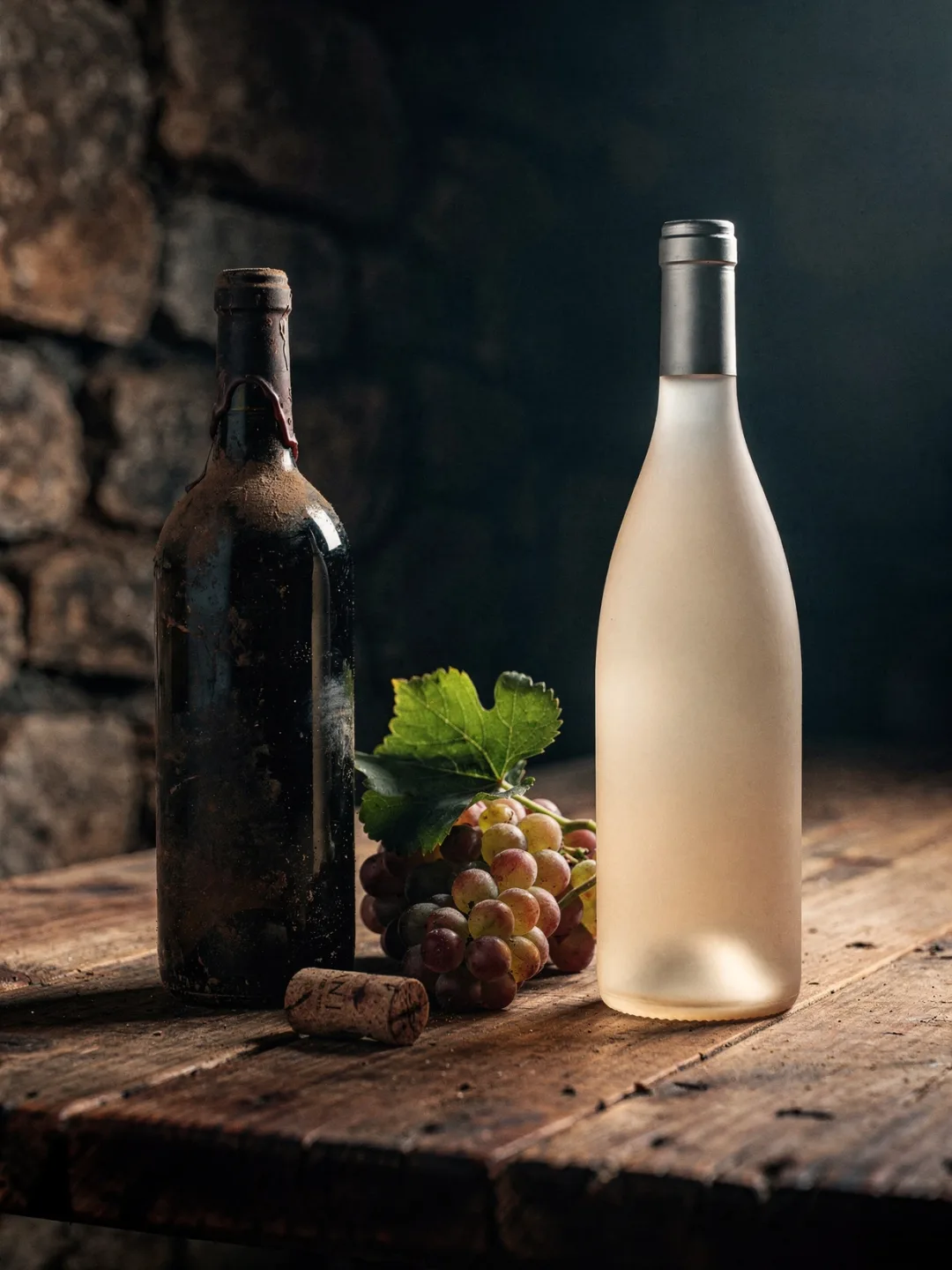
Tradition Meets Innovation
Old World, New World
Old World and New World are the most common labels in wine, and both are imprecise. What's usually meant is the difference between centuries-old European wine regions and younger wine countries like the USA, Australia or Chile.
Where the Divide Comes From
Countries considered Old World have grown wine since antiquity or the Middle Ages: France, Italy, Spain, Germany, Greece, Portugal. There, rules, vineyard sites and grape varieties have developed over centuries, often in close partnership with the church, the aristocracy, or later the state. Countries considered New World are those where European settlers first brought vines between the 16th and 19th centuries: the USA, Australia, New Zealand, Chile, Argentina, South Africa. Historically, then, the line is fairly clear, even though it can feel unfair, since wine was already being made in some of these countries before European colonization.
South Africa, for example, has been making wine since 1659 — older than the country's reputation might suggest. Even so, it counts as New World, because its winemaking has European origins and stylistically leans more toward Californian or Australian models than French tradition. The distinction, then, describes less an exact age than a mindset.
Two Fundamental Attitudes Toward Wine
In the Old World, it's usually the place that determines what can go into the bottle. A wine from Burgundy must be made from certain grape varieties, within a defined area, according to fixed rules, and the name on the label is often the place name, not the grape variety. In the New World, it's usually the grape variety that determines the name. A Chardonnay from California is simply called Chardonnay, regardless of which valley exactly the grapes came from. These two logics still shape how wine shelves are organized today and how wine drinkers talk about wine.
Winemaking traditions often differ in cellar practice too, though with plenty of exceptions. Old World winemakers frequently emphasize restraint: less new oak, moderate ripeness, acidity as backbone. New World winemakers historically experimented more freely with ripe fruit, new barrique and higher alcohol, because less strict regulations allowed it. These differences have blurred considerably by now — young winemakers in Bordeaux today often work just as understatedly as their counterparts in Oregon.
Clichés That No Longer Hold True
For a long time, the image persisted that Old World wine tasted earthy and restrained, while New World wine was fruity and bold. As a rough rule of thumb, that still holds occasionally, but as a reliable rule, it long since stopped applying. A cool-climate Pinot Noir from New Zealand can seem more restrained than many a warm red from southern Italy. A biodynamic winery in California can farm more traditionally than an industrial large-scale operation in southern France.
What actually matters is climate, soil and the decisions made in the cellar, not simply how long a country has been making wine. The division into Old and New still remains useful as an initial point of orientation, much like a rough map before the actual journey. It just says very little about what ultimately ends up in the glass.
A Third Category Is Growing in Between
Some countries don't fit neatly into either drawer. Georgia is considered one of the oldest wine regions in existence, with finds of grape seeds and clay vessels dating back several thousand years, yet internationally it's often treated like an exciting new discovery. China has only been producing wine on a large scale for a few decades, but already does so at a volume that surpasses many established countries. The map of the wine world, then, is better understood as a continuum than as two fixed camps.
One Example: Napa Versus Bordeaux
Napa Valley in California was officially declared a wine region, a so-called American Viticultural Area or AVA, in 1981. Bordeaux, by contrast, has been cultivated since the Middle Ages, and its first protected designations of origin already existed back in the 1930s. Even so, Napa has long ranked among the most expensive wine regions in the world, with its own sub-regions like Oakville or Rutherford now thought of in terms almost as fine-grained as a commune in Burgundy. New World, then, doesn't automatically mean less sophisticated — only that it started later.