Four Climate Types
Cool, Warm, Continental, Maritime
Cool, warm, maritime or continental: with these four words, experts describe a wine region's climate more vividly than with bare temperature figures, because they immediately reveal what character the grapes from that place tend to bring.
Cool Versus Warm: The Basic Axis
The most important dividing line is the average temperature during the growing season. In cool regions like Champagne or Germany, grapes ripen slowly. They retain plenty of acidity and build up little sugar. That results in lower alcohol in the finished wine. In warm regions like southern Spain or Australia's Barossa Valley, the same grape ripens faster. It loses acidity and accumulates more sugar. That produces bolder, higher-alcohol wines. Neither side is inherently better — they simply suit different grape varieties and styles.
Riesling is considered a cool-climate variety almost everywhere. It preserves its acidity best when ripening doesn't happen too quickly. Syrah from the hot Rhône Valley, on the other hand, only unfolds its full spiciness with plenty of sun. Plant Riesling in too warm a climate, and the wine often turns out flabby and broad. Plant Syrah in too cool a climate, and it never fully ripens — it tastes green and harsh instead.
Continental: Extreme Summers, Harsh Winters
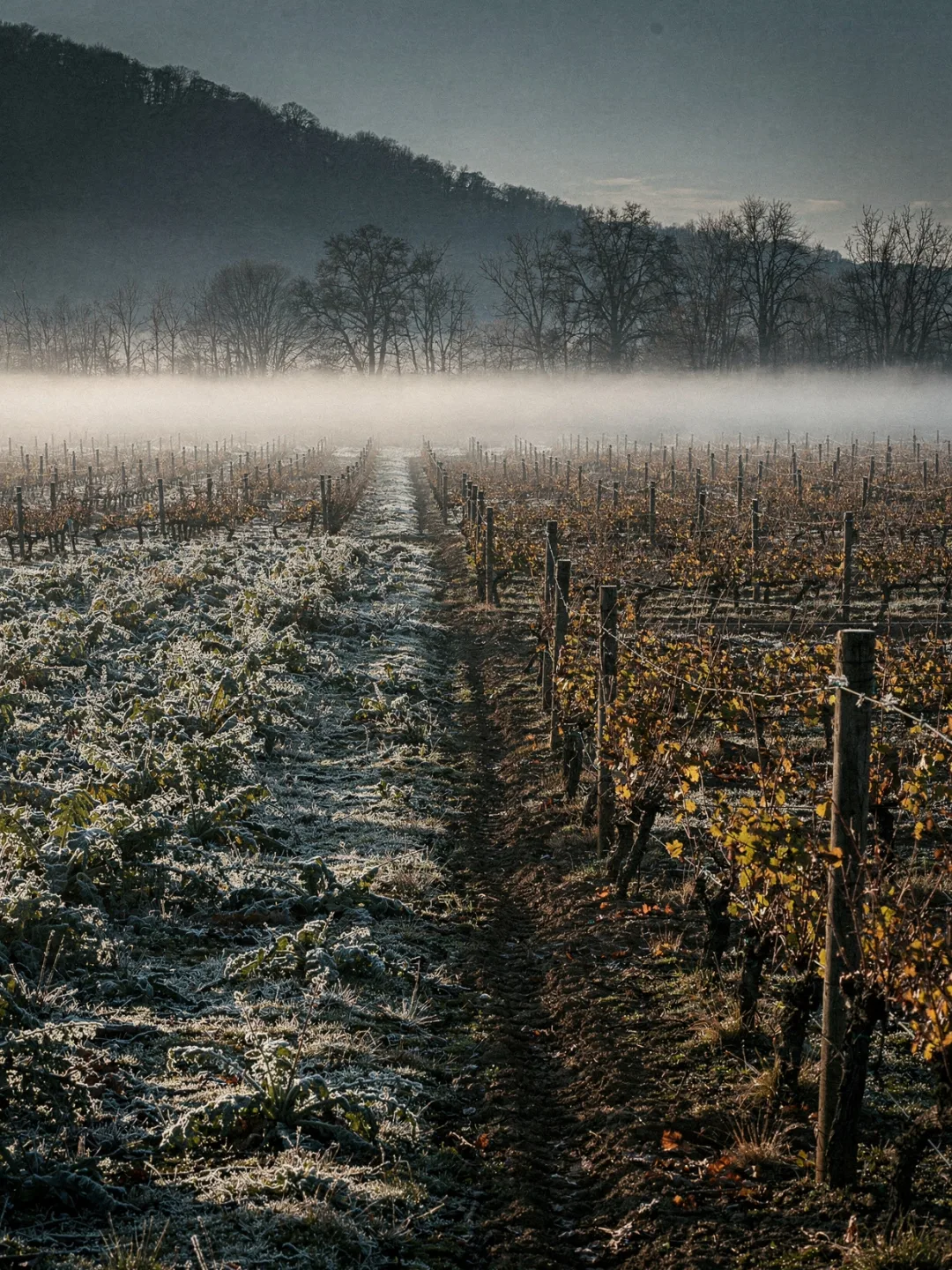
A continental climate lies far from the sea, in regions like Burgundy, parts of Austria, or the American interior. There, temperatures swing dramatically: hot, often dry summers followed by cold, sometimes harsh winters. These large differences between day and night during the ripening period are considered an advantage. Warm days build up sugar, while cool nights preserve acidity at the same time. The downside is risk. A late frost in spring or a cold snap in winter can endanger entire harvests, since no sea buffers the extremes here.
Washington State's Columbia Valley shows this pattern especially clearly. Far from the coast, hot summer days there are only a few hours away from cool, almost cold nights. It's precisely this swing that allows Cabernet Sauvignon and Riesling to thrive in the same region, even though the two varieties actually prefer different climates.
Maritime: Steady, but Temperamental
A maritime climate lies close to the sea or a large lake, as in Bordeaux, Portugal or New Zealand. The water stores warmth in summer and slowly releases it back in winter. As a result, temperatures stay more even throughout the year than they do inland. That significantly lowers the risk of frost. In return, proximity to the sea often brings more moisture, clouds and rain. That, in turn, raises the risk of fungal diseases on the grapes. Winemakers in maritime locations fight the cold less often, but rot more often.
The English Channel, too, acts like a temperature regulator for southern England, where winemakers now grow grapes that would barely have ripened there thirty years ago. Without the water's buffering effect, the region would simply be too cold for serious winemaking.
Why the Same Region Often Mixes Several Types
Rarely does a wine region fall exactly into just one of these four categories. Bordeaux, for instance, is predominantly maritime, yet its eastern reaches, farther from the Atlantic, already feel more continental. Germany as a whole is considered cool. Yet individual sheltered valleys, thanks to steep slopes and dark rock, still reach values that would suit a warm region. The four terms are rough tools, not exact boxes. The precise truth almost always lies somewhere in between.
A scale for what lies behind it
In the 1940s, wine scientists at the University of California, Davis developed a new system. It sorts regions into five classes based on the sum of heat accumulated during the growing season, ranging from very cool to very hot. This so-called Winkler Scale is still used today to assess new growing regions before a single vine is even planted. It doesn't replace the four handy everyday terms. It simply adds a number that allows two regions to be compared objectively, rather than relying on a mere sense of cool or warm.