Boundaries on the move
Climate change is shifting boundaries
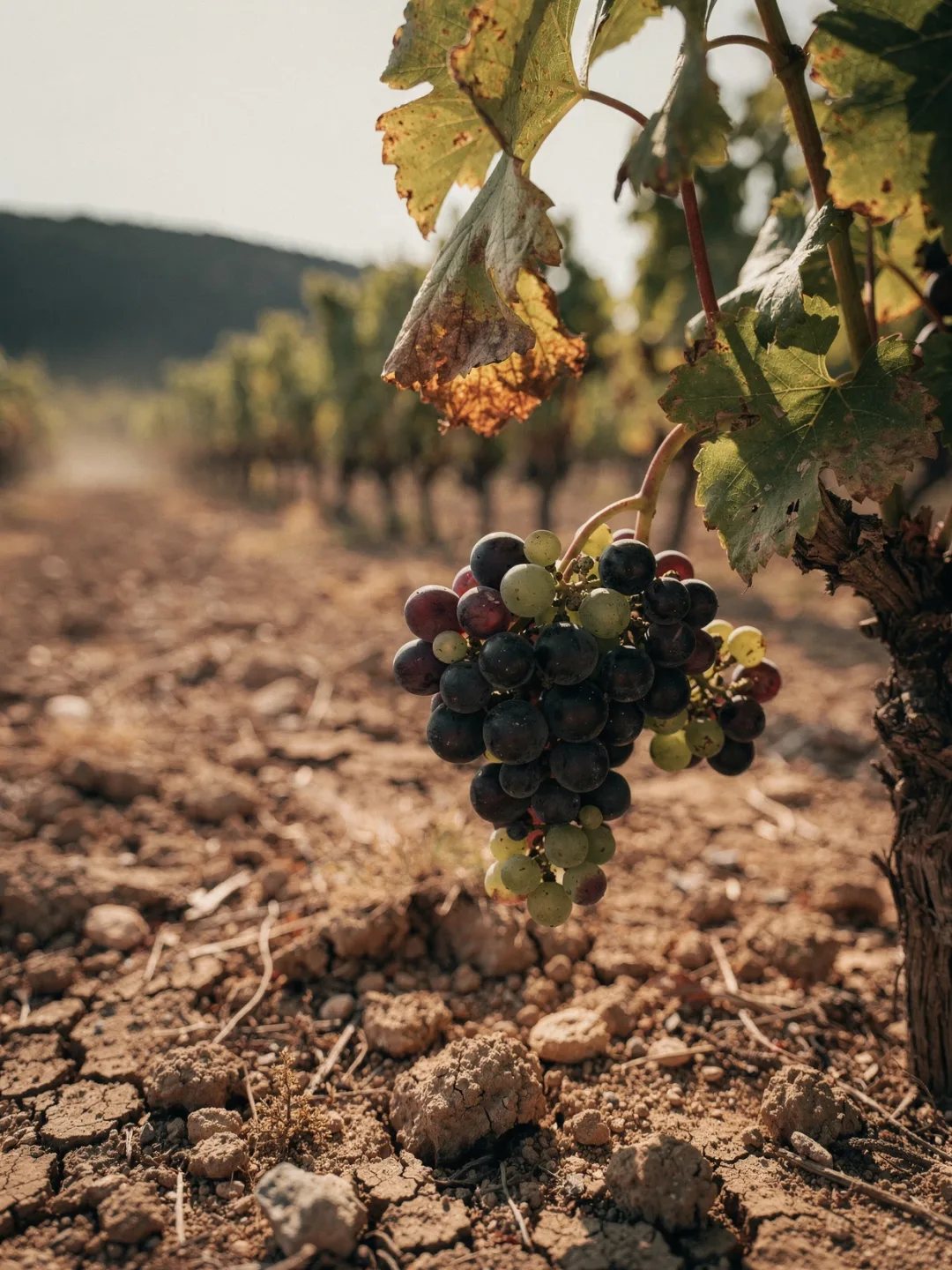
Vineyards react sensitively to every tenth of a degree, which is why climate change shows visible traces there earlier than in almost any other form of agriculture: earlier harvests, new grape varieties, entire regions only now becoming possible.
The harvest moves forward every decade
In France, the start of harvest across all wine regions has shifted forward by an average of around 21 days over the past fifty years. This was shown by agricultural climatologist Serge Zaka using long series of weather and harvest records. In Burgundy, a study analyzing records dating back to 1354 found that grapes have, on average, been picked 13 days earlier since 1988 than during the six centuries before. Of the eight earliest harvests across the entire study period, five fell in the years after 2011 alone.
Champagne provides the clearest example so far. In 2026, the official harvest there began as early as between August 12 and 17, depending on the area and grape variety. One winegrower even reached August 6, the earliest date ever documented across the entire region. The span of time grapes need from flowering to full ripeness has shrunk accordingly. It once took around a hundred days; today, in some cases, it's only eighty.
Why just a few degrees change so much
A vine responds to heat almost like a clock ticking too fast. Higher temperatures speed up photosynthesis. Sugar builds up faster, acidity breaks down faster. What used to ripen gradually over an entire month now often happens within a few hot weeks. This creates a risk: sugar content and alcohol shoot up before aromas and tannins have properly matured.
Extreme weather is also increasing: harsher hailstorms, longer dry spells, but also sudden late frosts. An early, mild bud break in spring leaves young shoots more vulnerable to a single cold April morning. As a result, a vintage today can turn out moodier than many traditional wine regions were used to over generations.
Who benefits, who loses
Traditionally cool, marginal wine regions often gain ground through this development, both literally and figuratively. Within just a few decades, England has evolved from a curiosity into a serious sparkling wine producer. Its once too-cool climate now offers exactly the conditions that Champagne had fifty years ago. Parts of Scandinavia and Canada are also increasingly experimenting with serious winemaking, with growing success.
Traditionally warm core regions, on the other hand, are coming under pressure. Parts of southern Spain, southern Italy, and California are now grappling with heat stress, water shortages, and fires that can destroy entire harvests. Some wineries there are already replanting grape varieties traditionally grown in warmer countries. Others are shifting new vineyards to higher, cooler sites just to preserve the freshness they're used to.
Adaptation instead of relocation
A vineyard can't simply be moved. That's why many producers adapt their work instead. Some plant higher up a slope. Others turn to later-ripening grape varieties or more traditional training systems that give the vines more shade of their own. Harvest timing itself is also shifting increasingly toward cooler morning hours or even into the night, so the grapes don't arrive overheated at the winery.
The laws governing origin, which take center stage in the next chapter of this journey, are increasingly coming under strain as a result. Many of them precisely define which grape variety is permitted in which area. These rules were set down at a time when the climate there was different. Some regions now allow trial plantings of new, heat-resistant varieties, a compromise between centuries-old tradition and a climate that doesn't play by old rules.
A look ahead
No one knows exactly how warm individual regions will be in thirty or fifty years, because weather fluctuates from year to year and can't simply be projected in a straight line. Still, climate models offer trends. For most of today's core wine regions, they continue to show rising average temperatures. Some researchers believe that certain particularly hot growing regions may eventually have to switch to other crops altogether. For the wine world as a whole, this means constant migration, not a one-time move.