An apartment instead of a cellar
A cellar without a cellar
Very few people own a real wine cellar. Even so, almost every home has a spot that meets the key requirements from the previous stages.
The best spot in a regular home
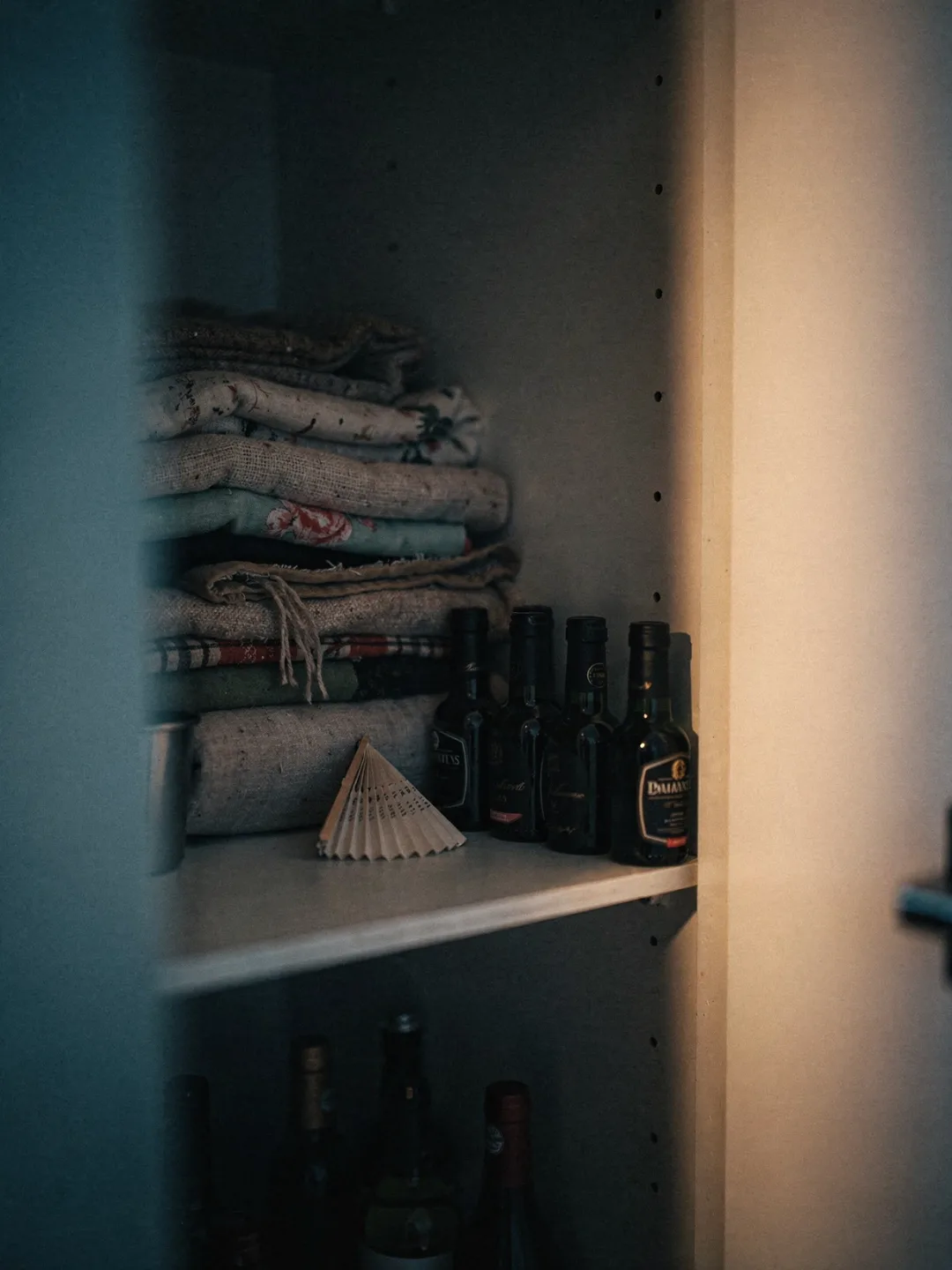
What you're looking for is an interior room with no exterior wall and no window. Such rooms fluctuate least in temperature. A storage closet, the bottom of a wardrobe, or a nook under the stairs often meets this condition better. A genuine cellar room with an exterior wall and a heating pipe, by contrast, often performs worse.
It's important to observe the spot over a few weeks, as described in the temperature stage. A perfect spot is rare. A workable spot, on the other hand, is almost always there if you search with a bit of patience. Nobody needs to claim there's no suitable place at all.
When a wine fridge makes sense
A wine fridge is worth it above all when your home really doesn't offer a stable spot, or when you plan to store larger quantities over several years. When buying one, what matters isn't so much the stated bottle capacity, which often only holds true for very slim bottles, but the actual usable interior space for your own bottle shapes.
Also consider where you'll put it: a wine fridge needs clearance from the wall for cooling and produces a quiet but constant operating noise. In a small apartment this can be disruptive in the bedroom, whereas in a kitchen or hallway it's barely noticeable.
Storing and being ready to drink are two different things
A wine fridge often keeps wine at the same temperature suited to storage, usually around 12°C (54°F). But for drinking, many wines need a different temperature: red wine a bit warmer, most white wines cooler. If you want every single bottle held at its ideal serving temperature inside the fridge, you end up buying technology you'll barely use.
A brief bit of preparation before opening is more practical: take the white wine out of the fridge half an hour before serving, or, conversely, pop it in briefly to chill. Those few minutes of effort replace any expensive equipment meant to permanently maintain a fixed serving temperature.
Small quantities, big impact
If you only own a dozen bottles, you don't need a system, just a good, calm spot and a bit of organization. A rack with a few compartments helps if every bottle has a fixed place. That way, bottles don't get forgotten at the very back, and they won't sit around long past their drinking window either.
Only once your collection grows and you yourself no longer know exactly what you own does a wine fridge, or at least a proper structure, really start to make sense. Until then, a deliberately chosen, calm shelf is more than enough in the vast majority of homes.
When there really is no space
In very small apartments, sometimes there's no quiet interior space at all. Often the only option left is a shelf in the regular wardrobe, far from the heating. That's still better than having no fixed spot at all.
A sturdy box under the bed can also work, as long as it's out of direct sunlight and away from heating vents. The most important thing is a fixed spot you remember and keep using consistently.
The difference between a stopgap and a long-term solution
A stopgap for a few months can be simple. For ten years of storage, though, it's worth being more careful in your choice. Test the spot first, as described in the temperature section, before storing valuable bottles there.
Over time, a quick stopgap can become a deliberately chosen, permanent spot. The difference rarely lies in the technique, but mostly in the attention you give the place at the very start.
Also ask yourself how often you can actually access this spot and how easily you can check on it day to day. A storage spot you can barely reach is rarely maintained over the years and eventually just gets forgotten, no matter how good it sounds in theory. Accessibility matters almost as much as temperature in the end.