A question of cork
Lying down or standing up
Whether a bottle should lie down or stand up depends almost entirely on the closure, not on the price or the quality of the wine inside.
Why natural cork wants to lie down
Natural cork stays elastic as long as it's moist. If a corked bottle stands upright for a long time, the part of the cork that has no contact with the wine slowly dries out and shrinks slightly. That lets in more air than is good for controlled aging.
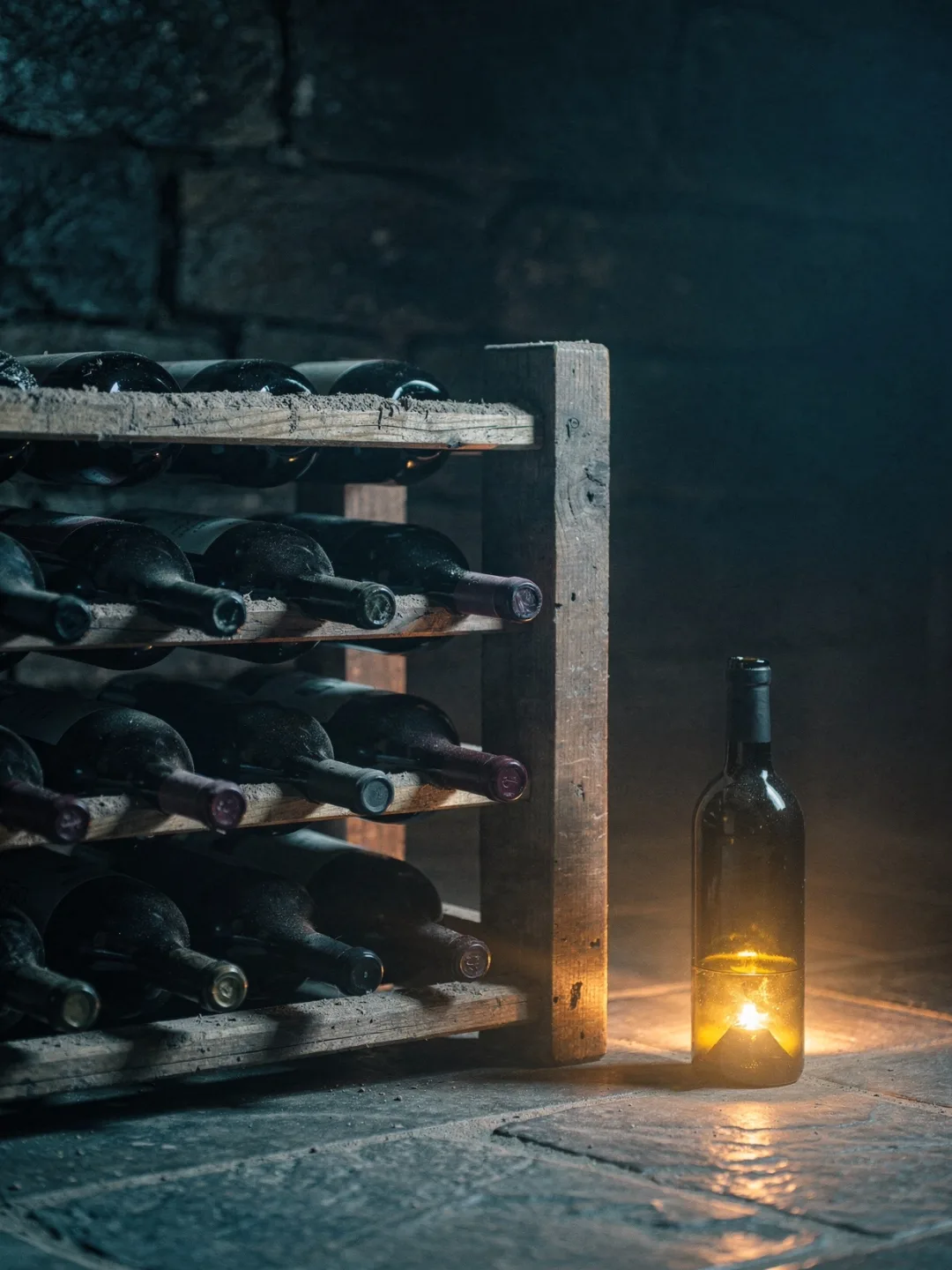
If the bottle lies on its side instead, the entire cork stays in constant contact with the wine and swells evenly. For bottles meant to be stored for longer than a few months, this is the safer position. For shorter periods before drinking, orientation practically doesn't matter.
Why other closures behave differently
Screw caps, glass stoppers, and synthetic corks don't need moisture to stay sealed. Bottles with these closures can stand without any harm. A screw cap isn't a sign of a simple wine, either: many high-quality white wines from Australia or New Zealand deliberately use them because they seal especially reliably.
If you have both types on the same shelf, you can apply a simple rule: screw-cap bottles upright at the front for near-term drinking, corked bottles lying down for the longer haul. A quick glance at the bottle neck when stocking the shelf saves you from having to figure out the right position later.
Sparkling wine and Champagne as a special case
With sparkling wine sealed by natural cork, the question is contested. The thick, mushroom-shaped cork already has far more contact pressure against the bottle than a still wine's cork, thanks to the carbonation. Many producers still recommend a lying position for longer storage, while others consider upright sufficient as long as the cork doesn't dry out completely.
For home use over a few months, orientation makes barely any measurable difference for sparkling wine. What matters more, as described in the other stages, is a stable, cool, dark environment. Still, if you plan to keep a bottle for years, lying it down is the safer choice.
A misconception that persists
Some people believe a wine stored on its side ages better or faster than one stored upright, as a general rule. That's not true. Position only affects how well the closure seals, not the speed of the actual chemical aging processes happening inside the bottle.
A screw-capped bottle stored upright ages its contents just as reliably as a corked wine lying down; the oxygen exchange just happens differently. So for storage decisions, the closure is what counts, while what ends up in the glass ultimately comes down to acidity, tannin, and sugar from the structure stage.
A look inside a wine shop
In a well-stocked wine shop, nearly all corked bottles already lie on shelves, often slightly tilted in special racks. That's no accident, it's standard practice built on decades of experience with exactly this problem.
Screw-cap bottles in the same shop, by contrast, often stand perfectly upright in boxes or on pallets. Nobody in the trade gives it a second thought, because the closure itself already handles everything necessary.
What matters when moving bottles onto your own shelf
If you buy a case with mixed closures, it's worth a quick sorting step when putting them away. Take a look at each capsule before the bottle disappears onto the shelf. This takes only a few seconds per bottle.
This way you avoid a corked bottle accidentally standing upright for months just because nobody took a close look. A single glance while stocking the shelf saves you an unpleasant surprise later when you open the bottle.
When an old cork breaks while opening
After twenty or thirty years, even a cork stored on its side becomes brittle. When opening, it sometimes breaks despite all care. This isn't a sign of spoiled wine, simply a sign of the material's age.
For such cases there are special two-pronged corkscrews that grip the cork from the side instead of piercing it. Anyone who regularly opens very old bottles will eventually find such a tool nearly indispensable.
Small crumbs in the glass are harmless in this case. A fine sieve while decanting catches them reliably. The taste of the wine remains completely unaffected, no matter how many crumbs were in the cork.