The Right Moment
The Drinking Window
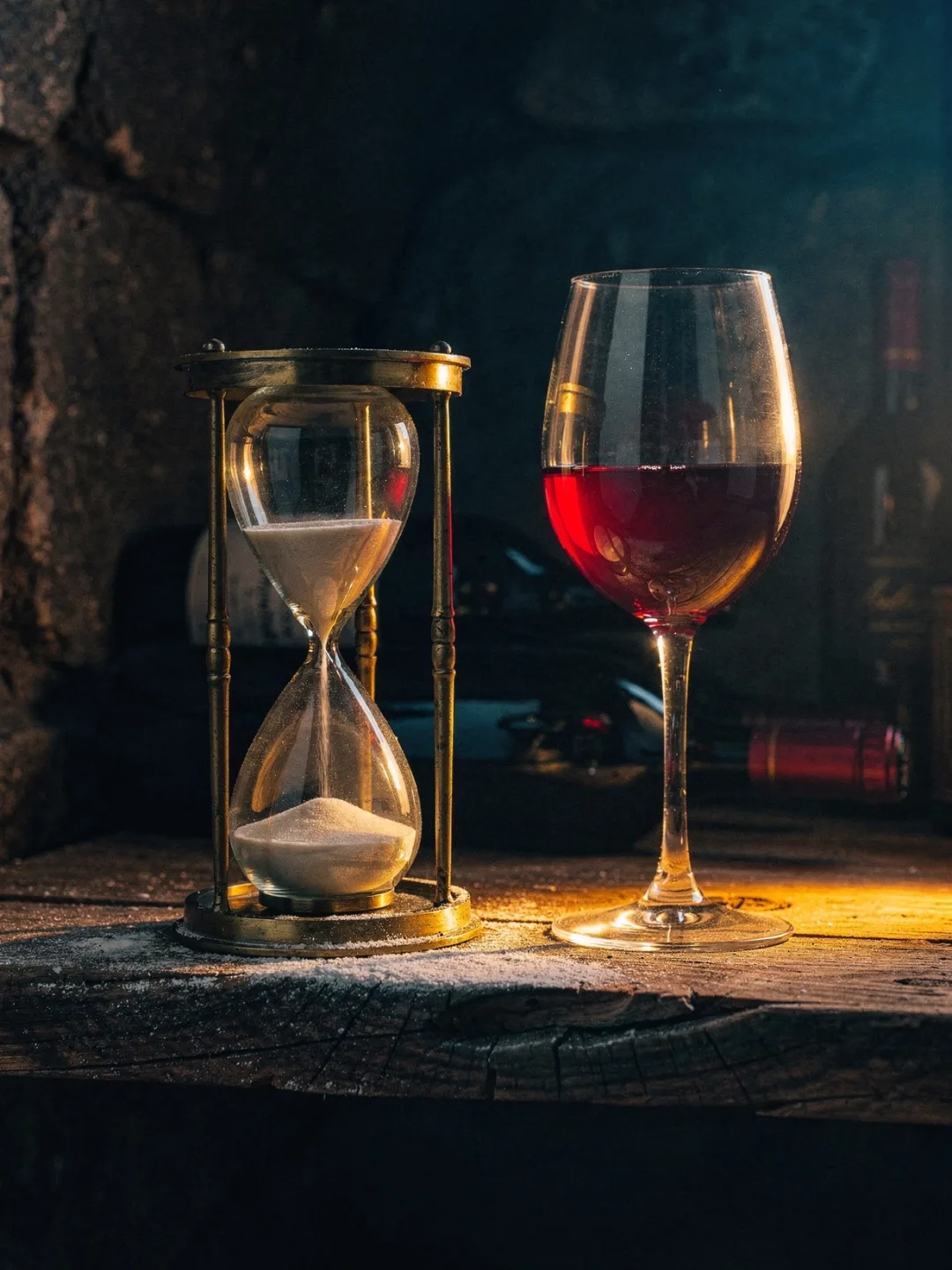
Every age-worthy wine has a span of time in which it tastes best. Experts call this the drinking window. It begins once rough, youthful edges have faded, and ends once fruit noticeably starts to fade.
How a Drinking Window Forms
A drinking window isn't a fixed number, but a span between two points. The first point is reached once harsh tannins or sharp acidity have settled and the wine feels rounded. The second point is reached once fruit and structure have broken down enough that the wine tastes flat. Between these lies the stretch where a wine shows its full potential.
How wide this window turns out to be depends on the individual wine. A simple, fruity wine often has only a year or two of room. A great, well-structured red wine or a noble sweet white wine, on the other hand, can stay wonderfully drinkable for over a decade. There's no single drinking window for wine in general, only one for each individual bottle.
Where to Find a Reference Point
The most reliable source is the producer itself. Many wineries state on their website, or on request, when they consider a given vintage ready to drink. Wine critics and magazines also publish assessments of entire vintages, noting for example whether a Bordeaux vintage is meant to be enjoyed early or built for long aging.
The vintage itself offers clues too. A cool, wet year often yields lighter wines with a shorter window, while a warm, ripe year tends to produce more powerful wines with greater aging potential. Anyone who can read a label at least finds the vintage there as a starting point for their own judgment.
Opening a Bottle as a Test
For larger quantities of the same wine, a simple method pays off: open one bottle early, one around the presumed midpoint, and the last one late. This lets you track the wine's development on your own palate, rather than relying solely on outside opinions. Jot down the date and your impression briefly, and over time a personal picture emerges.
This method does cost you a bottle that might otherwise have kept maturing. In return, you get an honest answer for this exact wine, from this exact cellar, under these exact conditions. No general chart can fully replace this kind of firsthand experience.
When the Window Closes
A wine that has passed its window doesn't automatically become undrinkable. It simply changes in a direction many drinkers find less appealing: the color turns dull, fruit recedes, and sometimes notes of nut or dry straw appear. Some lovers of old wine actually prize this exact state.
A reliable sign of a real fault rather than mere maturity is a scent of vinegar or damp cardboard. One points to a wine that's turned too acidic, the other usually to cork taint. Neither has anything to do with a normal drinking window, and both can happen regardless of a bottle's age.
A Real-World Example
Picture two bottles: a simple Beaujolais and a solid Rioja Reserva. The Beaujolais lives on its fruit. Already after a year that fruit starts to fade. After three years its window is usually closed. Waiting won't help here.
The Rioja Reserva has already spent several years in barrel and bottle before it even reaches the shelf. Its window often only begins where the Beaujolais's has long since ended, and it easily stretches on for another five to eight years.
A Simple Trick for Your Own Cellar
Label new bottles with the purchase date as soon as you store them. That way you can see at a glance how long a bottle has been sitting with you, and how old the vintage really is. A small sticker is all it takes.
Practice makes the biggest difference here. After a few years of collecting on your own, you'll develop a feel for which wines you like best young, aged, or somewhere in between. No book can replace that firsthand experience.