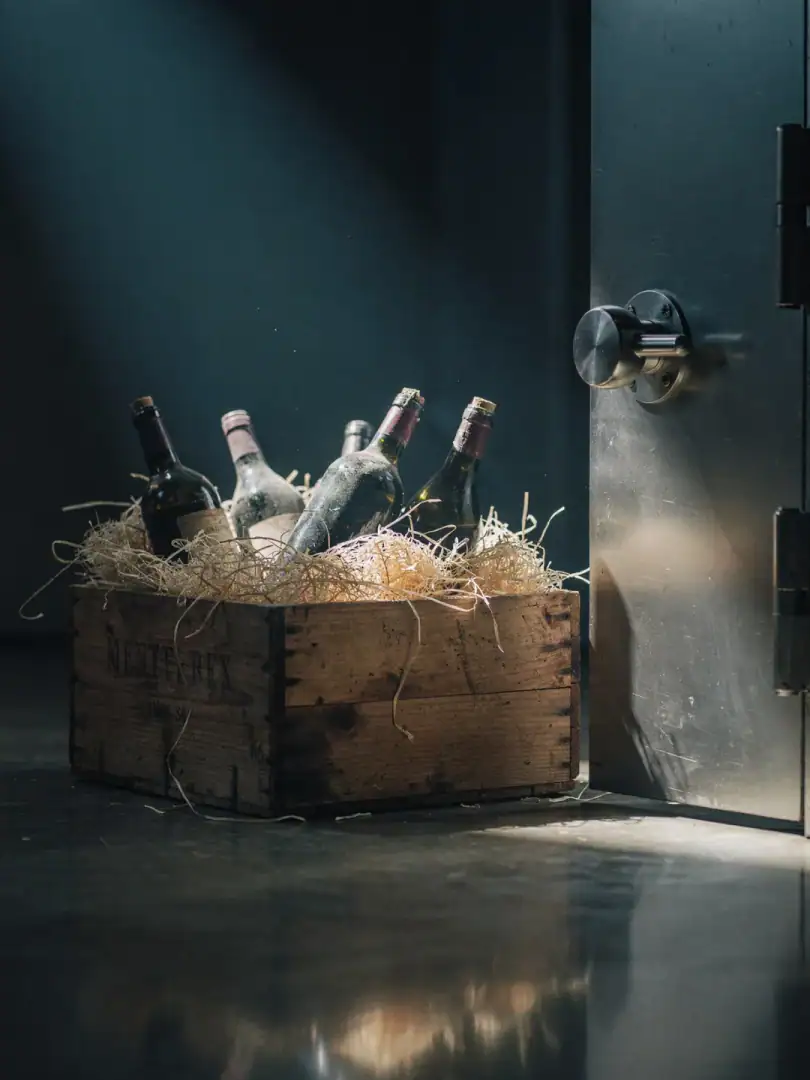
A sober look
Wine as an investment
Some bottles rise significantly in value. That still doesn't make wine an ordinary investment: the market is narrow, barely regulated, and pricier than it first appears.
Where value appreciation even happens
Only a small fraction of all wines are candidates for appreciation: well-known names from regions like Bordeaux, Burgundy, or Piedmont, with long aging potential and limited production. An average supermarket wine doesn't become more valuable with age, no matter how carefully it's stored.
A well-known index tracking trade in such collector wines rose sharply over twenty years and then gave back some of those gains in the years that followed. So prices can fall even for established names. Anyone getting into this is buying a security that happens to be made of grapes, not a sure bet.
The costs that are rarely factored in
Proper storage, insurance, and, with professional providers, management fees cost money year after year, regardless of whether the wine's value rises or falls. These ongoing costs eat into potential returns, especially in years with stagnant or falling prices.
There's also the difficulty of actually selling. Unlike a stock, a case of rare bottles can't be turned into cash in seconds. A sale can take weeks or months, and in a weak market you often get less than hoped for, simply because hardly anyone wants to buy.
Risks beyond price
The trade in expensive collector wines also attracts disreputable dealers. There have repeatedly been cases of companies promising supposedly guaranteed returns or selling wine they never actually owned. Anyone entering this space should carefully check providers and storage conditions instead of trusting promises of quick profit.
Counterfeits are also a real problem with highly sought-after, expensive bottles. Proof of provenance, an unbroken storage history, and buying through established merchants reduce this risk but don't eliminate it entirely. The higher a bottle's price, the more attractive it unfortunately becomes to fraudsters.
Who wine as an investment is actually suited for
Anyone who buys wine primarily to drink it and is happy about a possible rise in value isn't doing much wrong. Anyone who wants to invest deliberately, though, should treat it as a small, speculative slice of a larger portfolio, not as a reliable main source of income.
A realistic outlook helps more than any success story from an acquaintance. For most people, the biggest, most reliable payoff from wine ultimately remains the enjoyment in the glass, not the figure on a valuation certificate.
A realistic look at the tax side
Profits from selling wine can be tax-relevant depending on the country and holding period. The rules differ greatly between countries and occasionally change. Anyone seriously planning to invest should clarify this concretely for their own place of residence beforehand, not only at the point of sale.
This detail is often overlooked at the outset, since the hoped-for profit takes center stage. In the end, though, what matters is what's actually left after costs and taxes, not the figure on paper.
A simple alternative to pure speculation
Anyone who enjoys rare wines can simply buy bottles they intend to drink themselves someday, regardless of market price. If the value happens to rise along the way, that's a pleasant bonus, not the reason for buying it in the first place.
This mindset takes the pressure off. Even if the market falls, you're still left with a good bottle you can open, rather than a disappointing account statement.
A closing thought on the whole journey
This outlook fits the underlying idea of the entire journey through storing and aging: temperature, humidity, position, and format all ultimately serve the same goal. They're meant to keep a bottle in good condition until the right moment to open it arrives.
Whether that moment comes after one year or after twenty is decided by the acid, tannin, and sugar from the second stage. Whether the bottle even stays in good shape until then is decided by the stages in between. The rest, in the end, is simply patience. And patience alone costs nothing.