Technique and Practice
Spitting & Calibrating
At the end of a serious tasting session lies an unglamorous but essential skill: spitting reliably and staying true to your own judgment across many wines and many years.
Why Professionals Spit
Anyone who tastes ten or twenty wines in a row while swallowing each one eventually hits a wall. By the last glass at the latest, there's simply not enough sharpness left for a reliable judgment. Alcohol affects concentration and the fineness of perception long before any feeling of drunkenness sets in. Professionals often notice it in themselves first: differences that were clear a moment ago suddenly blur, and every wine starts to taste a little like the one before it.
Spitting, then, isn't a sign of restraint or a lack of enjoyment, it's simply craft. The taste of a wine forms almost entirely in the mouth and throat, long before it ever reaches the stomach. So spitting means barely any aroma is lost. If you're enjoying a bottle alone at home, none of this applies, of course. But when tasting several wines in a row, the technique pays off.
The Right Spitting Technique
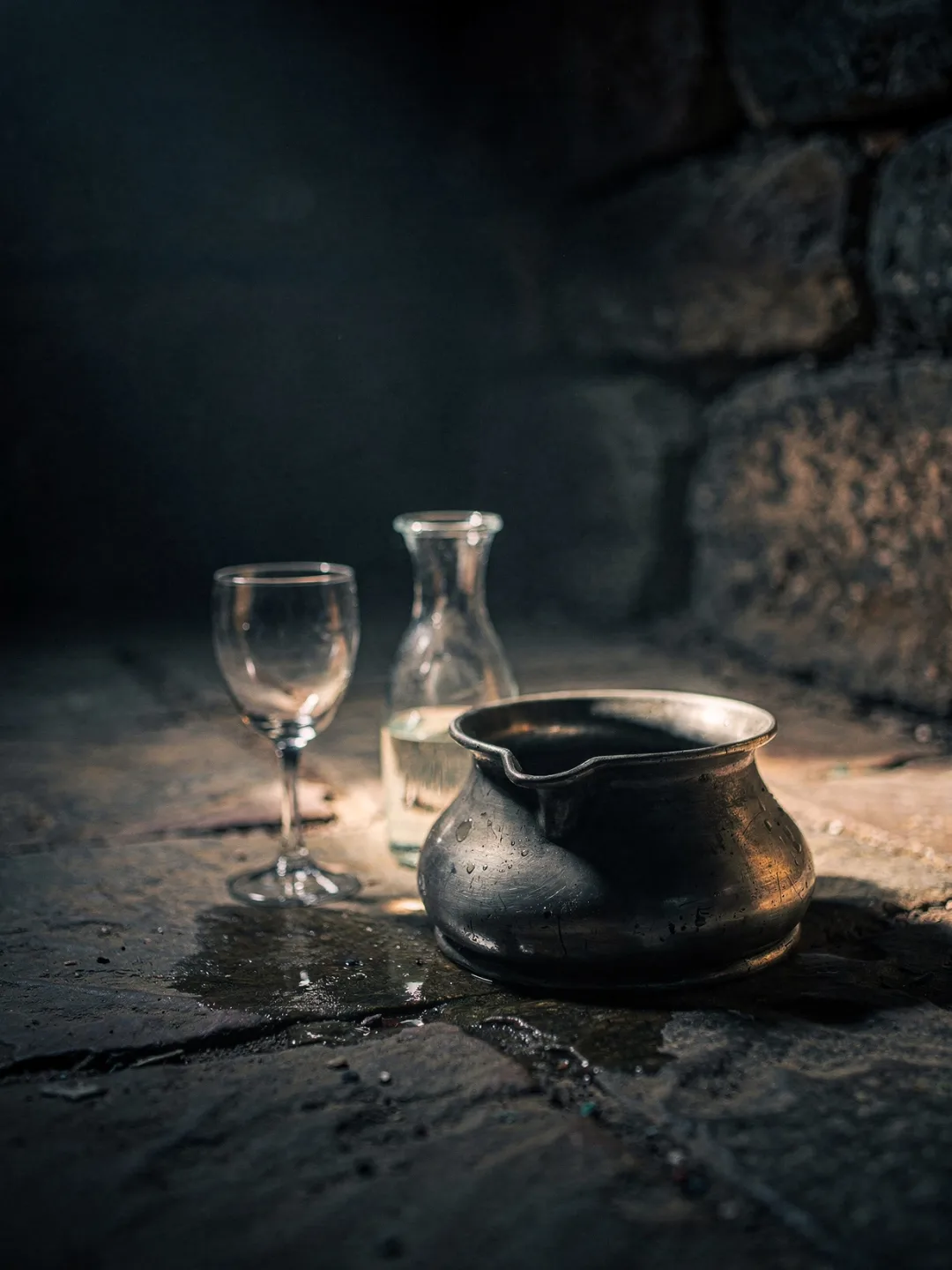
First attempts usually end up spilling more than actually landing in the spittoon. A bit of practice is worthwhile before doing it in front of other people for the first time. The wine should leave the mouth in a tight, short stream, not a loose splash. Keep your head tilted slightly forward so nothing runs down your chin. A spittoon or bucket is easier to hit from a bit of distance than one you have to lean deeply into.
The easiest way to practice is at home over the sink, using water instead of wine, until the motion feels natural. If you still feel unsure in company, simply hold the spittoon closer to your mouth. No one at the table is judging your technique, everyone's just glad for good aim.
How the Palate Recovers
After several wines in a row, the palate tires regardless of whether you're swallowing or spitting. A sure sign is when all the wines suddenly start tasting alike, or when aromas that were easy to name before become impossible to pin down. Continuing to taste in this state rarely produces reliable results, no matter how hard you concentrate.
A sip of still water and a neutral bite of white bread usually reset perception within a few minutes. What happens before the tasting matters too. Strong coffee, chili, or spicy seasoning a few hours beforehand leaves a lingering aftertaste that water alone won't fully wash away.
Calibrating: Finding Your Own Baseline
A single impression on a single evening says little about how reliable your judgment really is overall. But revisiting the same familiar bottle from time to time, say a house wine you know inside and out, is genuinely valuable. It gives you a fixed reference point for your own perception. If that familiar wine tastes unusually sharp or flat on a given day, the wine itself is often not the reason. More likely it's your own condition that day, a cold, fatigue, or simply too many samples beforehand.
This kind of check is called calibrating: regularly testing your own judgment against a known benchmark, the way a scale gets recalibrated from time to time. Building this step into your own routine reveals, over time, how much more stable your assessments become, regardless of whether the end result is a technical term, a score, or simply a satisfied nod.
When Swallowing Is the Better Choice
With two or three wines on a relaxed evening among friends, there's no reason not to simply enjoy every sip. Spitting really pays off once many wines follow each other in quick succession, or when a clear-headed judgment is needed, say, when buying for your own cellar or at a larger tasting with many bottles.
If you're unsure, just go by the number of glasses: swallow the first two or three wines without worry, then let the spittoon take over once it's about more than pure enjoyment. That way, enough clarity remains at the end to judge even the very last wine fairly.