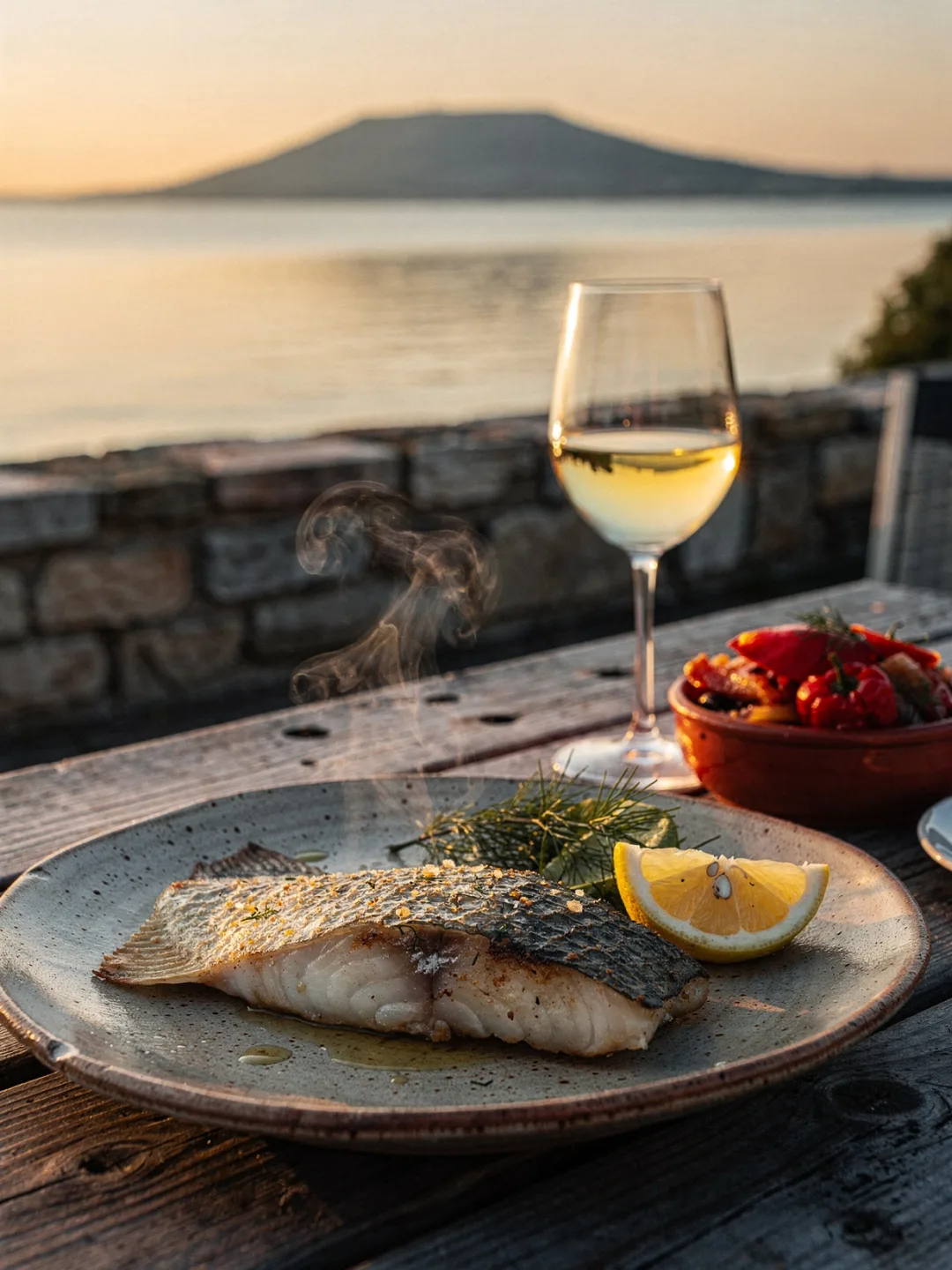
Fogas and Lecsó
Wine & Food
Fogas appears on every menu around Lake Balaton. Most guests have no idea that it isn't actually a separate species of fish. Fogas and Süllő are both the same pike-perch, Sander lucioperca. Only the larger specimens caught in Lake Balaton have been called Fogas since a marketing idea from the 1920s. It's a matter of size, not biology.
This mildly pan-fried fish pairs almost always with a young Olaszrizling from Balatonfüred-Csopak. Its acidity cuts through the delicate, slightly fatty flesh without overpowering the fish's mild flavor, and it's exactly this restraint that makes the variety the most reliable food companion around the whole lake.
Things look different with Balatoni Halászlé, the spicy fish soup made from several freshwater fish and plenty of paprika. The same Olaszrizling usually falls short here. The soup's heat and tomato notes call for more weight and less acidity. That's why many restaurants around the lake instead pour a full-bodied Kéknyelű or even a light red wine from southern Hungary.
Sooner or later, every holiday cottage by the lake sees Lecsó on the stove — the braised vegetable dish of peppers, tomatoes, and onions, often rounded out with bacon or sausage. A young, uncomplicated Olaszrizling handles the mild heat with ease, while a heavy, oak-aged wine would simply feel out of place next to such a humble dish.
To wrap up, here's a rule of thumb for the whole table. Fatty, mild dishes like pan-fried Fogas mainly need acidity. Spicy, well-seasoned ones like Halászlé or Paprikás Csirke need fullness and little acidity instead — and anyone who mixes that up will notice immediately on their own palate.