Tasting an Olaszrizling
Tasting
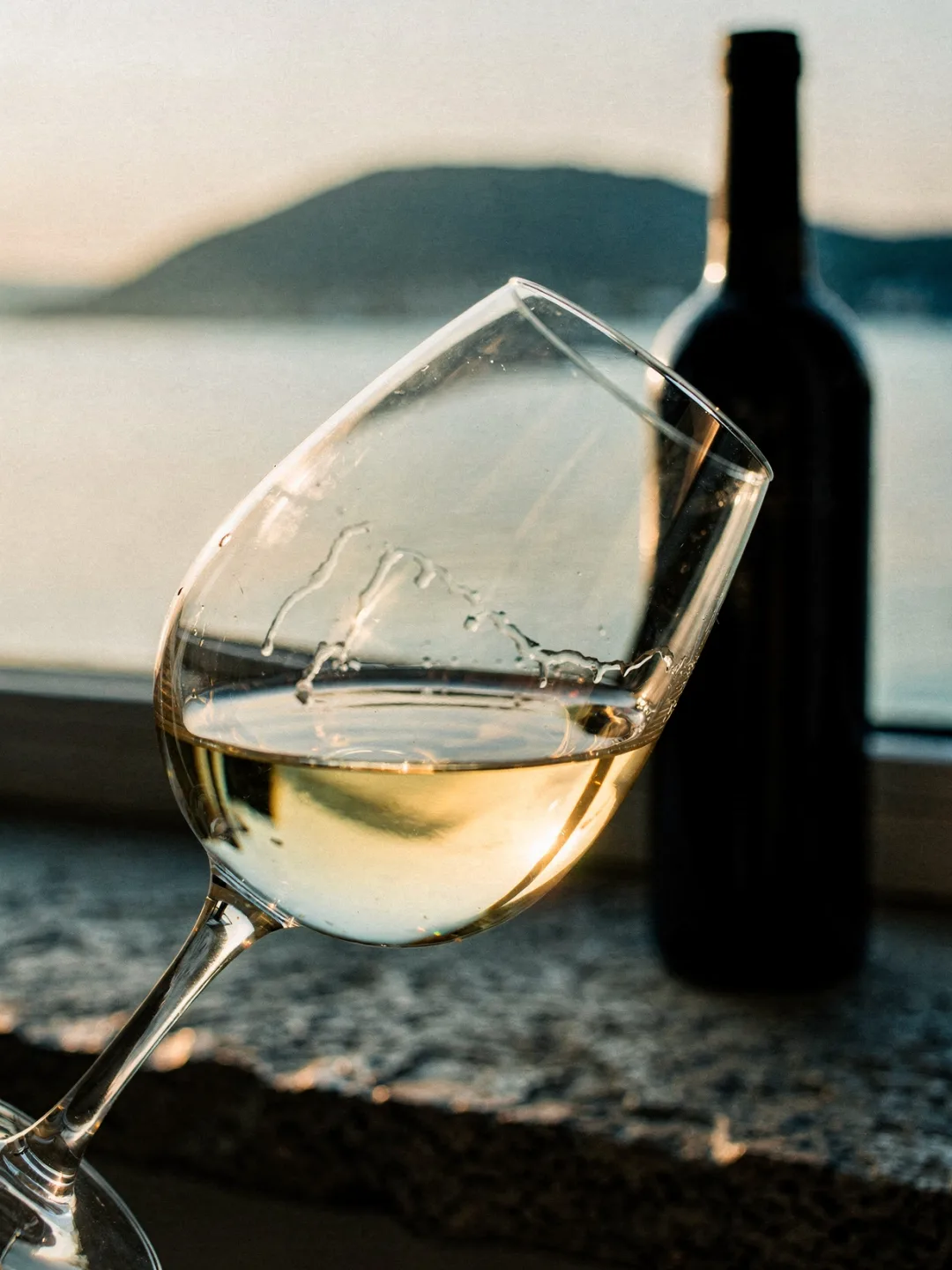
In the glass, an Olaszrizling from Lake Balaton usually shows a pale, slightly greenish straw-yellow, rarely more. The grapes are picked early to preserve acidity — the deeper the yellow, the riper and warmer the vintage tended to be.
Smell it gently first, without swirling. A typical Balatonfüred-Csopaki Olaszrizling shows a hint of mignonette, often alongside a fine, slightly bitter almond note. Many people only notice it consciously after the second or third glass — it sits more at the back of the palate than at the front of the nose.
On the palate, acidity comes first, sharp and direct. A salty aftertaste almost always follows. This salinity comes from neither actual salt nor proximity to the sea, which doesn't exist here anyway. Rather, it comes from the minerals that the basalt and red sandstone release into the lake.
Kéknyelű behaves completely differently. Even its color is bolder, almost gold, and in the mouth the wine feels denser than any Olaszrizling. Some tasters describe a slightly astringent grip, that rough sensation on the gums usually associated with red wine and rare in a white.
In the end, length is what counts. How long does the salty, almondy aftertaste linger after the wine is swallowed? With a simple table wine, it's two or three seconds; with a varietal Kéknyelű from old vines, often twenty. This length is exactly what separates an everyday wine around the lake from one where the effort on the basalt slopes truly paid off.