Game and Home Butchering
Wine & Food
What lands on the table in Eger is hearty, often pork-based, and rarely restrained in its seasoning. Bikavér is tailor-made for exactly that: its acidity cuts through fat like a knife. Its tannin binds to protein, and together they turn a heavy dish into a lighter eating experience than it would be on its own.
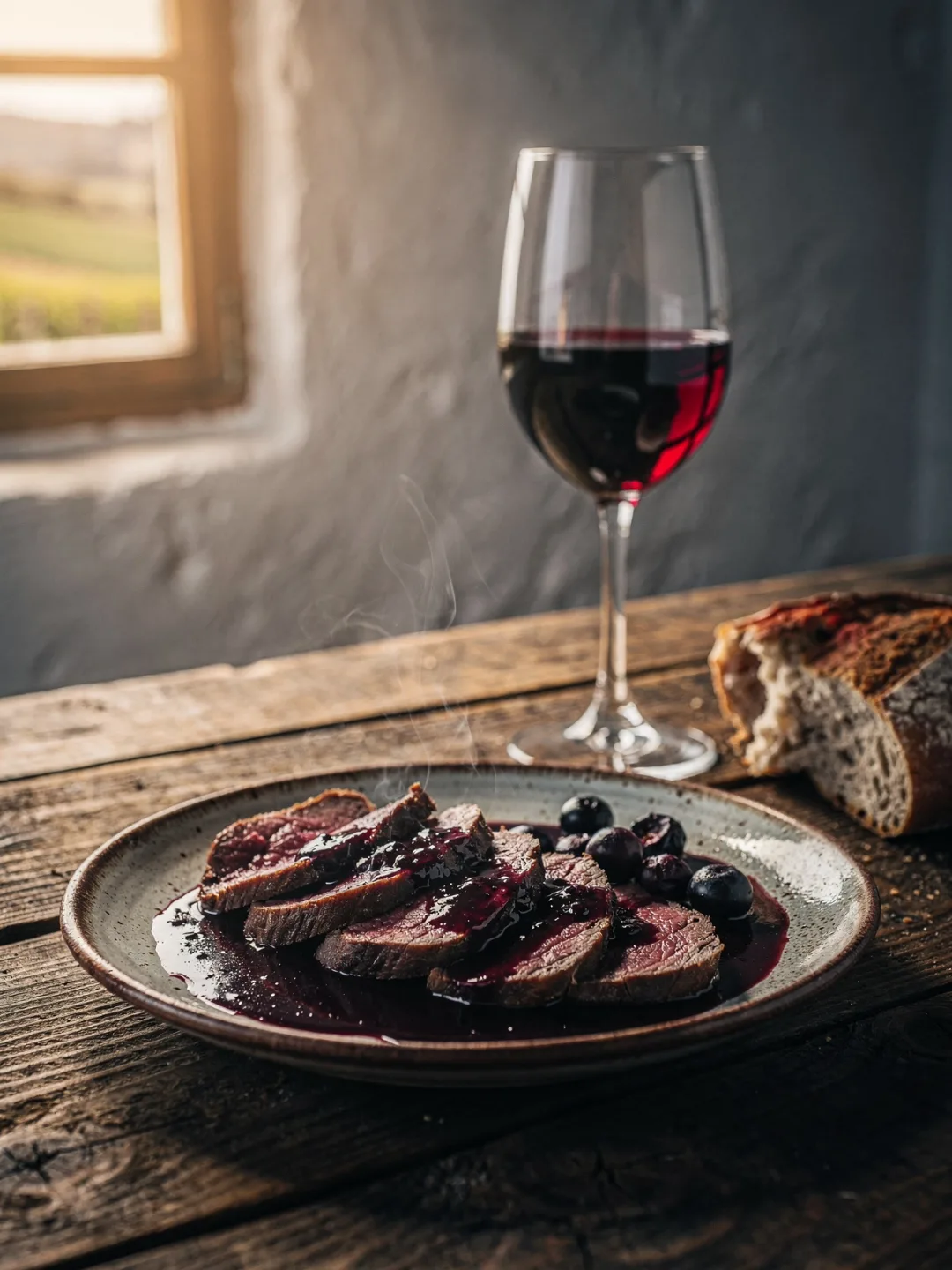
This shows most clearly in a dish that often appears on menus throughout the region: venison, usually deer, in a sauce of blueberries and the very same Bikavér it's served alongside. The sweetness of the berries meets the wine's acidity. The bold gamey flavor meets its tannin. In the end, neither stands out on its own — only the combination does.
The connection to pork runs just as deep. Around Eger, winter traditionally ended with disznótoros, the home slaughter, in which a single animal was turned over several days into sausage, lard, and hearty roasts. Alongside the fatty, often smoked cuts of meat, people poured young, tannin-rich Bikavér. No coincidence — a cuisine and a wine that grew up in the same village.
Things are lighter with the potato dishes of the villages around Eger, such as macok, a thick potato pancake baked in a pan. A heavy red wine doesn't suit this dish. Better choices are the white Egri Csillag with its floral fruit, or a young, barely aged Bikavér Classicus, served slightly chilled. For the sweet finale, egri gömbpalacsinta with walnut cream and vanilla sauce, no wine at all is usually served in Eger. Here, the sweetness of the dish speaks for itself.