Tasting a Bikavér
Tasting
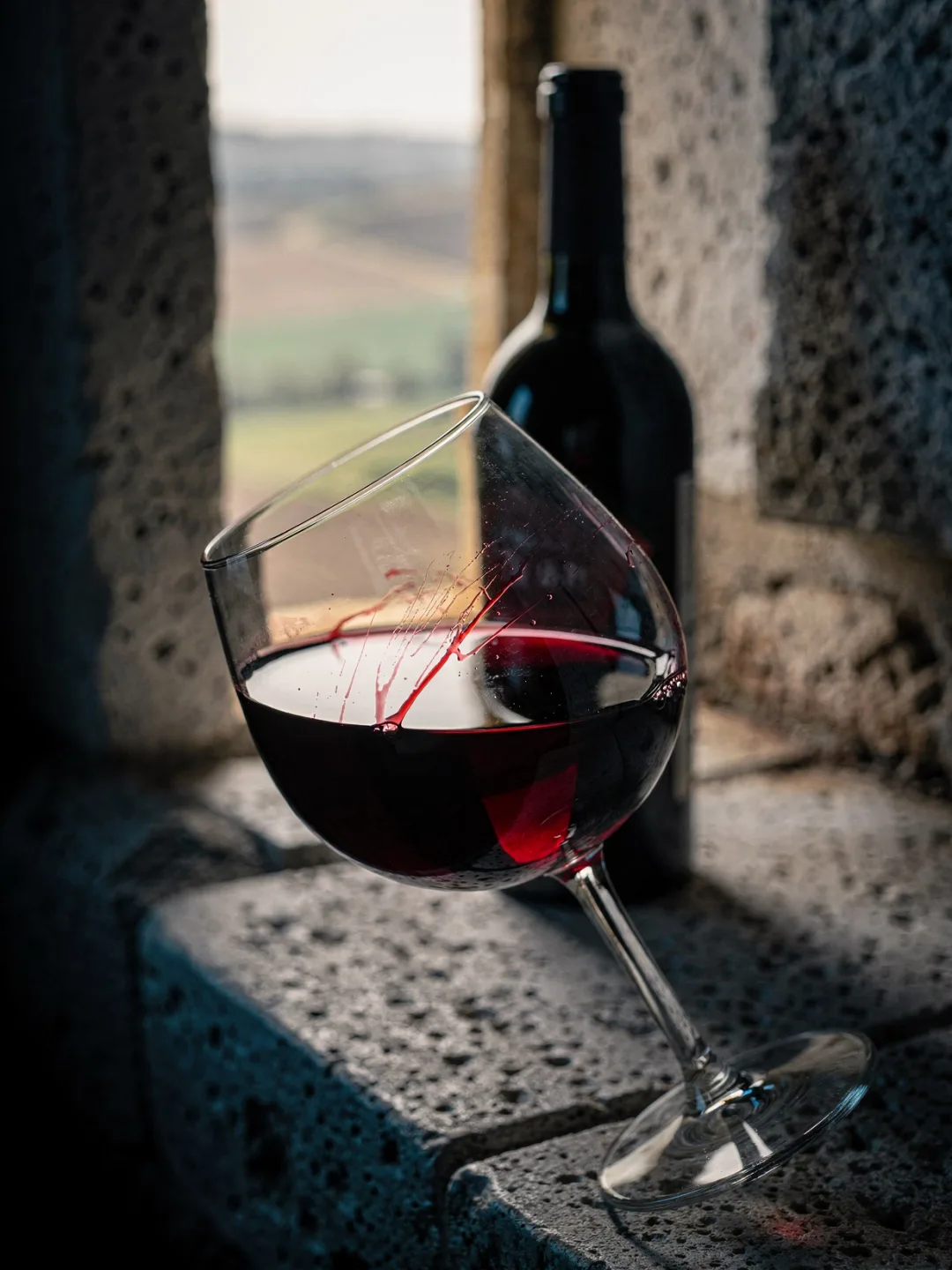
Tilt a glass of Bikavér against something light-colored. The color already reveals the origin of the grapes: deep garnet red with a rim that shifts toward ruby, darker than a Chianti, lighter than a pure Cabernet. This comes from Kékfrankos, which carries the color and structure of the whole blend, even with a dozen other varieties playing a part.
Smell it twice: once with the glass still, once after swirling. First, sour cherry and red plum rise up, light and fleeting. After swirling comes what's heavier: black pepper, a trace of clove, and in a barrel-aged Superior, vanilla and toasted oak as well. This peppery sharpness is the signature of Kékfrankos — no other red wine from Central Europe smells quite like it.
In the mouth, it's best to separate two things. You feel the acidity along the sides of the tongue. It makes the mouth water and keeps the wine fresh despite fourteen percent alcohol. The tannin sits above it like a fine but distinct coating on the gums — firmer than in a Pinot Noir, finer than in a young Cabernet. A good Bikavér balances both, so neither one stands out.
Finally, count the seconds the flavor lingers after swallowing. In a young Classicus, it's six or seven — pleasant, but not overwhelming. In a Grand Superior from the Nagy-Eged-hegy, aged sixteen months in barrel, cherry, pepper, and a smoky undertone often carry on for half a minute. It's a difference by which you can tell the region's three quality tiers apart blind, with no label needed.