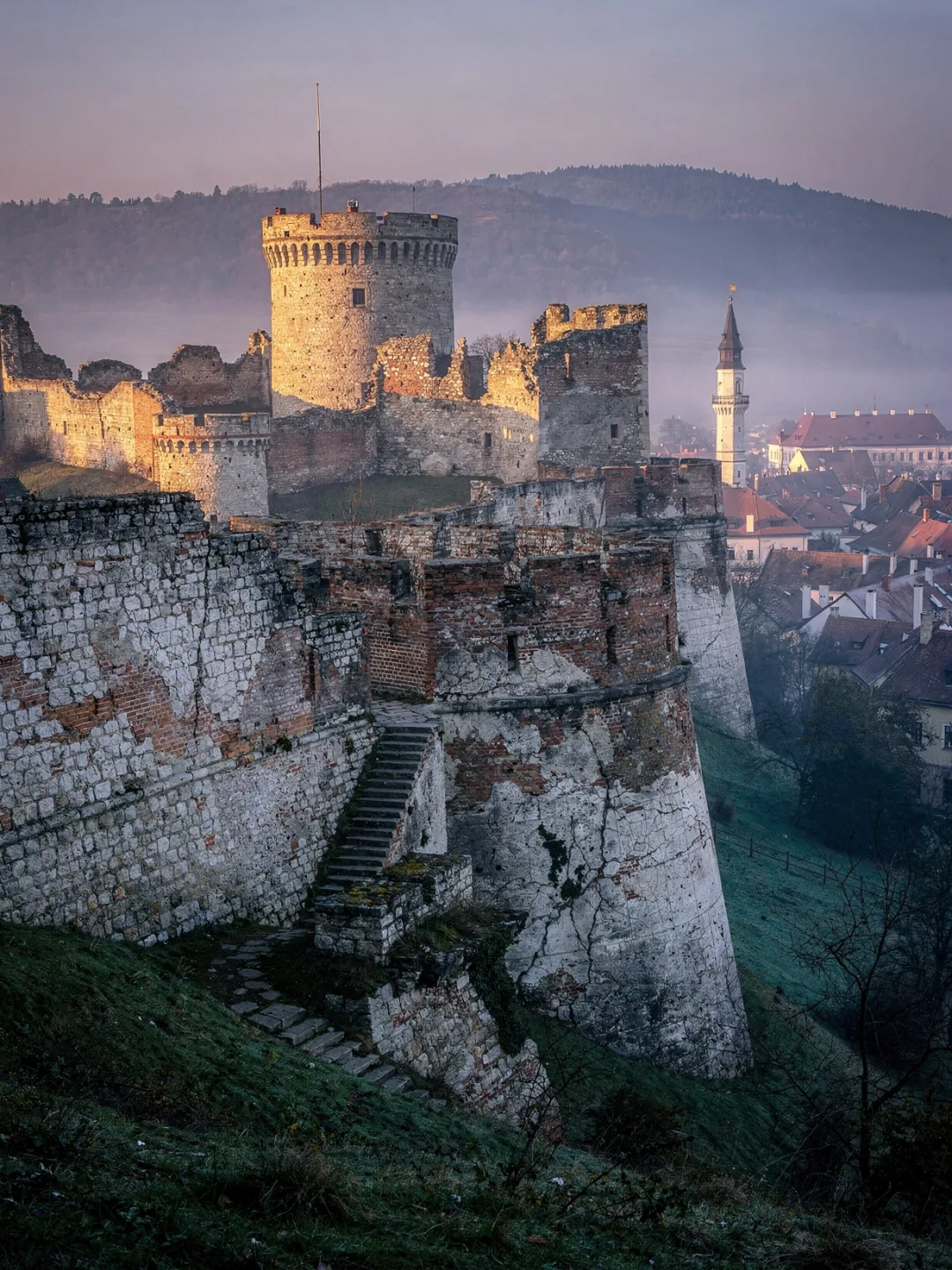
Dobó István, 1552
Region & History
Monks planted vineyards here long before anyone spoke of Bikavér. That was already happening in the thirteenth and fourteenth centuries, on the hills south of the Bükk Mountains. Red wine was barely known back then, since Hungary was a country of white wine. That changed only in the fifteenth century, when Serbian refugees fled north from the advancing Ottomans. The Rácok, as they were called in Hungary, brought with them the Kadarka grape variety and the knowledge of fermenting red wine openly on the skins.
In 1552, an Ottoman army of roughly forty thousand men besieged the castle of Eger. It was defended by barely more than two thousand three hundred men under castle captain Dobó István. They held out for six weeks. In the end, the besiegers withdrew defeated, and Dobó István became a symbol of Hungarian resistance — to this day, a school, a street, and a wine cellar in the city bear his name.
Around this victory grew Hungary's most famous wine legend. Dobó István is said to have poured dark red wine for his exhausted soldiers, and when the besiegers saw the red stains on shirts and beards, they took it for bull's blood, believed to grant superhuman strength. Hence the name Bikavér. It's a beautiful story, though probably not a true one: in 1552 Hungary produced almost exclusively white wine, and the word Bikavér doesn't appear in writing until 1846, in a drinking song by the poet Garay János. The legend only became national history in 1901, through Gárdonyi Géza's novel Egri csillagok, still read in Hungarian schools today.
The glory of 1552 lasted less than fifty years. In 1596, Eger fell to Sultan Mehmed III after three weeks, beginning an occupation of ninety-one years that ended only in 1687. Winemaking continued, since it brought in tax revenue, and the Kadarka vines of the Rácok stayed in the ground.
All of this only became official much later. In 1997, Egri Bikavér became Hungary's first wine to receive a protected designation of origin, the Districtus Hungaricus Controllatus, or DHC, modeled on the French AOC. In 2004, the stricter Superior tier was added. In 2010, the winemakers finally agreed on a white counterpart, Egri Csillag. Out of legend, occupation, and migration came, rather belatedly, a rulebook with paragraphs.