Kékfrankos & Kadarka
Grape Varieties
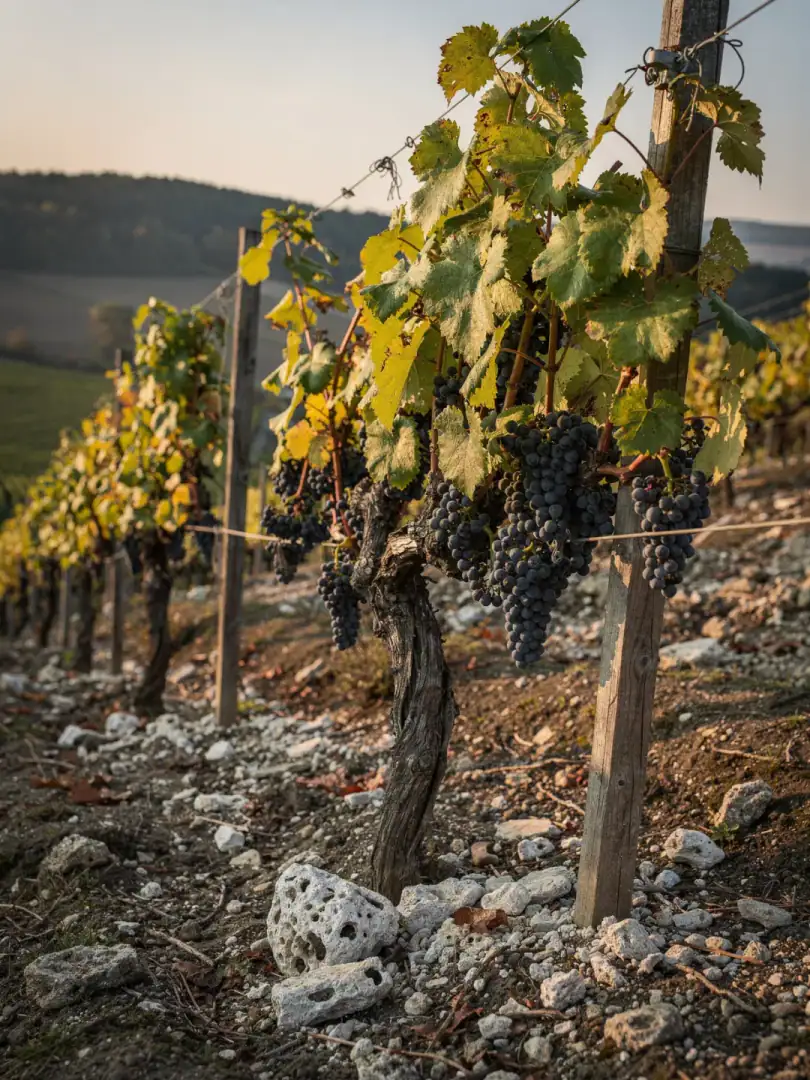
Kékfrankos carries nearly the entire weight here. It's the grape behind the region's famous red wine. In every Egri Bikavér it must make up the largest share, between thirty and sixty-five percent, as the regulations prescribe. In the glass, you recognize it by sour cherry and red plum flesh. Add to that a dab of black pepper, and after swirling, a trace of clove. The acidity is firm, the tannin fine but noticeable. It's exactly this combination that makes the wine drinkable young while still allowing it to age.
Before Kékfrankos, another variety ruled here: Kadarka, brought by Serbian refugees in the fifteenth century who moved north to escape the Ottoman army. It remained the main variety in Bikavér until well into the twentieth century. Phylloxera and socialist-era mass production nearly wiped out the old vines. Today it's back, but only in small amounts. Kadarka and the related Bíborkadarka may together make up at most ten percent of the Classicus blend, since their thin skins yield little color or tannin. What it lacks in power, it makes up for in spice, along with a distinctive aroma of dried herbs.
The rest of the thirteen permitted varieties come from both newcomers and homegrown crossings alike. Cabernet Sauvignon, Cabernet Franc, Merlot, and Syrah bring body and dark fruit. Pinot Noir and Zweigelt add lightness, Kékoportó contributes gentle tannin. In between stands Turán, a Hungarian crossing bred from Kadarka. It delivers so much color and extract that the regulations cap it at ten percent — any more, and the Bikavér would taste of Turán instead of itself.
White wine is no afterthought in Eger. Egri Leányka and Olaszrizling have grown here for generations, along with Furmint and, from the villages around Debrő, the specially protected Debrői Hárslevelű. Since 2010, winemakers have been allowed to blend these into a white counterpart to Bikavér, called Egri Csillag. The blend requires at least four varieties, half of them native to the Carpathian Basin. A dash of aromatic crossings like Irsai Olivér or Cserszegi Fűszeres is added, but never more than thirty percent, or the wine tips into the overly perfumed.