Libamáj and Strudel
Wine & Food
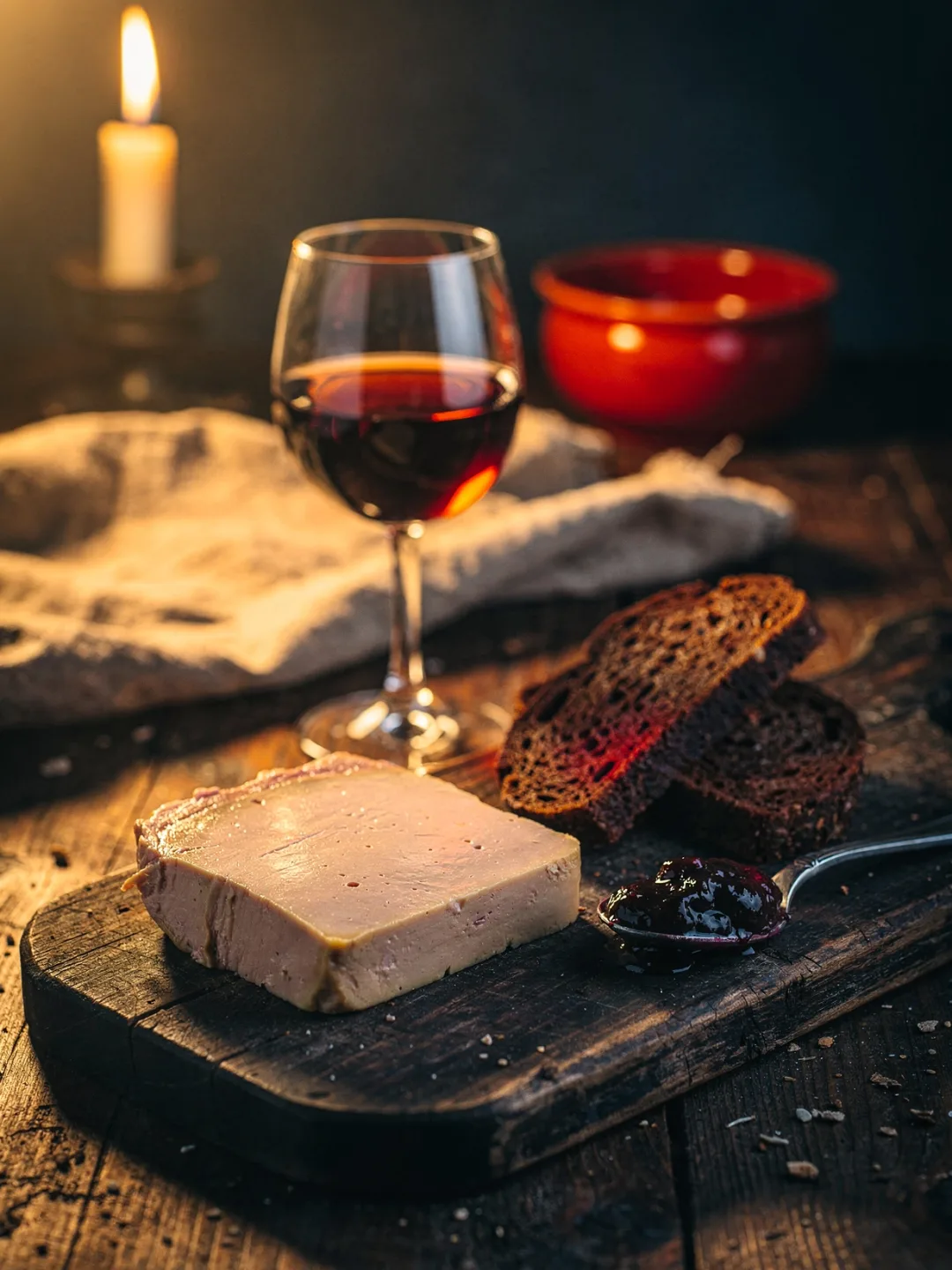
Few pairings are as famous as Aszú and foie gras, libamáj in Hungarian, and Hungary is among the world's largest producers, where in Tokaj it's traditionally eaten cold, as a terrine, with toasted bread.
The sweetness of the Aszú doesn't sit alongside the fat of the liver. It cuts right through it, much as acidity does with a dry wine. Fat mutes the sweetness on the tongue, while the acidity in the Aszú in turn tames the fat. In the end, both stay in balance, with neither overwhelming the other.
The same logic works with a bold blue cheese. Salt and mold need a counterweight that isn't weak itself, and a six-puttonyos Aszú manages this effortlessly. A light white wine would simply vanish next to that much cheese.
Dry Furmint, by contrast, belongs not to dessert but to the everyday side of Hungarian cuisine. Its acidity suits Halászlé, the spicy carp and paprika fish soup, just as well as grilled river or lake fish from the nearby Tisza. There, the bold seasoning needs something to push back against it without itself being sweet.
One rule applies to dessert, regardless of which wine is served: it must be sweeter than what's on the plate. Otherwise, next to cake or strudel, it suddenly tastes sour and thin. A six-puttonyos Aszú outstrips practically any Hungarian pastry in sweetness. That's why it pairs well even with the densest poppy seed and walnut strudels.