On an Aszú
Tasting
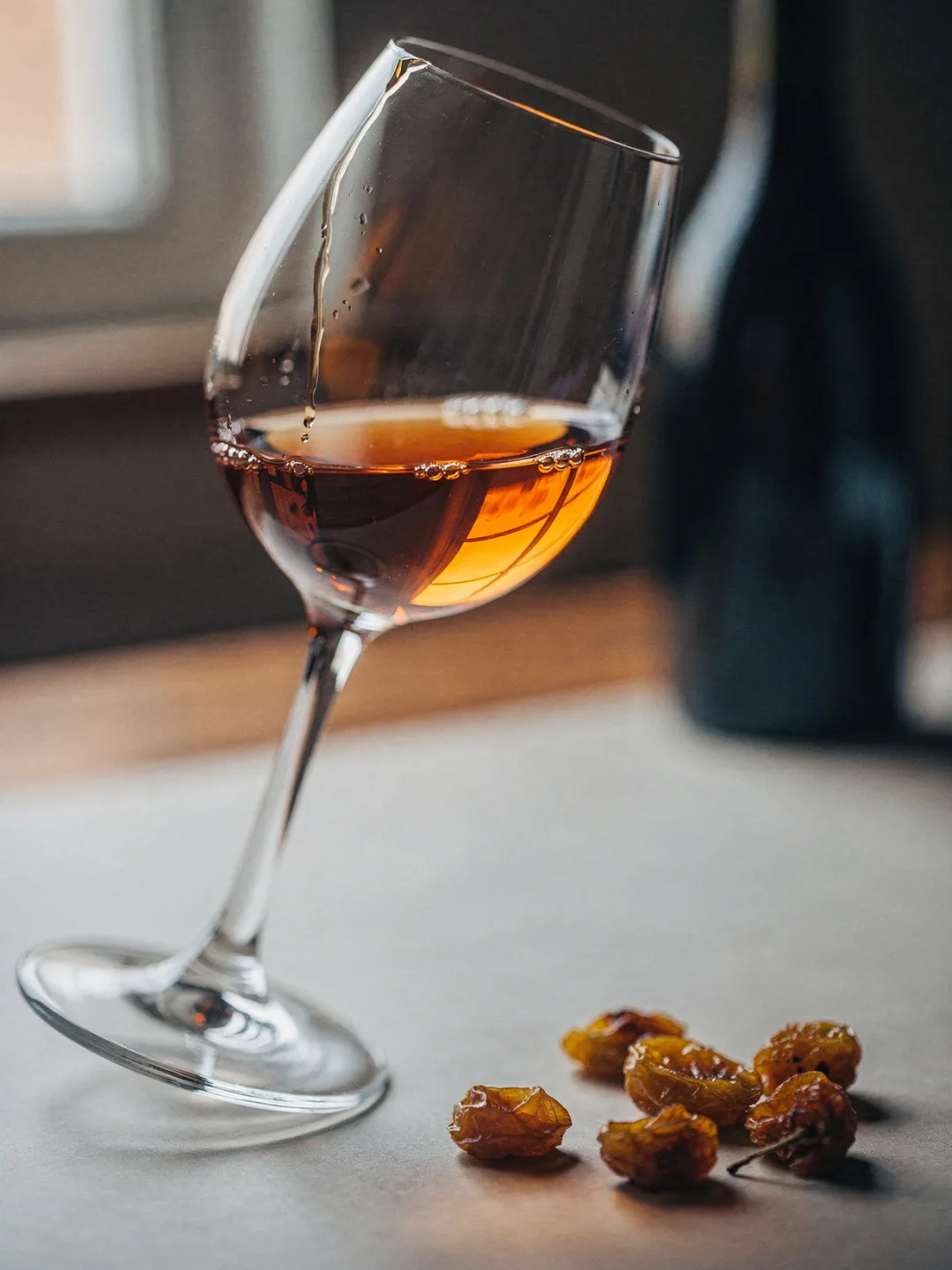
Hold a young Aszú up to the light and it glows golden to amber, never the pale green-yellow of a dry white wine, while after ten or twenty years it deepens into rich amber, almost like strong tea.
Swirl the glass, and thick, slow-running streaks form along the rim, colloquially called church windows. They come from the high sugar and glycerol content. That says more about the concentration of an Aszú than any number on the label.
On the nose, fruit comes first: ripe apricot, sometimes quince, along with honey and a hint of saffron. This combination occurs only in botrytized Furmint grapes. After swirling, more complex notes follow: orange peel, roasted nuts, sometimes a whiff of smoke from the old Gönci Hordó.
On the palate, everything hinges on a single point: the balance of sweetness to acidity. An Aszú that tastes only sweet is considered a failure in Tokaj. What carries it is Furmint's razor-sharp acidity, which cuts through even one hundred fifty grams of sugar. In the end, this makes the wine feel refreshing rather than cloying.
In the end, length is what counts. A good Aszú lingers for a minute or longer, with shifting aromas that reveal themselves one after another. When tasting several styles in a row, always start with dry Furmint, then Szamorodni, then Aszú in ascending order of puttonyos. Any other order will strip the acidity from the next wine, since sweetness numbs the tongue to anything more delicate that follows.