Gönci Hordó & Aszú
Production
The Aszú harvest is the slowest in winemaking. Pickers pass through the same vineyard multiple times, taking each shriveled berry individually off the bunch. This can stretch over weeks. Noble rot never covers an entire vineyard at once. It takes patience.
The collected Aszú berries go into barrels of must or young wine from the same harvest and soak there for twelve to twenty-four hours before being carefully pressed. This step shapes the character of the finished wine more than anything that happens afterward in the cellar.
The name Puttonyos comes from the wooden hod once used to carry Aszú berries to the barrel. Until 2013, winemakers counted how many hods of berries went into a barrel of base wine, three to six. Since then, only sugar content counts. An Aszú needs at least one hundred twenty grams of residual sugar per liter, and the six-puttonyos level at least one hundred fifty.
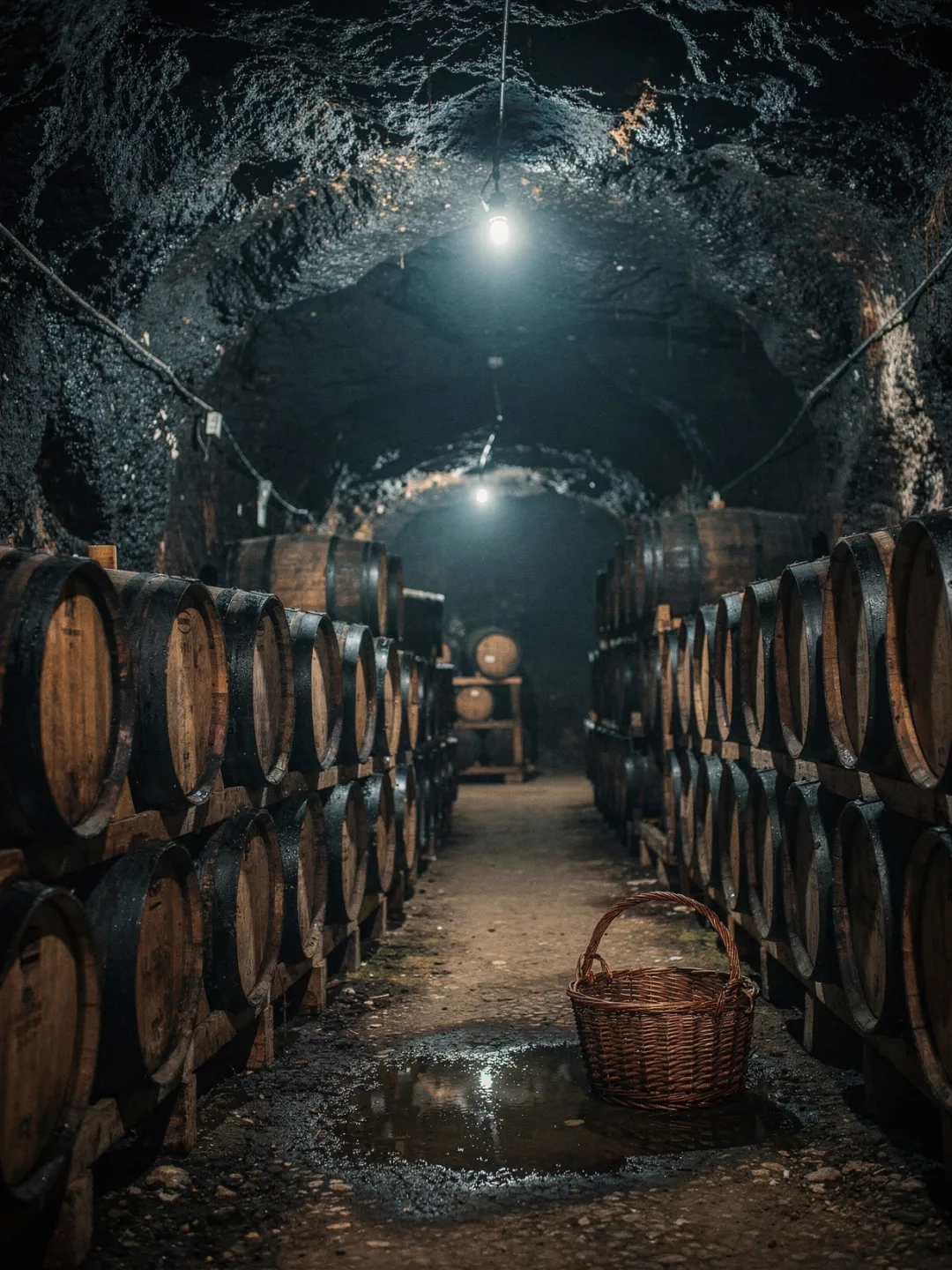
Aging traditionally takes place in the Gönci Hordó, a barrel holding roughly one hundred thirty-six liters, named after the cooperage town of Gönc at the edge of the region. The barrels rest in cellars dug directly into the soft tuff, at ten to twelve degrees Celsius and near-total darkness. A black fungus called Cladosporium cellare grows on the walls, feeding on alcohol vapors in the air.
Alongside Aszú, other styles follow the same idea. Szamorodni, Polish for as it grows, is pressed from whole clusters without selecting individual berries and can turn out dry or sweet. Fordítás is made by pouring fresh must a second time over Aszú pomace that has already been pressed once. At the very top of this hierarchy stands Eszencia, the barely fermented juice of pure Aszú berries, with a sugar content often exceeding four hundred fifty grams per liter. It sometimes ferments for years yet never reaches much alcohol.